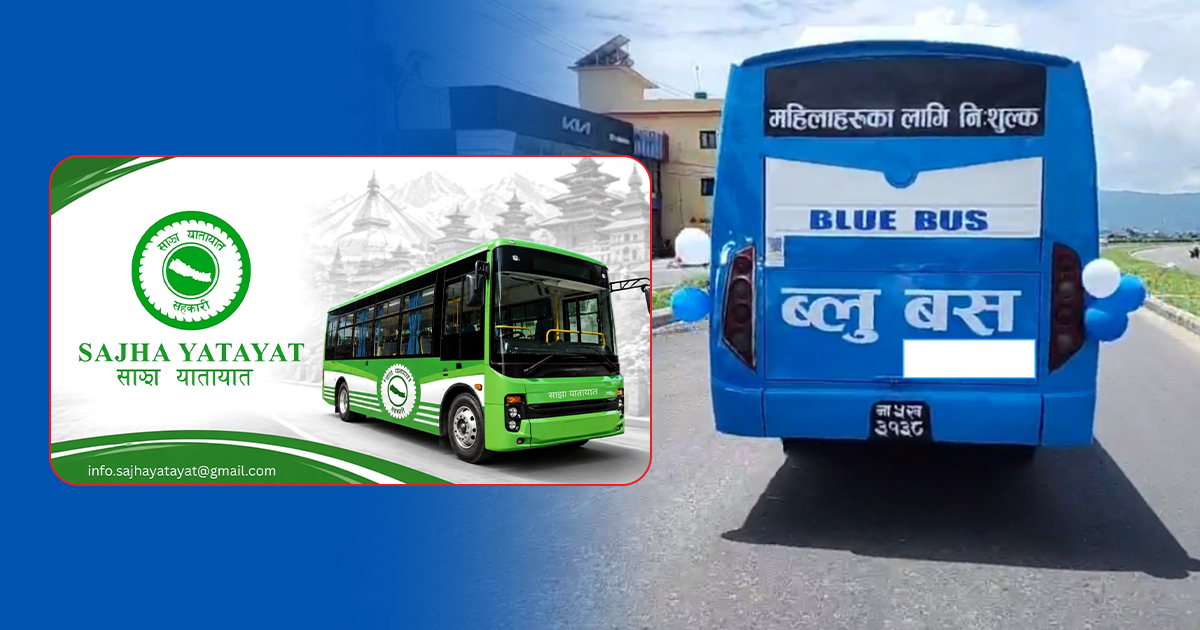

Kathmandu: The Nepal government is moving forward with its plan to introduce a specialized “Blue Bus” service aimed at enhancing the safety and accessibility of public transportation for women. Scheduled to commence operations from mid-July 2026, the initiative will not involve the procurement of new vehicles. Instead, existing buses from the Sajha Yatayat fleet will be repainted and rebranded to serve as the new “Blue Bus” units.
Bhupendra Aryal, the Executive Director of Sajha Yatayat, confirmed that the transition is part of a strategic agreement between the transport cooperative and the government. He noted that while a theoretical consensus has been reached, several administrative procedures are still being finalized. Under the terms of the agreement, the government will bear all operational expenses to ensure that the service remains free of charge for women passengers.
The launch of the “Blue Bus” service is a key component of the government’s “100 Actions for Governance Reform,” which prioritizes immediate improvements in public service delivery. Aryal explained that Sajha Yatayat has already submitted a comprehensive proposal detailing the specific routes and estimated expenditure to the relevant authorities. The final formal agreement is expected to be signed as soon as the Ministry of Finance grants budget approval, allowing the buses to be deployed on the streets immediately thereafter.
While the long-term goal is to establish free “Blue Bus” services across all seven provinces to ensure secure mobility for women, the first phase will focus on the Kathmandu Valley. Eight buses are currently being prepared for the initial rollout, although physical modifications, including the distinctive blue repainting, are still in the queue. This initiative follows the Rastriya Swatantra Party’s (RSP) reform agenda released on March 26, 2026, which emphasized women’s safety and improved public infrastructure. The broader national target aims to have at least 25 free Blue Buses operational within the first 100 days of the program’s implementation.
Regarding route management in the capital, the initial rollout will prioritize high-traffic corridors. Two buses will be assigned to the Nagdhunga–Tribhuvan International Airport route, while others will operate along the Lagankhel–Budhanilkantha path and the Ring Road circuit. The government plans to expand route coverage incrementally as the service stabilizes and more vehicles are integrated into the specialized fleet.

Comment Here