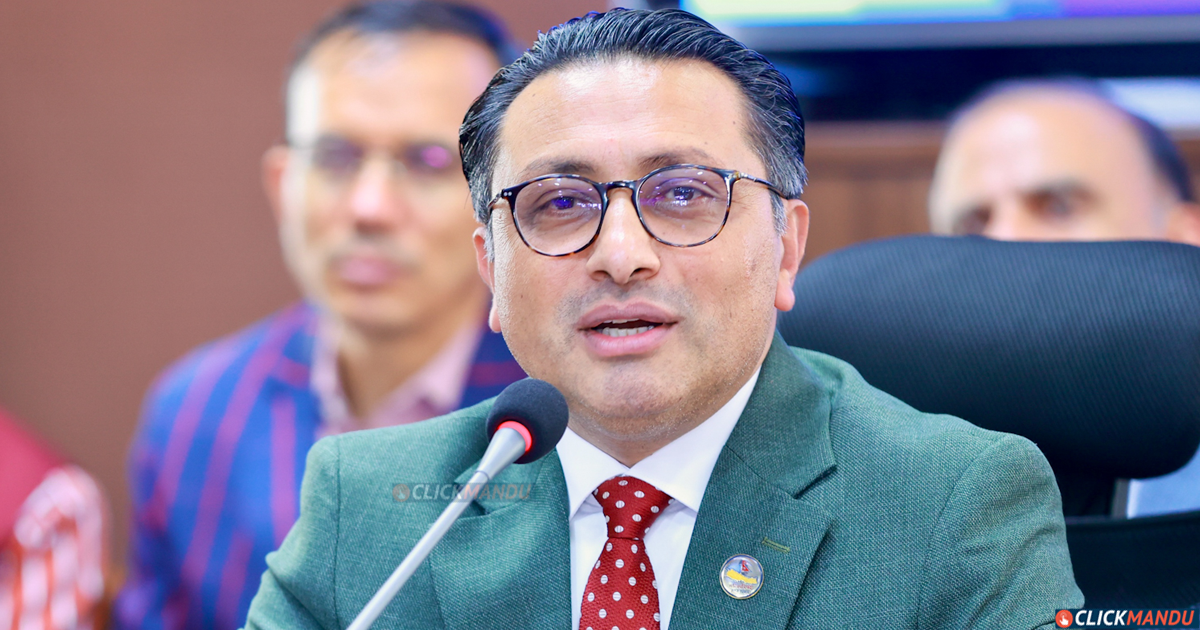

Kathmandu: Finance Minister Dr Swarnim Wagle has released a comprehensive progress report marking his first hundred days in office, characterizing this period as a pivotal chapter for Nepal’s economy.
The report asserts that the Ministry of Finance has successfully moved away from traditional administrative methods, opting instead for result-driven and citizen-centric reforms. According to the Secretariat of the Finance Minister, the primary highlights of this tenure include significant policy overhauls, effective mobilization of foreign aid, a renewed commitment to good governance, and tangible relief measures designed to improve the daily lives of citizens.
Upon assuming office, Dr Wagle initiated his reform agenda by publishing an “Economic Status Paper,” which served as a transparent assessment of the country’s financial landscape and its looming challenges. A major achievement noted in the report is the enhancement of financial procedures and fiscal accountability.
By introducing critical amendments to the Financial Procedures and Fiscal Responsibility Rules of 2020, the Ministry has addressed legal bottlenecks hindering capital expenditure. This reform includes delegating authority to Ministry Secretaries to facilitate the transfer of capital funds, a move expected to drastically reduce delays in the execution of development projects.
Furthermore, based on recommendations from the High-Level Economic Reform Suggestion Commission, the government decided to scrap fifteen obsolete laws. This move aims to revitalize private sector investment and development activities that were previously stalled due to legal complexities. The report also highlights the restructuring and improved management of the Department of Revenue Investigation, aiming for a long-term boost in the national revenue collection system.
In terms of fiscal planning, Dr. Wagle pointed to the timely presentation of budget principles and priorities for the upcoming fiscal year 2083/84 in Parliament. He claimed that the strategic approach adopted in preparing the budget statement reflects the Ministry’s serious commitment to planned national development. Additionally, the Ministry has focused on administrative simplification and technology-based services to enhance the public experience.
Notable digital milestones include the development of an e-pension verification system, allowing retired employees to renew their pensions from home. To further ease access for taxpayers, Permanent Account Number (PAN) services have been expanded across 120 local levels and integrated into the Office of the Company Registrar. The government also addressed the economic burden caused by rising global petroleum prices and geopolitical tensions in West Asia by slashing customs duties and infrastructure development fees on petroleum imports by fifty percent.
Social justice and financial integrity remain core pillars of the administration. The income tax exemption limit has been raised to one million rupees to support middle- and low-income earners, and a framework for restructuring the national health insurance program is currently being finalized. On the legal front, the Ministry successfully investigated and filed a court case regarding a 110-billion-rupee scam in the insurance and securities sectors, described as one of the largest financial crimes in the country’s history, under money laundering charges.
To ensure transparency in public service, electronic systems like GEOMS and LMBIS are being strictly enforced. Customs processes are becoming more scientific and predictable through the introduction of an online customs valuation system and a real-time valuation database. Additionally, tourists visiting Nepal can now facilitate the temporary import of vehicles through an online portal, a move that is expected to positively impact the tourism sector while curbing corruption and revenue leakage.
Substantial progress has also been made in mobilizing foreign resources for development. The Ministry has secured concessional loans and grant agreements exceeding 51 billion rupees from various donor agencies. Key projects include a 90-million-dollar Digital Transformation Project funded by the World Bank and the Asian Development Bank, as well as an 85-million-dollar grant for the development of the Lumbini region. Agreements focused on climate change mitigation and sustainable finance have further strengthened Nepal’s international standing.
Dr. Wagle also emphasized his efforts to project Nepal’s economic agenda on the global stage, citing his participation in the ministerial session on “Financing for Development” in New York and programs at Harvard University. These engagements have fostered a favourable environment for foreign direct investment and boosted the morale of international investors. Domestically, the Ministry has completed Due Diligence Audits (DDA) for long-closed industries such as Gorakhkali Rubber, Hetauda Cement, Janakpur Cigarette Factory, and Nepal Metal Company, paving the way for new management or operational models.
Finally, the report outlines ongoing efforts to restructure the Nepal Stock Exchange and ensure a competitive selection process for the leadership of the Securities Board of Nepal. Strategic diplomatic and legal initiatives have also been undertaken to keep Nepal off the FATF “Grey List.” With the introduction of semi-monthly salary payments for government employees and the deployment of “Dedicated Operation Teams” to control revenue leakage, Dr Wagle maintains that his ministry has successfully injected new energy into the nation’s financial governance.

Comment Here