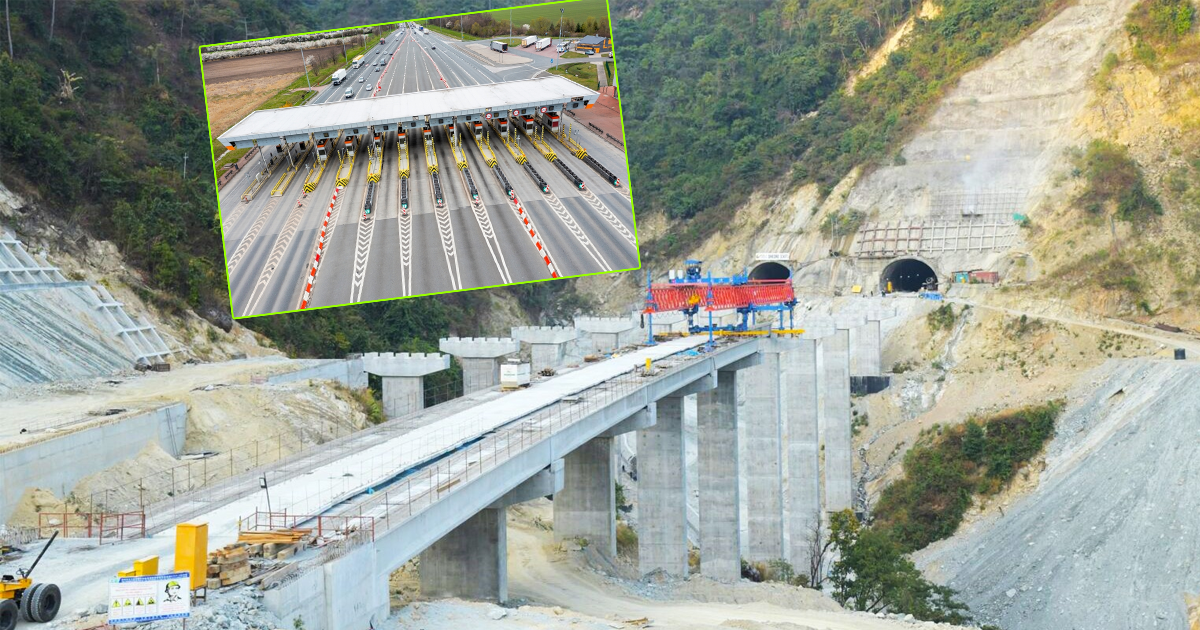

Kathmandu: The long-standing deadlock surrounding the Khokana section of the Kathmandu-Terai/Madhesh Fast Track is set to resolve as the construction process finally moves forward.
This critical stretch had been stalled for years due to a complex web of disputes involving land acquisition, compensation, cultural heritage preservation, and disagreements over the road’s alignment. Following a revised technical proposal from the Nepal Army that addresses both local sensitivities and engineering requirements, a joint technical team from the Ministry of Physical Infrastructure and the National Planning Commission has granted preliminary approval to resume construction.
Under the updated plan, Khokana is officially confirmed as the starting point for the expressway. The government and the National Planning Commission have authorized the Nepal Army to proceed by dividing the disputed 6.5-kilometre section into smaller segments, allowing work to begin immediately in areas with minimal conflict.
A significant technical change involves shifting the road’s route away from the centre of fertile agricultural land toward the banks of the Bagmati River. To further reduce the impact on productive soil and historical landmarks, such as the Shikali Temple, the new design includes increased heights and lengths for several bridges, ensuring that traditional settlements and religious sites remain largely untouched.
Political leadership has played a pivotal role in this renewed momentum, with reports indicating that Prime Minister Balendra (Balen) Shah has taken a special interest in maintaining Khokana as the project’s entry point. This clear policy direction has prompted the Nepal Army to urge 154 local landowners to settle their compensation claims. This marks a departure from the stance of former Prime Minister Sushila Karki, who had previously directed officials to seek alternative starting points to bypass the stalemate and prevent the national pride project from being delayed indefinitely by local opposition.
To manage the logistical challenges, the 6.5-kilometre stretch will be executed in two distinct packages. The first phase will focus on a 3.3-kilometre section between Dukuchhap and Pharsidol, where the tender process is expected to begin shortly. Meanwhile, the remaining 3.2-kilometre segment will undergo a parallel process of land acquisition and consensus-building with the local community. Furthermore, the plan extends the expressway’s reach to link with the Chobhar Dry Port via a four-lane road connecting to the Dakshinkali highway, which will eventually provide seamless access for cargo and passenger vehicles to the capital’s Ring Road.
Despite this recent progress, the project continues to face significant hurdles regarding time and cost. Originally entrusted to the Nepal Army in 2017 with a 2021 completion target, the project has seen its deadline pushed to mid-2027, with costs escalating from an initial 212 billion to an estimated Rs 250 billion.
While physical progress currently stands at approximately 48 per cent, major milestones such as the “breakthroughs” of the Dhedre and Lendanda tunnels have been achieved. As the Nepal Army works to complete the longest tunnel at Mahadev Danda by the end of the current fiscal year, it is also initiating a process for a further three-year extension to ensure the full 70.977-kilometre Asian Highway standard expressway is successfully realized.

Comment Here