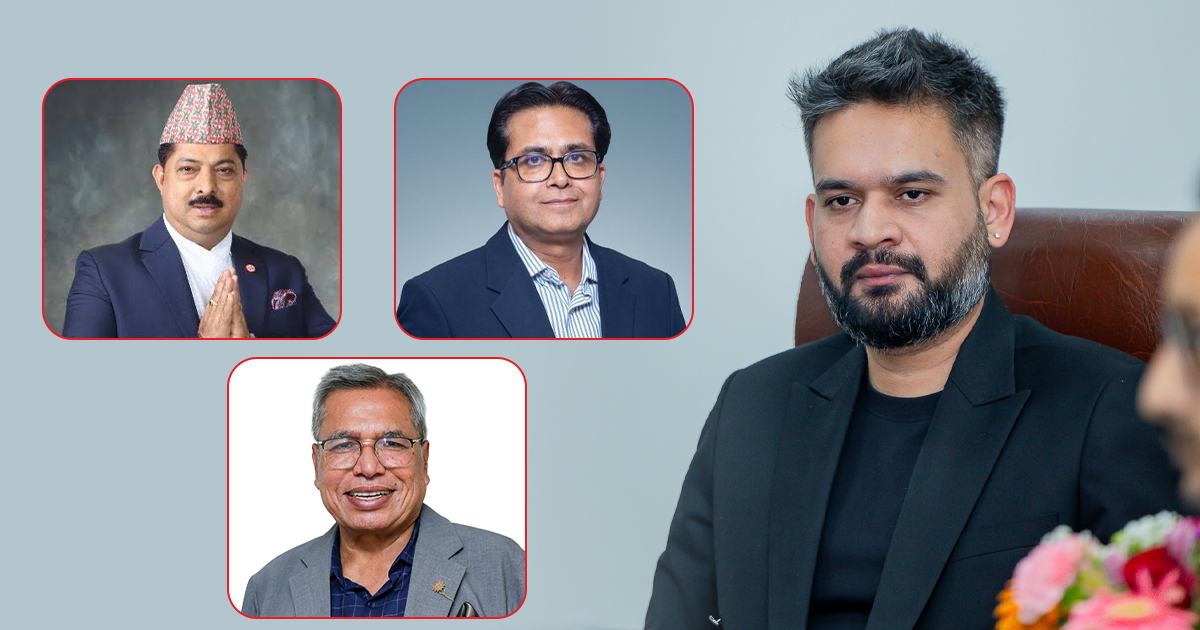

Kathmandu: Prime Minister Balendra Shah ‘Balen’ has officially identified the private sector as the primary driver of the nation’s economic development, promising unwavering government support to business leaders.
During a comprehensive 90-minute discussion held on Wednesday at the Prime Minister’s Office, the Prime Minister emphasized that the private sector is essential for nation-building and urged entrepreneurs to increase their investments with renewed vigour.
Anjan Shrestha, President of the Federation of Nepalese Chambers of Commerce and Industry (FNCCI), shared that the Prime Minister envisions a clear division of roles, where the state focuses on foundational infrastructure while the private sector spearheads commercial and trade activities.
A significant portion of the meeting was dedicated to exploring new models for infrastructure development, particularly in the road sector. Prime Minister Balen expressed interest in whether the private sector could participate in road construction using methods similar to India’s ‘Hybrid Annuity Model’ or other Public-Private Partnership (PPP) frameworks. In response, business representatives indicated their willingness to invest in large-scale projects, provided the government offers solid commitments regarding Viability Gap Funding.
The Prime Minister appeared highly receptive to addressing long-standing policy hurdles that have stifled industrial growth. He assured the delegation that the government would work to resolve land ceiling issues for industries and streamline Initial Environmental Examination (IEE) processes to make them more efficient. Furthermore, the meeting touched upon the necessity of implementing an ‘Integrated Tax System’ to eliminate the complexities of multi-tiered taxation, with the Prime Minister even considering a high-level commission to translate private sector suggestions into actionable policies.
Addressing the financial climate, business leaders voiced concerns over current monetary policies and banking regulations that have restricted the flow of investment. They specifically called for more flexible provisions regarding loan ‘watchlists’ and ‘blacklists’ to facilitate easier access to credit. The Prime Minister signalled his openness to crafting specialized policies for specific industries to foster a more conducive environment for capital.
Legal security and professional dignity were also key topics of discussion. Entrepreneurs urged the government to stop the practice of treating civil or commercial disputes as criminal cases and asked for better confidentiality regarding investigations or government files to prevent the public tarnishing of their reputations. Prime Minister Balen reassured them that the administration’s intent is not to harass the business community but acknowledged the need for legal reforms to ensure a fairer and more respectful process.
Expressing concern over the current ‘consumption-oriented’ nature of the economy, the Prime Minister advocated for a shift toward a ‘production-oriented’ model. He highlighted the need to encourage domestic industries and promote import substitution, with a specific focus on the growth and sustainability of Small and Medium Enterprises (SMEs).
To bridge the communication gap between the state and the business world, both parties agreed to establish a dedicated dialogue mechanism within the Prime Minister’s Office. This body will be responsible for regular coordination and the implementation of strategic action plans. Following the session, FNCCI President Shrestha noted that the private sector is feeling encouraged by the Prime Minister’s proactive engagement and views this meeting as a positive start toward continuous and meaningful cooperation.

Comment Here