
Kathmandu: The ‘Digital Nepal Framework’ envisioned by the Government of Nepal is currently in a significant implementation phase.
Launched with the goal of making the country’s economy modern, transparent, and robust through the maximum use of information and technology, this framework has drawn a roadmap to digitize everything from government services to financial transactions.
With the expansion of internet access, digital banking services are becoming more accessible. Now, not only digital banking but also services connected to the daily lives of citizens have reached their hands.
Lately, government transactions are also gradually being integrated into digital systems. This has not only speeded up government revenue collection and payment processes but has also significantly contributed to the reduction of corruption and the promotion of good governance.
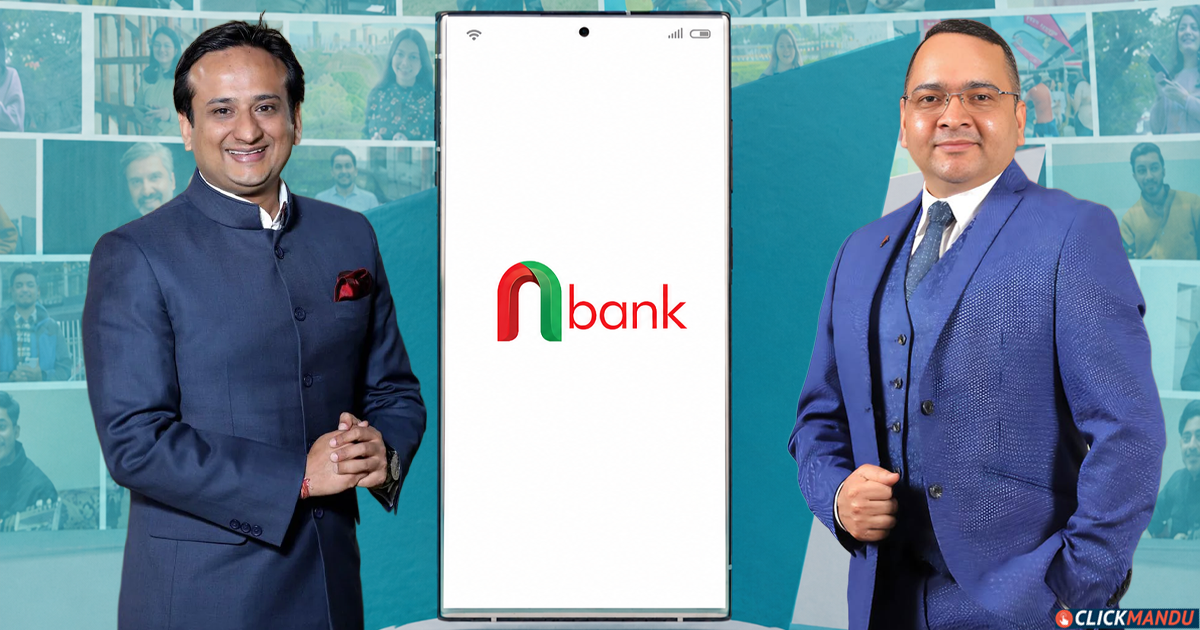
In line with this government policy and the necessity of modern banking, Nabil Bank’s ‘nBank’ has emerged as a strong pillar in building Nepal’s digital economy.
Established 42 years ago as the first bank in the private sector, Nabil Bank has also appeared as a leading bank in contributing to the construction of a digital economy.
Nirvana Chaudhary, Chairman of the bank, argues that for the past 42 years, the only thing beating in the heart of Nabil Bank is ‘Trust,’ and that trust is what Nabil is today.
“As Nabil Bank witnesses its excellent journey of 42 years today, I express my gratitude to all customers, shareholders, regulatory bodies, partners, and our dedicated employees. This trust is our greatest asset and will become the strong foundation for our future,” Chairman Chaudhary said on the occasion of the anniversary.
Nabil is now moving forward not just as trust, but with its ‘nBank’ as a vital pillar of Nepal’s digital economy. Officially launched on 22 December 2022, ‘nBank’ is not just a mobile banking app but Nepal’s first complete digital banking platform.
It has taken banking services out of the boundaries of physical branches and placed them into the hands of customers. In today’s era, the belief that ‘Convenience is the new currency of banking’ has been established.
Instead of spending time going to the bank, people now want to conduct secure financial transactions from their workplace or home. nBank has made this convenience its core mantra.
Through this platform, customers are receiving services such as opening accounts, updating KYC, applying for loans, and making international-standard payments 24 hours a day, 365 days a year. Manoj Gyawali, Chief Executive Officer of Nabil Bank, states that they are developing nBank as an AI-powered super app.
“When we started nBank, our objective was to provide customers with a simple, easy, and modern neo-banking experience through a single integrated digital platform,” Gyawali says. “Now, we are developing nBank as an AI-powered super app that personally addresses all money-related needs, including savings, loans, remittances, payments, shopping, and investments.”
The biggest benefit of a digital payment system is the transparency it brings to financial transactions. When any transaction occurs through digital means, it leaves a clear record, which helps prevent tax evasion and widen the scope of the formal economy. The cashless transactions promoted by nBank have also contributed to maintaining financial discipline in society and reducing the state’s expenditure on printing banknotes.
Chairman Nirvana Chaudhary says that there has been a massive change in Nepal’s economic and industrial landscape over the last four decades, and Nabil Bank never waited for change but always led it.
He stated that nBank is also Nabil’s initiative to lead modern banking. “We laid the foundation of modern banking. By establishing ourselves as Nepal’s first digital bank through the ‘nBank’ app, we completely transformed the customer’s banking experience,” Chairman Chaudhary said during the anniversary. “By establishing Nepal’s first private commercial bank, we opened new doors for industries and investors. Today, Nabil Bank is the only financial group in Nepal that provides a complete financial ecosystem including commercial banking, investment banking, stock broker, merchant banking, capital market, and digital banking under one roof. We haven’t just adopted innovation; it is in Nabil’s DNA.”
Following the government’s policy to encourage digital payments, nBank has provided features like QR code payments, online bill payments, and mobile top-ups to its customers in a very simple manner. In particular, nBank’s ‘Tap Me’ feature has made the payment experience even easier, where customers can complete the initial process without even logging into the app and pay bills instantly after final security authentication.
Accessing Investments Digitally through nBank
nBank has also digitally connected Nepali citizens to the investment sector. To participate in a Systematic Investment Plan (SIP), one no longer needs to visit a Mutual Fund office or a bank. Customers can register for SIP digitally, submit details, and make regular installment payments through nBank. This has encouraged even the middle and low-income public to invest safely in the capital market.
For active investors in the stock market, nBank, in collaboration with Nabil Stock Dealer (Broker No. 77), has provided facilities to open TMS accounts and directly access the TMS portal. Additionally, the provision to pay Demat account and MeroShare renewal fees with a single click has saved both time and costs for investors.
nRemit Facility within nBank to Connect Nepalis Worldwide
In the context of international financial access, nBank has connected Nepal with the global market. According to the bank, Nepalis in 188 countries across the world can securely send money home through nBank’s nRemit.
This facility has helped discourage illegal channels like Hundi and bring remittances into the formal banking system. Similarly, keeping in view the economic and trade relations between Nepal and India, nBank has also made cross-border transfer facilities available, making the transfer of funds between the two countries easy and transparent.
Targeting Nepalis traveling abroad, the facility to purchase Global e-SIMs that work in 190 countries and the Virtual iCard (Dollar Card) facility with a limit of up to $500 for international shopping have made nBank a true ‘Super App.’
The nBank ecosystem is divided into four main parts: Save, Spend, Borrow, and Remit. Under ‘Save,’ there are online fixed deposits, and under ‘Spend,’ there are various utility bill payment facilities.
In the area of loans, nBank has prioritized quick and efficient service. From taking instant loans against fixed deposits to online applications for digital loans and credit cards, nBank has become a medium to immediately address customers’ financial needs. It has provided citizens not just with banking in their hands, but all facilities. nBank also features the Nabil Installment service, allowing payments in installments when purchasing goods.
Digitization of the banking sector is indispensable for the success of the Digital Nepal Framework. As government agencies have started accepting taxes, fees, and service charges through digital means, platforms like nBank have acted as a financial bridge between the general public and the government.
Digital payments make every unit of the economy trackable, which brings accuracy to the calculation of national income and reduces the risk of economic irregularities. Nabil Bank claims that nBank has ensured the security of customers’ details and funds by using Artificial Intelligence and state-of-the-art security systems. Currently, the number of nBank users has exceeded 1 million.
The fusion of technology and banking through nBank is steering Nepal toward becoming a modern and prosperous nation. Nabil Bank’s nBank is materializing the goal of a cashless society by putting the idea that ‘Convenience is the new currency’ into practice. Future banking is not just about buildings and counters; it is about the mobile in a citizen’s hand and powerful, secure software like nBank, which nBank has proven.
Chairman Chaudhary also states that the bank has entered the most transformative era in banking history—the era of ‘Artificial Intelligence’ (AI). “AI is not just a simple technology; it is redefining decision-making processes, risk management, business operations, and the customer’s financial experience,” Chaudhary says. “Nabil Bank has prepared not just to participate in this change but to lead it. AI will be at the center of nBank’s future development. This will make banking services smarter and more personalized. It will lead to rapid loan processing, superior risk management, intelligent customer experiences, broad financial inclusion, and the development of robust security systems.”
He clarified that no matter how intelligent technology becomes, Nabil’s core objective will always be connected with human emotions and values. Banking is not just about financial transactions; it is a medium for realizing dreams, supporting entrepreneurs, building the future of families, and contributing to the prosperity of Nepal, he argued.

Comment Here