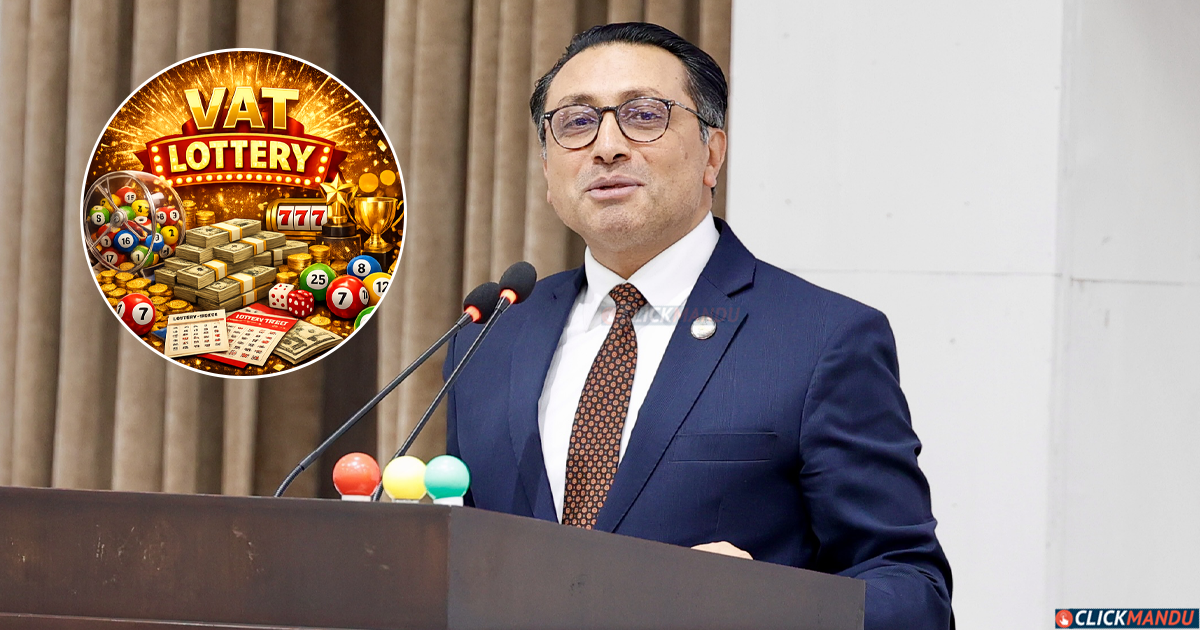

Kathmandu: Finance Minister Dr Swarnim Wagle’s high-profile initiative to introduce a lottery system for Value Added Tax (VAT) bills, a centrepiece of the current fiscal year 2026/27 budget, has failed to launch on its scheduled start date.
Despite the initial announcement during the budget speech on May 29 that the program would be operational by mid-July, administrative and technical delays have prevented its immediate rollout. This scheme was designed to revolutionize tax compliance by incentivizing consumers to demand formal receipts for their daily purchases, effectively turning every purchase into a potential windfall for the public.
The ambitious “Daily Lakhpati” program aimed to automatically transform electronic VAT receipts issued for the purchase of goods and services into lottery tickets, offering citizens the chance to win significant cash prizes on a daily basis. By making tax compliance rewarding for the average shopper, the government hoped to curb tax evasion and ensure more transactions are recorded in the official system.
However, according to Keshav Raghubanshi, the Information Officer at the Inland Revenue Department, the necessary working guidelines are currently awaiting final approval from the Finance Ministry. While the department has already submitted the operational framework, the program cannot move forward until the ministry formally sanctions these procedures.
Beyond the bureaucratic holdup, there are significant technical milestones that must be reached before the first draw can take place. Once the Ministry of Finance provides the necessary approval, the IT department will need to finalize a digital system capable of handling automated lucky draws, which will initially be restricted to businesses utilizing online or electronic billing.
Although the authorities had hoped for a smooth launch at the start of the fiscal year, they are now targeting a rollout sometime within the current month of July, though a specific date remains unconfirmed. This delay has drawn attention to a paradoxical situation where a flagship policy championed by the Finance Minister himself is being bottlenecked by internal processes within his own ministry.

Comment Here