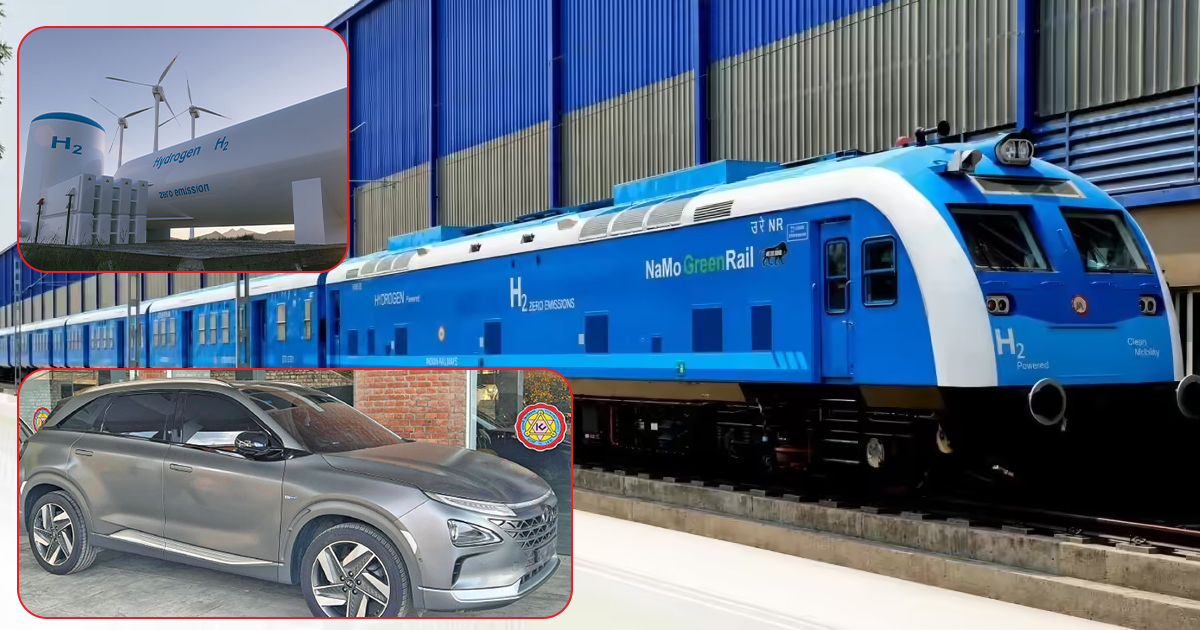

Kathmandu: The ambitious roadmap for the commercial production of green hydrogen in Nepal is currently mired in uncertainty.
While the Detailed Project Report (DPR) should have been completed by now, per an agreement signed last August, the project hit a major roadblock when the foreign company contracted to conduct the study went silent. This lack of communication has left the future of the project hanging in the balance, despite the initial momentum generated by the Investment Board Nepal.
The Investment Board Nepal had agreed with a South Korean firm in August 2025 to explore the production of green hydrogen fuel. Per the memorandum of understanding, the Korean company was required to provide a bank guarantee and secure a survey license within 45 days of the signing. However, the process was derailed by the ‘Gen-Z’ protests that erupted in Nepal around that time, preventing the company from moving forward with the necessary formalities. While Nepal remains stuck in the preliminary study phase, neighbouring India has already successfully launched hydrogen-powered trains.
The government’s plan involves utilizing approximately 20 megawatts of electricity to produce hydrogen fuel. This initiative was formalized through a partnership between the Government of Nepal, the Investment Board, and the South Korean company G-Philos to establish a green hydrogen plant and fuel cell facility. Preliminary estimates suggested a project cost of around 6 billion rupees. The strategy was to start with a pilot phase and scale up production based on the feasibility findings. Under the agreement, the DPR was expected to be submitted to the Board within ten months of receiving the survey license.
Although Nepal first initiated studies on hydrogen fuel as far back as 2008, it took nearly 17 years to begin concrete work toward production. The proposing company submitted its plan for the development and operation of the plant in April 2025, suggesting a public-private partnership model. Based on this proposal, the 63rd meeting of the Investment Board decided to grant the survey license and move forward with the partnership.
While the government-led project has struggled, Kathmandu University has been a pioneer in this field, conducting research for the past six years and even importing a hydrogen-powered car to demonstrate feasibility. Furthermore, the government has introduced the Green Hydrogen Policy 2023, and the current budget offers a five-year tax holiday for the industry. The university’s Green Hydrogen Lab, established in 2020, focuses on mitigating climate change and reducing fossil fuel dependency by researching how hydrogen can replace coal in urea plants, iron processing, and cement industries.
Despite these academic and policy-level advancements, Nepal lacks the specific legal and procedural framework needed to advance projects. Research expert Associate Professor Dr Biraj Singh Thapa notes that while India has already tested hydrogen trains on an 89-kilometre route, Nepal’s progress is hindered by policy ambiguity. He emphasizes that mere policy declarations or calls for suggestions are not enough to attract foreign investment. International financial institutions like the World Bank and IFC require clear safety standards, national protocols, and legal provisions regarding production, storage, and commercial use before committing funds.
The science behind this energy source is promising for a water-rich nation like Nepal. By using approximately 50 units of electricity to split nine kilograms of water through electrolysis, one kilogram of hydrogen can be produced
The gap between vision and reality is best illustrated by the hydrogen car currently housed at Kathmandu University. Although then-Prime Minister K.P. Sharma Oli inaugurated the vehicle, declaring the start of a “hydrogen era,” the car remains confined to the university campus. Because current transportation laws do not account for hydrogen vehicles, there are no provisions for registration, issuing number plates, or providing a “blue book,” making it illegal to drive the car on public roads. While the government has recently asked for stakeholder input to formulate standards, experts argue that a dedicated task force is needed to fast-track these regulations.
The push for green hydrogen is seen as a vital step toward fulfilling Nepal’s international commitment to achieving zero carbon emissions. Historical studies, including a joint effort between Tribhuvan University and Western Michigan University in 2008, and a 2020 Asian Development Bank study, have consistently highlighted the potential of using surplus hydropower to produce hydrogen. This could significantly reduce petroleum imports and even create a new export market, as seen in the roadmaps already implemented by global powers like China, the US, and India.
The science behind this energy source is promising for a water-rich nation like Nepal. By using approximately 50 units of electricity to split nine kilograms of water through electrolysis, one kilogram of hydrogen can be produced. Since Nepal has an abundance of both water and electricity, the country could theoretically replace two percent of its diesel consumption with hydrogen. According to Kathmandu University, this shift could create a market worth 71 billion rupees over a decade.
In the current fiscal budget, the government announced a pilot project to produce 2.5 megawatts of green hydrogen in Hetauda. Finance Minister Dr Swornim Wagle presented this as a key step for the upcoming year, building on previous incentives such as tax exemptions on imported machinery and a five-year income tax holiday for producers. These measures aim to integrate green hydrogen into the national energy mix and enhance energy security by 2045.
In a recent development, the Korean company that had been unreachable for eight months has finally made contact. After nearly a year of silence, the firm sent an email expressing its continued commitment to the project and a desire to move forward with new proposals. However, the future of the project remains tied to bureaucratic processes; the Investment Board has not held a meeting in months. Sources indicate that until a new Chief Executive Officer is appointed and a formal board meeting is convened to finalize the old proposals, the project will remain in a state of limbo.

Comment Here