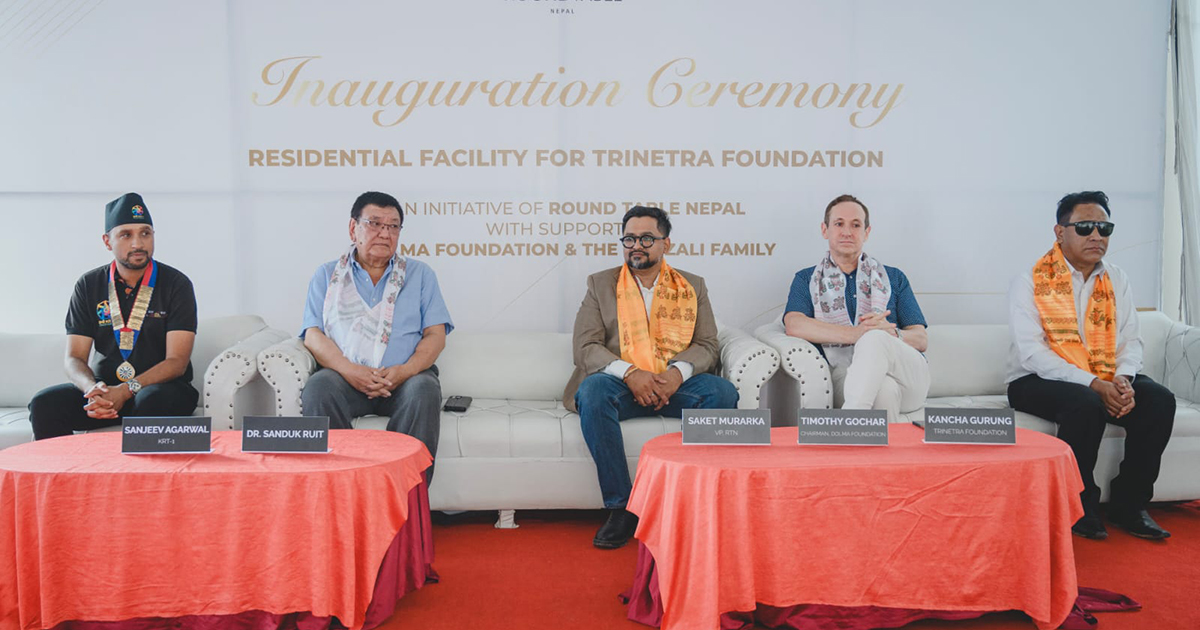

Kathmandu: Round Table Nepal has officially inaugurated a modern residential building specially designed for visually impaired children under the Trinetra Foundation. Completed in a remarkably short span of nine months, this project stands as one of the largest and most impactful social service initiatives in the history of Round Table Nepal. The facility represents a major milestone for the organization in its mission to serve the community through large-scale infrastructure projects.
Constructed at a total cost of approximately NPR 18.3 million, the residential building is dedicated to improving the living standards of visually impaired youth by providing them with a safe, dignified, and high-quality environment. Spanning an area of one ropani, the building is equipped to house more than 48 children.
The infrastructure includes six spacious residential rooms, a large dining hall, a fully equipped kitchen, modern bathrooms, and other essential facilities. These amenities are expected to play a crucial role in the overall development, safety, and comfort of the children, ensuring they lead a life of dignity.
The successful completion of this ambitious project was made possible through the generous contributions of the Dolma Foundation, the Mazzali family, various individual donors, corporate partners, and well-wishers. The initiative was spearheaded by Tr. Sanjeev Agrawal, Chairman of Kathmandu Round Table-1, whose leadership was instrumental in bringing the project to fruition. The collaborative effort highlights the strength of public and private partnerships in addressing social welfare needs.
The inauguration ceremony was graced by world-renowned ophthalmologist and humanitarian Dr Sanduk Ruit, who attended as the chief guest. The event saw a significant turnout, including representatives from the Dolma Foundation and the Mazzali family, members of Round Table Nepal, distinguished guests, donors, volunteers, and representatives from the local community. During the event, Round Table Nepal representatives reaffirmed their core belief that every child, regardless of their physical condition or economic background, deserves equal opportunities to thrive.
Beyond its physical structure, the project is envisioned as a lasting symbol of compassion, cooperation, and selfless service. It sends a powerful message that meaningful and long-term change is achievable through collective generosity and social responsibility. This residential building is set to serve as an invaluable asset for generations to come, providing visually impaired children with a sense of belonging and a place they can truly call home.

Comment Here