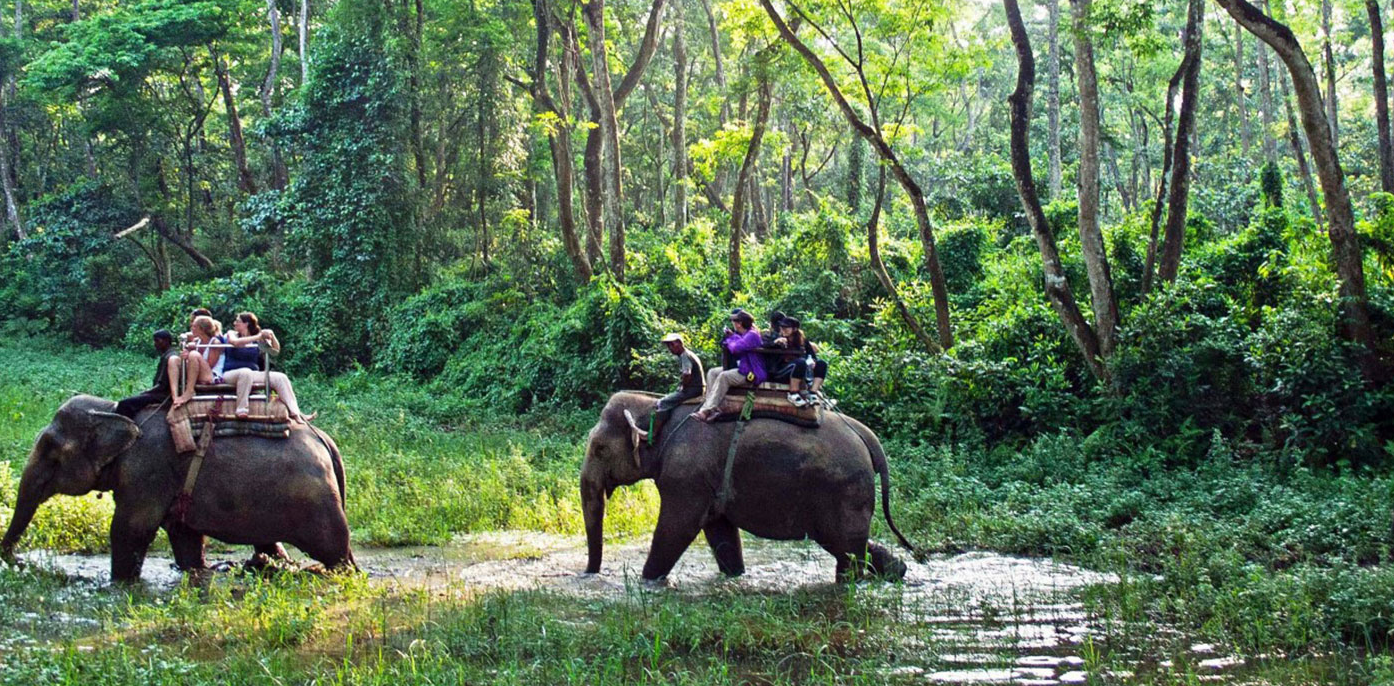

On 14 September 2021, advocates Sanjay Adhikari and others, representing the Janhit Sanrakshan Manch, had filed a public-interest petition demanding stronger protection for captive elephants. Their petition sought an end to torture, illegal transportation and prolonged chaining, while also calling for proper records of elephant ownership, purchase and transfer. It further asked the state to replace elephant-back tourism with observation-based experiences.
A joint bench of Justices Hari Prasad Phuyal and Tek Prasad Dhungana issued its order on 17 December 2025. The full 46-page text, containing 62 points, was uploaded to the Supreme Court’s website on 16 July 2026.
The Court observed that carrying tourists for extended periods can harm elephants’ bodies and mental wellbeing. It directed the government to reconsider traditional elephant safaris and gradually develop alternatives such as elephant-friendly walks, bush walks and observation-only tourism. It also called for open spaces, natural diets, positive training, social contact, veterinary care, chain-free management and rehabilitation facilities for old or disabled elephants.
However, the ruling should not be misunderstood as an instruction to close every elephant tourism business overnight. The Court itself recognised that elephant safaris generate income, employment and tourism activity in places such as Sauraha. Its direction is for a gradual transformation supported by legal and policy arrangements, not an unmanaged shutdown.
That distinction matters. A poorly managed transition could protect elephants in principle while placing them at greater risk in practice.
The economic dependence is real
Elephant safaris have already been absent from the government-managed area of Chitwan National Park for nearly 15 years. The remaining rides are mainly conducted by privately owned elephants in buffer-zone community forests. These operations are tied to a wider local economy involving hotels, restaurants, transport workers, nature guides, mahouts, community forest groups and small tourism businesses.
Baghmara Buffer Zone Community Forest provides a clear example. The forest covers approximately 215 hectares and, at its peak, generated around Rs 30 million annually. About Rs 10 million of that income came directly from elephant safari permits. This money did not benefit elephant owners alone. Community-forest income has supported forest management, local development, conservation activities and community institutions.
Removing one-third of such income without creating an alternative would leave a serious financial gap. It could weaken the very community-based conservation system that Nepal frequently presents as a global success.
Protecting elephants requires more than prohibiting harmful practices. It requires financing their long-term care
The burden is equally serious for elephant owners. Caring for one captive elephant can cost approximately Rs 150,000 per month, including food, healthcare and mahout wages. Before the COVID-19 pandemic, the United Elephant Safari Cooperative managed more than 60 elephants. By 2025, that number had fallen to around 30, while approximately 45 elephants remained involved in Sauraha’s wider safari economy. More recent reporting indicates that roughly 38 to 40 elephants are still used for safaris on busy days.
If riding income disappears immediately, owners will still face feeding, veterinary and staffing expenses. Elephants cannot simply be parked like unused safari jeeps. Without support, some owners may reduce food and medical care, dismiss mahouts, attempt illegal sales or abandon animals they can no longer afford to maintain.
Therefore, protecting elephants requires more than prohibiting harmful practices. It requires financing their long-term care.
Chitwan tourism is larger than elephant riding
In fiscal year 2025/26, Chitwan National Park received 272,923 visitors, including 161,375 Nepalis, 22,883 visitors from SAARC countries and 88,665 tourists from other countries. The park collected approximately Rs 310.16 million in revenue. Its entrance fees remain Rs 150 for Nepalis, Rs 1,000 for SAARC citizens and Rs 2,000 for other foreign visitors, while safari jeeps are charged Rs 5,000.
These figures show that Chitwan’s tourism economy is built around a much broader wildlife experience. Visitors come for one-horned rhinoceroses, tigers, crocodiles, birds, forests, rivers and Tharu culture. Jeep safaris, canoe trips, jungle walks, birdwatching and nature-based accommodation already form major parts of the tourism market.
In fact, the number of visitors increased by more than 41,000 in 2025/26 compared with the previous fiscal year, even though elephant safari participation had already been declining. Park revenue nevertheless fell because the increase came mainly from lower-paying domestic visitors while the number of higher-paying foreign tourists declined.
This shows that Chitwan’s deeper economic challenge is not simply the future of elephant rides. It is how to increase tourism value, visitor spending and length of stay while protecting nature.
Changing international attitudes also make reform economically necessary. Several European tour operators stopped promoting elephant rides after animal-welfare organisations raised concerns. Operators in Sauraha have reported that many European guests no longer want to ride elephants and instead prefer less intrusive experiences. Some businesses have introduced elephant bush walks that reportedly cost more than conventional rides and have received a positive response from visitors.
The elephant tourism market is not simply disappearing; it’s changing. Nepal can either adapt and sell higher-quality ethical experiences, or continue defending a declining tourism product until international demand moves elsewhere.
A ban without a transition plan would be irresponsible
The Court has established the direction of reform. The responsibility for designing the road now lies with the federal government, provincial and local governments, the Department of National Parks and Wildlife Conservation, community forests, tourism operators and elephant owners.
The first step should be a national captive-elephant registry. Every elephant should have a verified ownership record, identification profile, health history and welfare assessment. This would help prevent illegal sales, transfers and cross-border transportation while allowing the government to estimate the real cost of rehabilitation and retirement.
Community forests must be guaranteed replacement revenue. They could receive a share of income from jeep safaris, guided walks, canoe trips, wildlife photography permits and ethical elephant-observation programmes.
Chitwan should be marketed not as a place where visitors sit on wildlife, but as a place where people learn to observe wildlife respectfully
Mahouts must be recognised as skilled workers, not treated as disposable labour. They understand elephant behaviour, feeding, movement and individual temperament. With training and certification, mahouts could become elephant-welfare handlers, nature interpreters, conservation educators, trackers and guides for observation-based tourism. The objective should be to transform their employment, not eliminate it.
Nepal should develop genuine retirement and rehabilitation centres with sufficient land, veterinary services and social space. The word “sanctuary” must not become a new marketing label for the same exploitation. Facilities should be independently inspected, their financial records made transparent and direct contact with tourists carefully controlled.
Finally, Nepal needs a new tourism narrative. Chitwan should be marketed not as a place where visitors sit on wildlife, but as a place where people learn to observe wildlife respectfully. Elephant bush walks, remote observation platforms, mahout-led interpretation, conservation education, photography, forest restoration and longer nature-based packages could generate more income per visitor than a brief ride.
The cost of reform must not fall on the elephant
The Supreme Court’s decision is a moral and economic turning point. It recognises that elephants possess social needs, intelligence and value beyond the money they can earn by carrying people. But moral declarations alone do not feed an elephant, pay a mahout or finance a community forest.
The government must therefore avoid two failures. The first would be ignoring the ruling and allowing harmful practices to continue under the label of tradition. The second would be imposing a sudden prohibition without financing, infrastructure or livelihood alternatives.
A successful transition would protect elephant welfare while preserving employment, conservation funding and tourism income. A failed transition would leave owners bankrupt, mahouts unemployed, community forests underfunded and elephants with nowhere safe to go.
The question is no longer whether Nepal should move beyond elephant-back safaris. The Court has already answered that. The real question is whether the government can build a tourism economy in which an elephant is worth more standing freely beside a forest than carrying tourists through it.

Comment Here