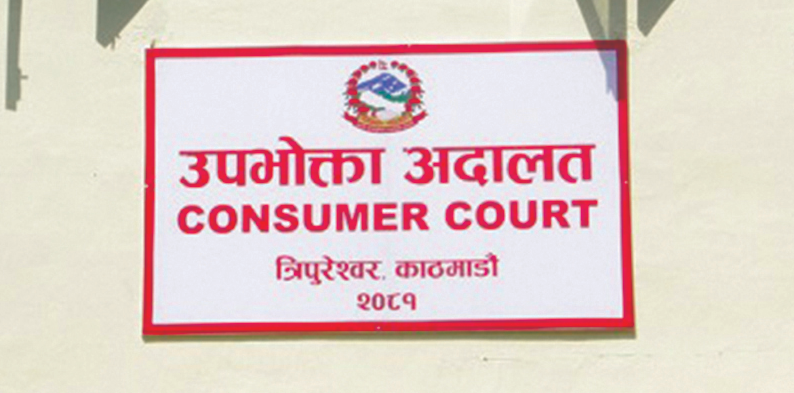

Kathmandu: The establishment of Nepal’s first specialized Consumer Court was hailed as a landmark victory for the rights of the common citizen, promising a dedicated legal arena where grievances could be heard and justice served based on rigorous evidence.
However, twenty-eight months after its inception, a startling reality has emerged: not a single case has been filed by a government regulatory body in this court. Formally established in Teku, Kathmandu, in March 2025, following a Cabinet decision made under the provisions of the Consumer Protection Act of 2018, the court was intended to be the ultimate arbiter in market disputes.
Yet, the very departments tasked with monitoring the market and protecting the public—most notably the Department of Commerce, Supplies, and Consumer Protection—have completely bypassed the judiciary, leaving the court to function as a hollow shell of its intended purpose.
The absence of government-initiated litigation is particularly jarring given the high expectations that the court would tackle large-scale market fraud, syndicates, and organized monopolies. Consumer rights activists have pointed out that the Department of Commerce appears to prefer administrative shortcuts over judicial accountability.
According to department officials, they utilize their authority to issue immediate spot fines to erring businesses, a move they claim makes a trip to the courtroom unnecessary. However, critics argue that this practice effectively allows major commercial offenders to pay a relatively small “tax” for their crimes and continue their operations without facing a full judicial inquiry. By resolving serious offenses through administrative fines rather than court trials, the role of the judiciary is being systematically undermined, and the opportunity for a thorough investigation into complex commercial crimes is being lost.
Shishir Lamichhane, the Registrar of the Consumer Court, confirmed that while the Department has settled thousands of issues internally, none have reached his office. He noted that the petitions currently sitting on the court’s docket have been filed exclusively by individual citizens who felt they had no other recourse. These private complaints paint a vivid picture of the diverse grievances facing Nepali consumers today.
The court has seen a surge in cases involving medical malpractice, where patients allege severe negligence by doctors and hospitals. There is also a significant number of disputes regarding automobile warranties, where dealers refuse to honour their service commitments, as well as fraud related to jewellery purchases and electronic gadgets that fail to meet advertised specifications. The court maintains a strict standard of evidence, refusing to label any complainant a “victim” or any businessman a “perpetrator” until the facts are fully substantiated in an open session.
The legal framework behind the Consumer Court is designed to be multi-faceted, allowing both individual citizens and various government monitoring agencies—such as the Departments of Food Technology, Standards and Metrology, and Drug Administration—to file suits. Despite this, the lack of government participation remains a major hurdle. Director General of the Department of Commerce, Motiram Sapkota, maintains that they have not yet encountered an offence grave enough to warrant a formal court filing, as their inspectors resolve most discrepancies on the spot.
However, consumer advocates like Prem Lal Maharjan, President of the National Consumer Forum, allege that the regulatory bodies are more interested in shielding influential businessmen than protecting the public. He points out that even when departments do choose to prosecute, they often prefer the District Court or the District Administration Office, where consumer cases are frequently de-prioritized and buried under a mountain of other criminal and civil litigation.
Legal experts and members of the Nepal Bar Association have raised concerns about the ambiguity of the court’s sentencing and compensation standards
The physical state of the Consumer Court is perhaps the most visible indicator of the government’s lack of commitment. Lacking its own dedicated building, the court is currently squeezed into a cramped corner of the Department of Industry. The infrastructure is described as deplorable, with a total staff of twenty-one employees struggling to work without enough chairs or tables.
While the government spends approximately Rs 20 million annually to run the court, it has failed to invest in basic physical facilities, let alone the modern information technology and digital recording systems required for a contemporary judicial body. This lack of resources has a direct impact on performance, as the court struggles to manage its workload in an environment that hardly resembles a temple of justice.
Legal experts and members of the Nepal Bar Association have also raised concerns about the ambiguity of the court’s sentencing and compensation standards. Because the government rarely seeks penalties exceeding three years of imprisonment, serious market crimes are not being prosecuted to the full extent of the law.
Furthermore, there is a lack of consistency in compensation awards, with some victims receiving millions of rupees while others are granted only a few thousand for similar grievances. There is also the significant legal barrier that prevents consumers from suing the government within this specific court. If a citizen suffers loss due to the negligence of a state agency, they are still forced to navigate the arduous and slow-moving processes of the regular District Court.
Despite these challenges, the court has managed to process 62 cases over the last two fiscal years, delivering verdicts in 38 of them. These cases range from disputes over house construction and internet service quality to high-stakes medical negligence claims. The statute of limitations remains a critical factor for citizens; an individual must file their complaint within six months of the incident or damage.
While the court’s leadership, including Chairman Dr Diwakar Bhatta, continues to advocate for more effective market monitoring and public awareness, the future of the Consumer Court depends on whether the government is willing to move beyond administrative fines and embrace a truly judicial approach to market regulation. Until then, the court remains a symbol of a promise only half-kept, waiting for the state to finally take its seat at the bench.

Comment Here