
Kathmandu: The federal government of Nepal, alongside all seven provinces, has officially unveiled its budget for the fiscal year 2026/27.
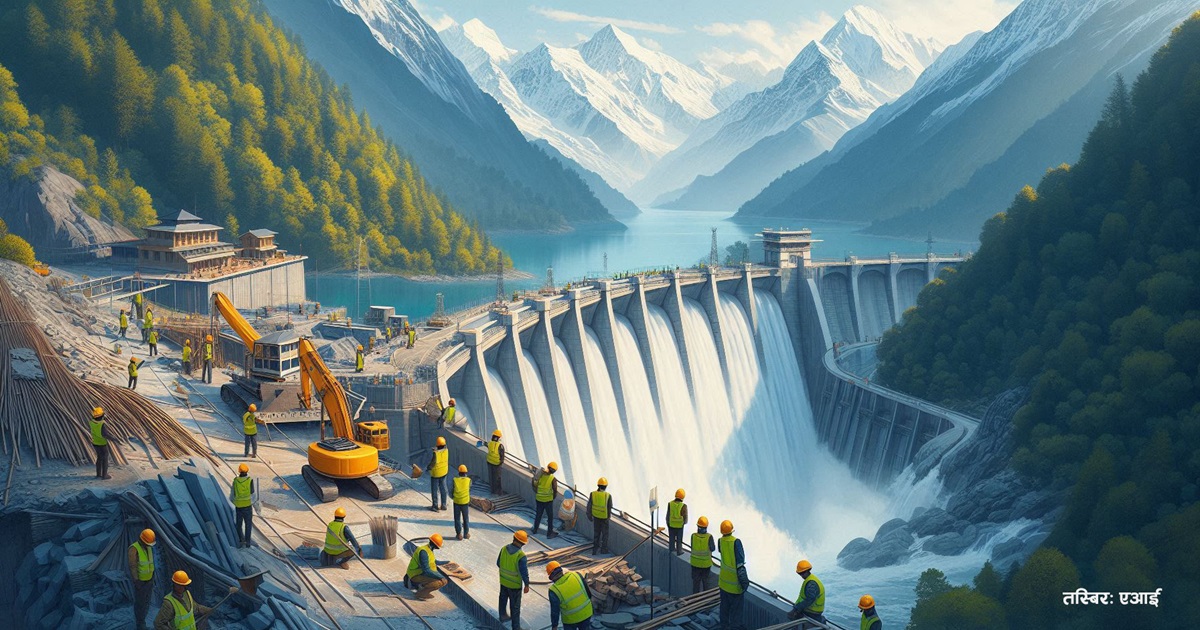
A cornerstone of the federal budget is the highly ambitious goal of producing 30,000 megawatts of electricity within the next decade. However, a review of the provincial financial plans reveals a significant lack of enthusiasm for this vision.
Instead of aligning their resources with the national energy strategy, provincial governments have remained focused on small-scale, retail-level projects, failing to demonstrate the commitment necessary to support the central government’s large-scale energy aspirations.
The provincial budgets for the upcoming year suggest that energy has been sidelined in favour of combined allocations for drinking water and irrigation. This lack of a distinct and specialised priority for power generation has overshadowed the national target.
For instance, despite the immense hydroelectric potential of rivers like the Arun, Tamor, Bheri, and Karnali, the Koshi and Karnali provinces have allocated only Rs 6.28 billion and Rs 4.81 billion, respectively, for energy and irrigation combined. Meanwhile, Madhesh Province, which lacks hydroelectric geography, has allocated a substantial Rs 8.90 billion, but these funds are largely concentrated on distribution-centric schemes such as solar streetlights and urban illumination.
Other provinces, including Bagmati, Gandaki, and Sudurpashchim, have grouped energy and water resources with an average allocation of Rs 4.77 billion, while Lumbini Province remains at the bottom with a modest Rs 2.81 billion.
The federal strategy is built around constructing large reservoir-type projects to boost energy exports and reduce the national trade deficit. In contrast, the priorities of provinces like Madhesh and Lumbini are confined to local subsidies for agricultural pumps and installing solar lamps on streets. An analysis of all seven provincial budget statements shows that, except for the ‘Jagadulla’ project in Karnali, there are no concrete plans to invest in or facilitate national-scale hydropower projects.
While Karnali has allocated approximately Rs 500 million to encourage public investment and attract developers for large projects, most other provinces have limited their budgetary focus to mere feasibility studies without ensuring the billions in investment required for actual implementation.
Technical and legal hurdles further complicate provincial involvement in the energy sector. Because power generation and transmission line expansion are largely seen as the domain of the federal government, provinces remain hesitant to take significant initiative. This is compounded by the fact that the current Electricity Act of 1992 does not officially recognize provincial roles, and the much-anticipated new Electricity Bill has yet to be passed.
Without a clear legal framework to grant them ownership or authority, provinces are struggling to adopt federal targets as their own. Consequently, there is a growing risk that the national goal of 30,000 MW may remain a theoretical ambition, as provincial governments have yet to show the readiness required to mobilize local resources or partner in large-scale infrastructure development.

Comment Here