
Kathmandu: Nepal Rastra Bank (NRB) had formally announced in its monetary policy for the current fiscal year that it would conduct a comprehensive study to review the existing loan classification and loss provisioning system.
However, as the fiscal year draws to a close, the central bank has yet to implement this pledge, leading to growing frustration within the banking community. Recently, a delegation of bankers met with Deputy Governor Kiran Pandit to urge the execution of the promised reforms, but they reportedly received a discouraging response.
Despite the regulator’s hesitation, the Nepal Bankers’ Association (NBA) has intensified its lobbying, recently submitting a formal demand to Governor Dr Maha Prasad Adhikari to fulfil the commitment outlined in the monetary policy to bring Nepal’s banking norms in line with international practices.
The banking industry argues that Nepal’s current provisioning requirements are among the most rigid in South Asia, severely impacting profitability and capital adequacy. Under the existing integrated directives, banks must set aside a 100 per cent loss provision for any loan that remains overdue for more than a year, regardless of the quality of the underlying collateral. Bankers contend that since the vast majority of loans in Nepal are secured by real estate or project assets, such aggressive provisioning is impractical and creates an artificial dip in distributable profits.
This financial strain is evident in the latest data: by mid-April 2026, Nepal’s banks and financial institutions had set aside nearly 350 billion NPR for loan loss provisions, a figure that represents roughly 42 per cent of their total capital and 74 per cent of their total paid-up capital.
Under the current “aging-based” system, loans are categorized based on the duration of default: ‘Good’ loans (up to 1 month overdue) require a 1 per cent provision, ‘Watchlist’ (1 to 3 months) require 5 per cent, ‘Substandard’ (3 to 6 months) require 25 per cent, ‘Doubtful’ (6 months to 1 year) require 50 per cent, and anything beyond a year is marked as ‘Loss’ with a 100 per cent provision.
Bankers are advocating for a more lenient “breathing space” for both lenders and borrowers. They have proposed that a loan should only be classified as a ‘Loss’ after three years of default, suggesting that the ‘Doubtful’ category should instead span the period between one and three years. Industry leaders, including representatives from the Confederation of Banks and Financial Institutions Nepal (CBIFIN), argue that South Asian peers adopted flexible policies during economic downturns to support their financial systems, a move they believe Nepal should emulate.
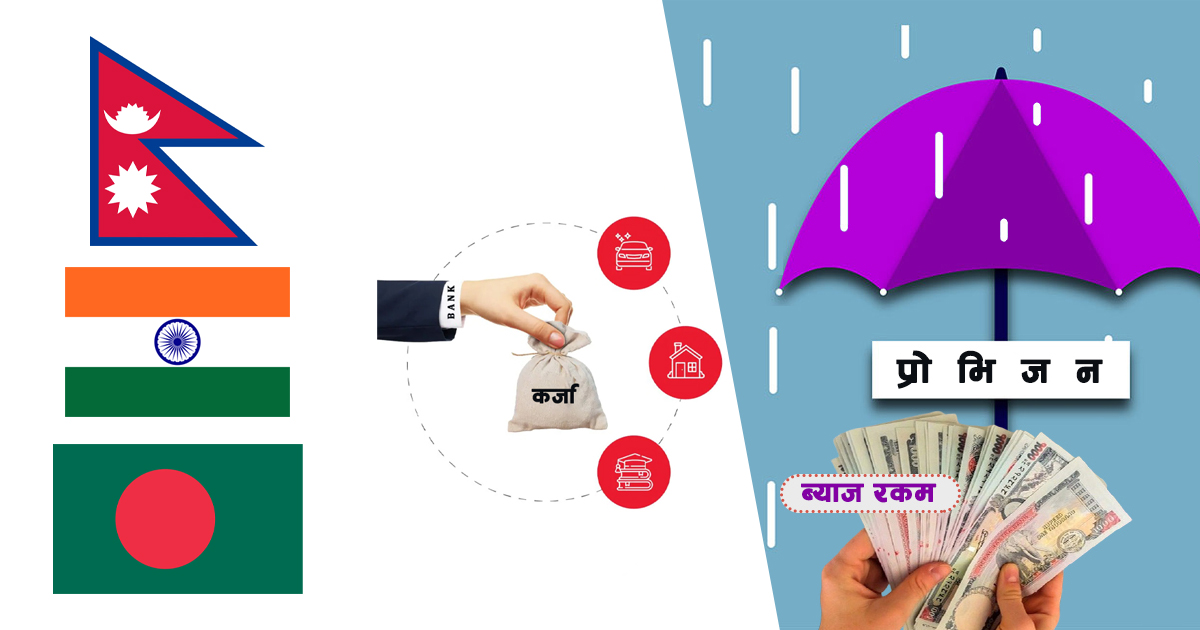
A comparative analysis of regional regulatory frameworks highlights the disparity between Nepal and its neighbours. In India and Pakistan, loans are generally classified as ‘Standard’ for up to 90 days of non-payment. While Nepal mandates a 100% provision after 365 days, Pakistan only requires such a total provision after 540 days.
Furthermore, Sri Lanka has fully transitioned to the ‘Expected Credit Loss’ (ECL) model under international accounting standards, which evaluates the actual probability of default rather than just the duration of the delay. Nepalese bankers argue that the current domestic system ignores the fact that even defaulted loans often result in zero actual loss because the bank can liquidate the collateral. The move from a “compliance-based” to a “risk-based” supervision model was supposed to address this, yet the central bank continues to rely on the outdated ageing system.
The delay in reform is also attributed to bureaucratic hurdles within the central bank. A study report on provisioning was reportedly prepared by the regulation department and submitted to the former Deputy Governor, Dr Neelam Dhungana Timsina, earlier this year.
However, the report remained unacted upon until her tenure ended, and the newly appointed Deputy Governor has shown little interest in moving it forward, reportedly citing the strong performance of specific banks like Everest Bank as a reason to maintain the status quo. This regulatory stagnation has created a double burden for banks, because the Income Tax Act only allows tax deductions for provisions up to 5 per cent of the total loan portfolio.
Banks with high non-performing loans (NPLs) are being forced to pay income tax on funds they have already set aside for potential losses. For instance, NIC Asia Bank’s provisioning has climbed to over 10 per cent of its total loans, significantly increasing its tax liability despite its internal financial pressures.
Currently, the average non-performing loan ratio in Nepal’s banking sector stands at 5.6 per cent, significantly higher than India’s 2.2 per cent but lower than the levels seen in Sri Lanka or Bangladesh. As the quality of credit continues to fluctuate, the divide between the regulator and the regulated remains sharp.
While the Nepal Rastra Bank has made minor adjustments, gradually reducing the provision for ‘Good’ loans from 1.3 per cent to the current 1 per cent, bankers insist that these are merely cosmetic changes. They maintain that without a fundamental shift toward an international risk-based model like ECL, the banking sector will continue to face capital constraints, ultimately hindering its ability to provide the credit necessary to stimulate the broader national economy.

Comment Here