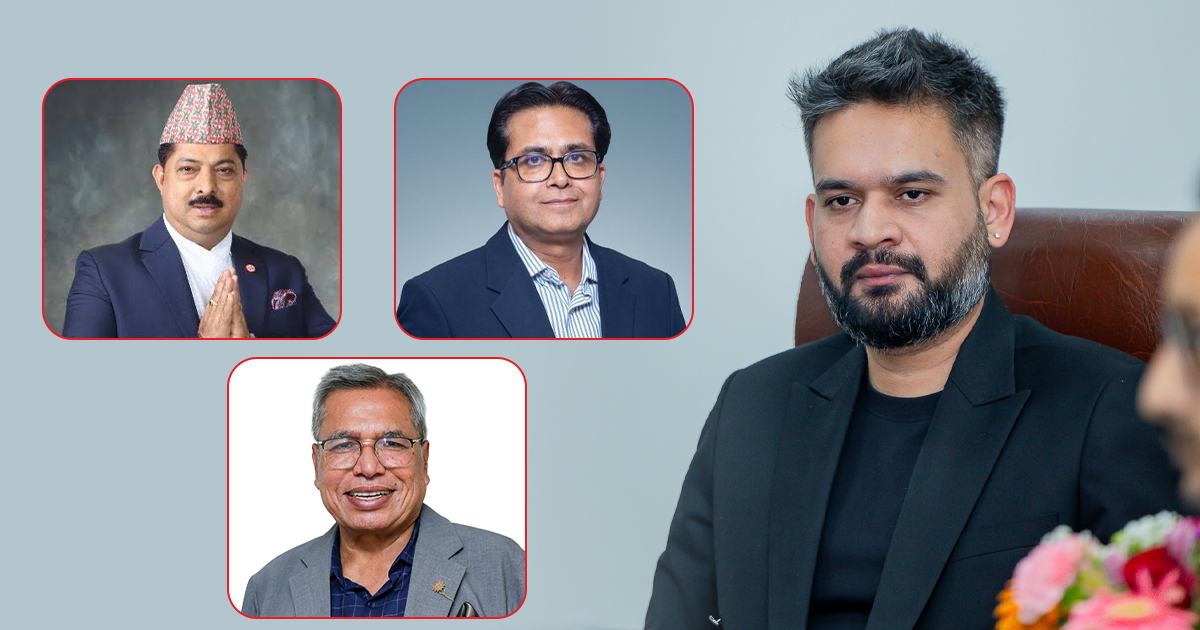

Kathmandu: Prime Minister Balendra Shah ‘Balen’ has expressed his government’s firm commitment to rejuvenating the nation’s sluggish economy and restoring the confidence of the private sector.
In his first formal engagement with representatives from major private sector umbrella organizations since taking office, the Prime Minister clarified that the government intends to move forward by positioning the private sector in the ‘driving seat’ of the economy. The high-level meeting, held at the Office of the Prime Minister and Council of Ministers, focused extensively on the current economic landscape, the investment climate, and the necessity of a robust partnership between the state and the business community.
The discussion saw participation from top leadership across the three major business bodies, including Anjan Shrestha, President of the Federation of Nepalese Chambers of Commerce and Industry (FNCCI), Rajesh Kumar Agarwal, outgoing President of the Confederation of Nepalese Industries (CNI), and Kamlesh Kumar Agarwal, President of the Nepal Chamber of Commerce (NCC), along with other senior executives.
Prime Minister Balen emphasized that economic prosperity remains his administration’s central priority, setting an ambitious target of achieving 7 percent economic growth within the next five years. To facilitate this, he urged business leaders to provide a comprehensive list of specific hurdles they face, promising that the government is prepared to reform acts and regulations to streamline operations.
Addressing a major concern raised by the private sector regarding the unnecessary harassment and detention of entrepreneurs, the Prime Minister clarified that the government has no policy or intention to trouble the business community. He stated that arresting entrepreneurs is counterproductive to the goal of creating a healthy industrial environment.
In response, the representatives urged the government to introduce legal provisions for “anticipatory bail,” arguing that no businessperson should be detained until allegations against them are proven. They believe such a move is essential for establishing a dignified and secure professional atmosphere in the country.
The meeting also highlighted the urgent need to boost capital expenditure to stimulate the market, noting that every unit of capital investment can trigger a fourfold increase in broader economic activity. Business leaders suggested that the government implement an immediate “action plan” at the beginning of the fiscal year to ensure efficiency.
Furthermore, they proposed the establishment of a dedicated “Private Sector Desk” within the Prime Minister’s Office. This specialized unit would allow advisors to listen to and resolve business grievances directly, circumventing the traditional bureaucratic red tape that often hinders progress.
Both sides reached a consensus on the immense potential for Nepal to lead South Asia in per capita income if natural resources are mobilized effectively and past policy failures are corrected. The discussion concluded with a focus on increasing the capacity of manufacturing industries and generating mass employment.
Following the session, business leaders expressed a sense of renewed optimism, noting that the Prime Minister’s attentive approach and his assurance that several of their demands are already being addressed have provided the sector with significant encouragement. Prime Minister Balen assured the delegates that these interactions would become a regular feature of his administration to ensure that private sector recommendations are prioritized and implemented.

Comment Here