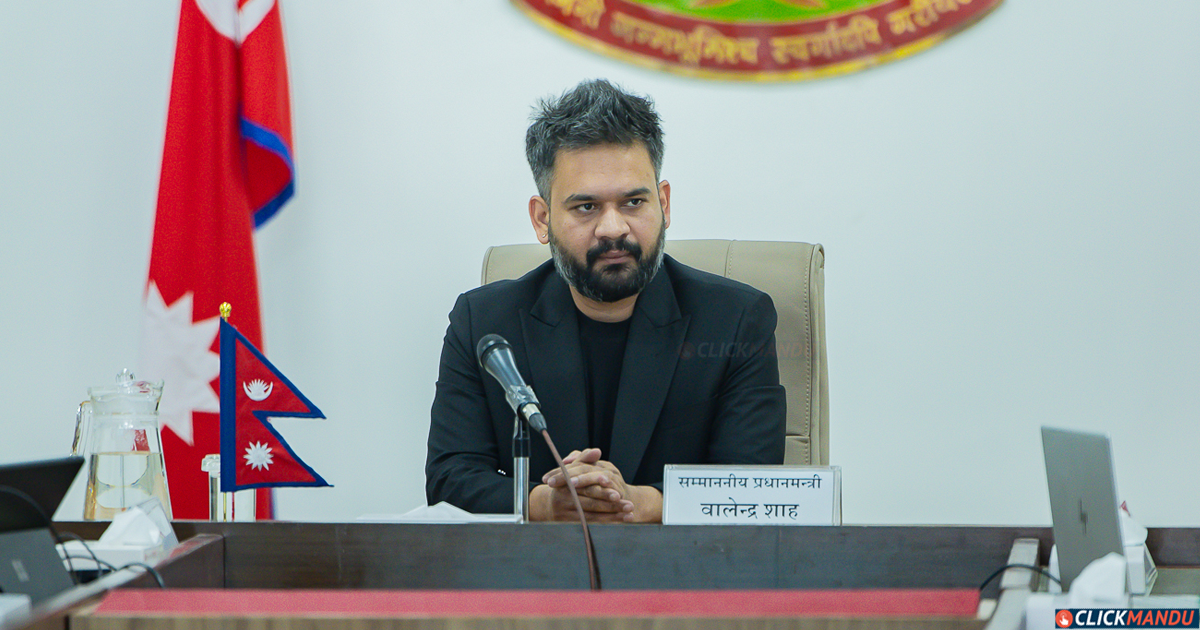

Kathmandu: Marking a significant departure from the practices of his predecessors, Prime Minister Balendra Shah ‘Balen’ held his first formal consultation with the private sector more than 100 days after taking office.
While previous administrations typically engaged with business leaders immediately upon their formation, Prime Minister Shah opted for a more deliberate approach, finally dedicating over an hour and a half to a high-stakes dialogue on Wednesday. This extended session, which tripled the originally allotted thirty minutes, underscored the Prime Minister’s genuine interest in understanding the deep-seated structural issues and the dampened morale currently plaguing the national economy.
The reaction from the business community following the meeting was overwhelmingly positive, with leaders expressing a sense of renewed hope for the nation’s economic trajectory. Deepak Malhotra, Senior Vice President of the Nepal Chamber of Commerce, characterized the discussion as exceptionally fruitful, noting that half of the psychological barriers affecting business morale were dismantled during the session.
Following the uncertainty of the recent Gen-Z movement and the subsequent dip in investment confidence, business representatives emerged from the Prime Minister’s office with a revitalized spirit, convinced that the administration’s pragmatic approach marks a turning point for industrial growth and national stability.
During the meeting, the Prime Minister prioritized listening to the specific grievances of the entrepreneurs before outlining his own expectations for reform. He challenged the attendees to move beyond abstract economic theories and instead present concrete, point-wise solutions to their problems. Stressing that the government is fully prepared to take decisive action, he urged the leaders to identify exactly where and how state intervention is required. According to participants, the Prime Minister was firm in his commitment to implementation, stating that if the private sector provides a tangible and realistic roadmap, the administration is ready to facilitate those requirements to ensure a more efficient and productive business environment.
To ensure continuous and structured communication, the Prime Minister proposed the formation of an informal committee comprising representatives from the three major private sector organizations, who will remain in regular contact with his secretariat. He issued immediate directives to his advisory team to maintain an open channel with business leaders to bypass unnecessary bureaucratic delays.
Addressing the sensitive issue of state surveillance and the arrest of certain business figures, the Prime Minister clarified that while the government has no intention of harassing legitimate entrepreneurs, it will not compromise on legal accountability. He dismissed the narrative that the state is unfairly targeting the business community, asserting that while the innocent need not fear, those involved in criminal activities will inevitably face the full force of the law.
A critical portion of the dialogue focused on the recent Monetary Policy, which the private sector leaders argued failed to address their urgent financial needs. In response to these concerns, Prime Minister Shah promised to host a joint consultative meeting involving the Nepal Rastra Bank, the Bankers’ Association, and the three primary business organizations to seek potential adjustments and ease existing financial constraints.
The high-level delegation included prominent figures such as FNCCI President Anjan Shrestha, CNI’s Rajesh Kumar Agarwal, and NCC President Kamlesh Kumar Agarwal, along with Rastriya Swatantra Party MP and industrialist Vidushi Rana, all of whom collectively emphasized the need for a more supportive fiscal and monetary environment to drive the country’s recovery.

Comment Here