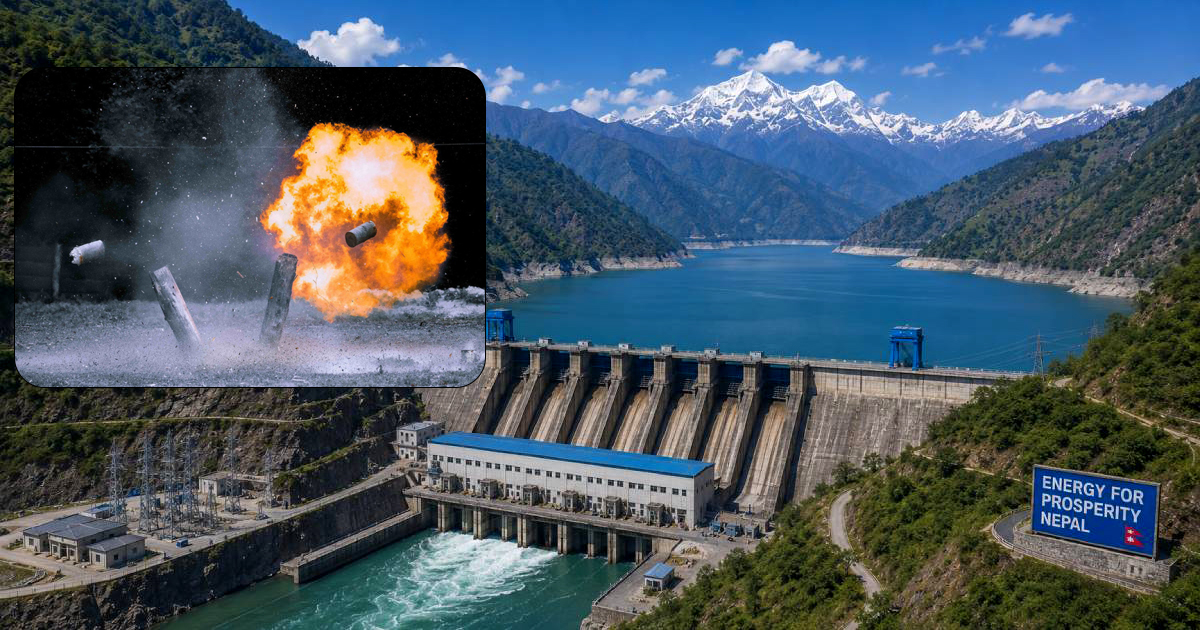

Kathmandu: The escalating conflict between the United States and Iran has sent unexpected shockwaves through Nepal’s infrastructure sector, leading to a critical shortage of industrial explosives.
This scarcity has hit the country’s hydropower and major construction projects hard, as these materials are indispensable for blasting rock to build tunnels, access roads, and highways. While the Nepal Army manages a limited domestic production line and Chinese-led projects often source their materials directly from China, the vast majority of explosives used in Nepal are imported from India. Since March, however, a severe disruption in the international supply chain has caused import volumes to plummet, leaving the industry in a state of high alert.
The impact of this shortage is staggering, with hydroelectric projects totalling a capacity of 5,700 megawatts currently under various stages of construction feeling the direct consequences. According to industry insiders, including Ananda Chaudhary, former Vice President of the Independent Power Producers’ Association, Nepal (IPPAN), tunnelling work has been partially or completely halted in more than half of the ongoing projects.
Nepal’s annual demand for explosives stands at approximately 7,000 tons and continues to grow as new projects are added each year. Currently, the Nepal Army’s internal production covers only 15 to 20 percent of this national requirement, leaving a massive 80 percent gap that must be filled by private importers sourcing from India.
Experts point to a combination of international geopolitical tensions, a domestic supply crisis within India, and Nepal’s own cumbersome administrative procedures as the primary drivers of this crisis. While the Russia-Ukraine war previously caused a modest price hike of 20 to 25 rupees per kilogram without halting supply, the current US-Iran conflict has led to a genuine scarcity of raw materials in the global market.
Major Indian manufacturers, particularly those based in the Nagpur and Bihar regions, are prioritizing their own domestic market due to these shortages. Furthermore, new and more stringent safety guidelines implemented in Indian factories have slowed production, causing the cost of materials at the border to surge by nearly 25 per cent.
Compounding these external factors is a domestic bureaucratic maze that slows down the import process even during stable times. Securing an import permit is an arduous journey that starts at the Department of Electricity Development, moves through the Nepal Army for security clearance, and finally reaches the Ministry of Home Affairs for final approval. Even with maximum urgency, this process takes a minimum of two months.
This administrative lag has led some developers to secure No Objection Certificates (NOCs) in advance; however, when projects face technical delays and do not import the materials immediately, it creates friction with Indian authorities.
In response to these inconsistencies, the Indian Embassy has tightened its regulations, currently issuing NOCs with a validity of only six months. If this window expires, developers are forced to restart the entire two-month-long bureaucratic cycle. This has become a significant bottleneck for the private sector, which is now calling for high-level diplomatic intervention.
Industry leaders argue that the Nepal government must engage with Indian officials to extend the NOC validity to at least one year and streamline the administrative hurdles to ensure that the country’s energy and infrastructure goals are not permanently derailed by global instability.

Comment Here