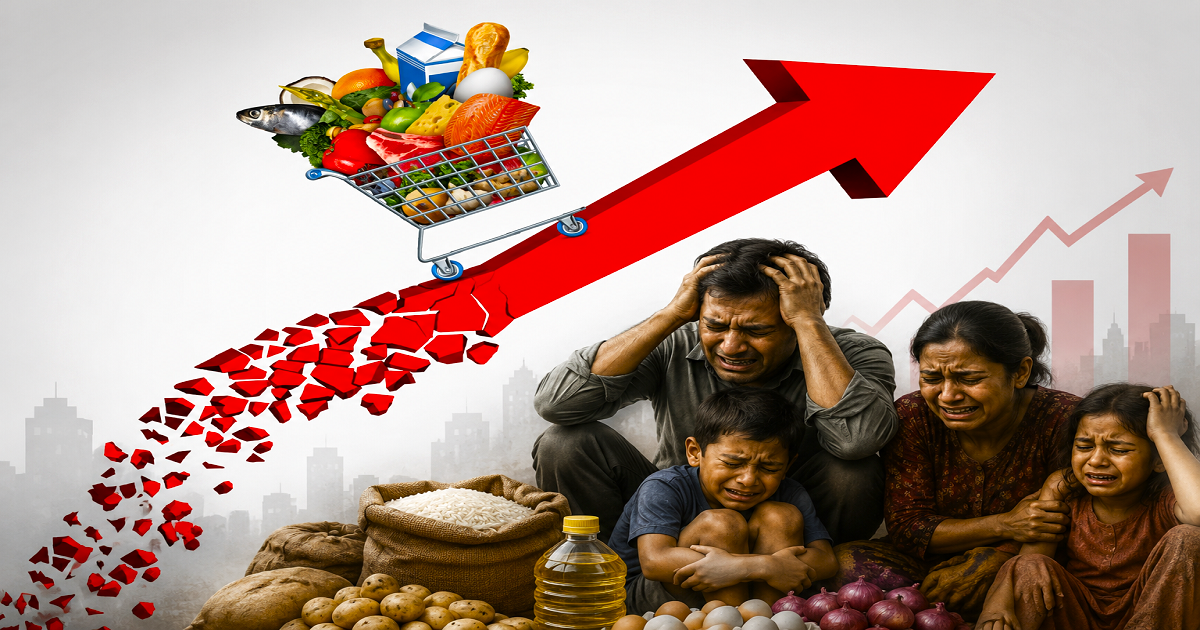

Kathmandu: The latest report from the Department of Commerce, Supplies, and Consumer Protection paints a grim picture for Nepalese households, revealing that kitchen expenses have become increasingly unbearable.
According to the price analysis for the month of Jestha in the fiscal year 2082/83, there has been an abnormal surge in the prices of essential food items and vegetables compared to the previous month. Data collected from six major cities indicates that low- and middle-income citizens are bearing the brunt of this inflationary pressure, as prices reach new heights for staples like rice, eggs, fruits, and green vegetables.
The most alarming findings are found within the vegetable market, where some items have seen a staggering price jump of over 250 percent. Specifically, the price of local small tomatoes skyrocketed by 253 percent in just one month, while tunnel-grown tomatoes saw a 158.6 percent increase. Other kitchen essentials were not spared; green chillies rose by 179.4 percent and taro jumped by 157 percent.
Even seasonal fruits like Dashahari mangoes became 160 percent more expensive, depriving consumers of affordable options even during peak production periods. This level of volatility signals a market that has become largely unregulated and chaotic.
While supply-demand imbalances play a role, the report identifies the dominance of middlemen as the primary driver behind these inflated costs. The journey of produce from the farm to the consumer’s table involves multiple layers of traders, each adding significant profit margins. This structure forces farmers to sell at low prices while consumers pay triple or quadruple the original cost.
The Department acknowledges that without breaking this intricate web of intermediaries and stabilizing market layers, the general public will continue to suffer from exploitation. The lack of transparency in the supply chain is further evidenced by the fact that even when the US dollar rate dipped slightly, the benefits never trickled down to the average shopper.
Basic staples such as rice and lentils have also remained volatile, with Kathmandu emerging as the most expensive city in the country. For instance, the average price of Sona Mansuli rice in Kathmandu reached 95 rupees per kilogram, whereas it remained at just 60 rupees in Birgunj. This massive price disparity highlights deep-rooted issues in transportation logistics and market management. High petroleum prices, which remained at 217 rupees for petrol and 225 rupees for diesel during the reporting month, have kept shipping costs elevated, directly impacting the final price of every imported and domestic commodity.
Beyond domestic issues, international geopolitical tensions have also cast a shadow over the Nepalese market. Conflicts in the Middle East, particularly between Iran and Israel, have disrupted global supply chains, leading to increased costs for shipping containers and maritime freight. As an import-dependent nation, Nepal is highly sensitive to these external shocks and fluctuations in the global monetary market. These factors, combined with domestic syndicates and cartels, have significantly eroded the purchasing power of the average citizen, making daily sustenance a growing challenge.
To address this escalating crisis, the Department suggests that mere market monitoring is insufficient and calls for bold policy interventions. Breaking the syndicate of middlemen by establishing direct links between farmers and cooperatives or government mechanisms is essential.
The report emphasizes the need for increased domestic production, improved food storage capacities, and the mandatory labelling of Maximum Retail Prices (MRP) on all consumer goods to prevent price gouging. Furthermore, the development of a transparent, technology-based monitoring system is vital to protect consumers from the ongoing exploitation by private monopolies and intermediaries in the future.

Comment Here