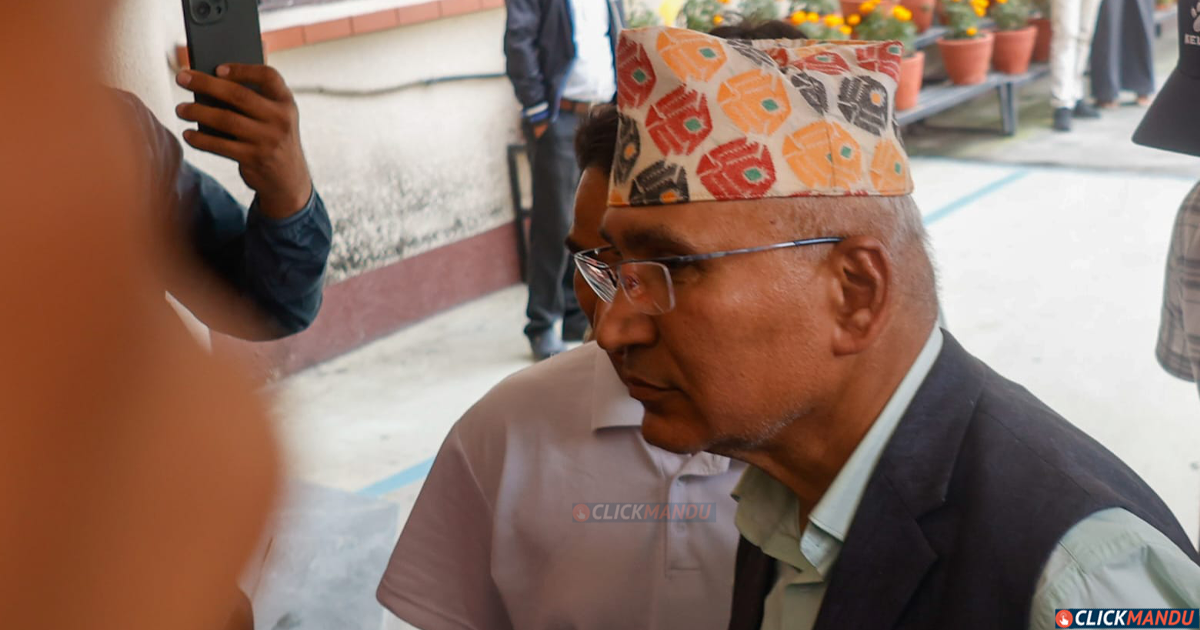

Kathmandu: In a significant legal development that has sent ripples through Nepal’s political and financial sectors, former Finance Minister and senior leader of the CPN-UML, Bishnu Paudel, has formally responded to the money laundering charges filed against him at the Special Court.
According to the detailed indictment, Paudel has issued a categorical and staunch denial of all allegations, characterizing the charges as entirely fabricated, baseless, and devoid of any evidentiary support. The case, which revolves around the alleged abuse of ministerial authority to facilitate illegal financial gains and license procurements for certain business interests, represents one of the most high-profile anti-money laundering actions in recent Nepali history. Paudel’s defence rests primarily on the structural argument that, as a Finance Minister, his jurisdiction did not extend to directing autonomous regulatory bodies, thereby making the accusations of his interference legally and procedurally impossible.
Addressing the core of the prosecution’s case regarding the licensing of Himalayan Reinsurance and various micro-insurance companies, Paudel argued that the Nepal Insurance Authority operates as a fully autonomous entity under existing laws. He asserted that the legal framework governing the insurance sector does not provide any provision that allows a Finance Minister to issue direct orders or influence the licensing process.
During his formal statement to the court, Paudel emphasized that the decision to grant or withhold licenses for reinsurance or insurance firms lies solely within the statutory power of the Authority. He claimed that the attempts to link him to these licenses, as well as other controversial financial policies such as the API policy, broker licensing, and the establishment of a new stock exchange, are part of a narrative constructed without any factual basis. By positioning himself as a policymaker who respected institutional boundaries, Paudel aims to dismantle the prosecution’s claim that he acted as a shadow coordinator for these lucrative business permissions.
One of the most contentious aspects of the indictment involves Paudel’s alleged role in the share transfer of Shreeram Tobacco Industry Pvt. Ltd. The prosecution claims that Paudel used his significant political and ministerial influence to compel the original owners of the tobacco company to transfer a 20 percent stake to Himalayan Assets, a firm allegedly under the control of the controversial businessman and co-defendant, Deepak Bhatta.
The indictment suggests that this high-value asset was transferred at a significantly undervalued price as a “commission” or “favour” for Paudel’s help in securing other government benefits for Bhatta. However, Paudel has dismissed these claims as a total distortion of reality. He admitted to having a passing acquaintance with the directors of the tobacco company, such as Chunna Prasad Sharma and Kamal Kishor Malpani, but explained that this was merely because they were residents of his home electoral district. He maintained that knowing a constituent is a normal part of political life and does not equate to a secret business partnership or the brokering of illegal share transfers.
Paudel’s defence further clarified his relationship with Deepak Bhatta, a figure often described in the media as a powerful power-broker within Nepal’s administrative circles. While the prosecution alleges that Paudel orchestrated a complex scheme to help Bhatt launder money and hide the illegal sources of his wealth, Paudel argued that he has never been involved in Bhatt’s private business transactions.
He stated that he had no knowledge of any dividends or massive payouts received by Bhatt’s companies and had certainly not used his office to build a “protective mechanism” for Bhatt to bypass money laundering regulations. Paudel insisted that any mutual transactions or business dealings between private individuals or entities are their own responsibility and that a minister cannot be held accountable for the financial movements of people they simply happen to know. This “arm’s length” defence is intended to counter the narrative of a quid pro quo relationship between the political leadership and the business elite.
The indictment also touched upon the controversial policy regarding the import of betel nuts, an area long associated with smuggling and revenue leakage in Nepal. Paudel defended his role by pointing out that the primary responsibility for such matters lies with the Ministry of Industry, Commerce, and Supplies.
He explained that the Finance Ministry’s involvement was limited to providing a consensus for a proposal to be taken to the Cabinet, based on the identified industrial needs and the necessity of ensuring that imports are not misused. He emphasized that the consensus given by his ministry was a broad policy move and was not targeted at favouring any specific firm, such as Shreeram Tobacco. Furthermore, Paudel claimed he was entirely unaware of any ongoing investigations by the Department of Revenue Investigation against the tobacco firm at the time, arguing that it is “beyond imagination” to suggest he would facilitate a company while it was under legal scrutiny.
Another significant charge involves the alleged plan to hand over the license or the “Yak” brand of the state-owned Janakpur Cigarette Factory to Shreeram Tobacco. Paudel countered this by citing a specific Cabinet decision from April 2082, which aimed at managing the government’s investment in seven “sick” public enterprises that were incurring heavy losses. He noted that the decision included several iconic but struggling units like Gorakhkali Rubber Industry and Udayapur Cement, alongside the Janakpur Cigarette Factory.
The goal, according to Paudel, was to reduce the financial and administrative burden on the state by exploring management models or liquidation, as per the Public Enterprises Management Act. He argued that this was a transparent, collective decision of the Council of Ministers intended for the national interest, rather than a secret plan to gift a public brand to a private associate.
Concluding his statement, Paudel reiterated his commitment to the law and his record as the coordinator of the high-level steering committee for the prevention of money laundering. He argued that it would be paradoxical for someone in his position, tasked with strengthening the nation’s anti-money laundering framework, to actively participate in the very crimes he was supposed to prevent.
He denied ever assisting Deepak Bhatta or anyone else in concealing the illegal origins of assets or misusing his ministerial influence for personal gain. Paudel’s defence is a multifaceted appeal to the principle of institutional autonomy, the formalities of Cabinet-level decision-making, and the distinction between political social circles and illegal business conspiracies. As the Special Court proceeds with the trial, Paudel’s testimony sets the stage for a high-stakes legal battle that will test the boundaries of ministerial accountability and the robustness of Nepal’s financial regulatory system.

Comment Here