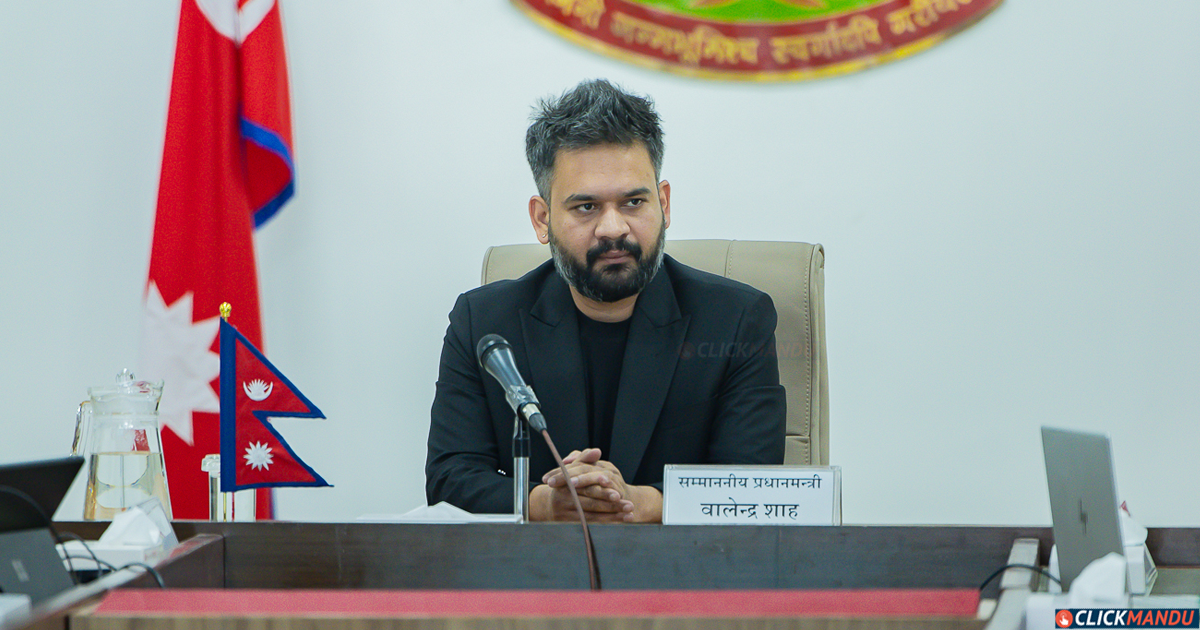

Kathmandu: Prime Minister Balendra Shah (Balen) held an extensive discussion with executive members of the Nepal Readymade Garment Industry Association on Tuesday, focusing on the country’s economic landscape and critical issues facing the manufacturing sector.
The meeting, which lasted for roughly an hour and a quarter, went beyond conventional bureaucratic talks; rather than simply listening to grievances, the Prime Minister took immediate action by calling relevant authorities on the spot to direct solutions.
According to Association President Pashupati Dev Pandey, the meeting felt less like a formal government briefing and more like an open, one-on-one family conversation. After listening to a comprehensive overview of the hurdles and prospects within the garment sector, Prime Minister Shah contacted the Minister of Industry and the Industry Secretary right in front of the delegates.
Pandey noted that the directives were issued mid-conversation, prompting the association leaders to head straight to the Ministry of Industry afterwards, where they agreed with the minister and secretary to begin working point-by-point starting the very next day.
During the discussion, the Prime Minister instructed officials to immediately formulate procedures and establish a committee to revive closed and distressed industries. He also emphasized expediting the previously proposed formation of a “Textile and Clothing Development Council.”
A major talking point during the meeting was the historical context of Nepal’s garment sector, particularly how the country exported ready-made garments worth over 400 million US dollars prior to 2005. The Prime Minister stressed that this level of export must not only be revived but substantially surpassed. Highlighting regional comparisons, President Pandey pointed out that a single company in Sri Lanka employs 60,000 workers, suggesting that Nepal should aim to attract similar large-scale manufacturing operations.
The dialogue also explored ways to secure smoother market access for Nepali garments in China and India, as well as leveraging Free Trade Agreements (FTAs)—similar to the models used by Egypt and Jordan—to expand trade with the United States. Noting the rapid progress made by countries like Vietnam, Bangladesh, and Sri Lanka, Pandey stated that the Prime Minister appeared receptive to amending outdated legal hurdles, acts, and procedures to mirror their success.
Furthermore, the Prime Minister assured the industrialists that work would begin immediately on establishing the “Green Garment Village,” a project outlined in government policies and programs though budget allocations had lagged. The government also committed full support toward curbing illegal cross-border smuggling and developing technical schools or universities dedicated to the textile industry.
President Pandey hailed the meeting with the Prime Minister as historic. He noted that the Prime Minister’s proactive approach, personally reaching out to business leaders and inviting them for discussions, clearly demonstrates that the current administration is pro-private sector. He added that the Prime Minister firmly believes the private sector is the backbone of the national economy and that a thriving economy is essential for nation-building.
Pandey revealed that he received multiple calls to schedule the meeting even while he was away in India, pointing out that prior governments had rarely accorded such high priority to industrialists and entrepreneurs. Remarking on the Prime Minister’s proactive engagement without any formal lobbying from their side, Pandey remarked that such active involvement for the sake of the economy is unprecedented.
Following the initial 75-minute meeting with the Prime Minister, the industrialist delegation spent an additional hour and a half in detailed discussions with the Prime Minister’s secretariat team. Representing the government side, Pradip Pariyar and members of the secretariat met with a five-member team from the association led by President Pandey, during which a formal joint written suggestion and charter of demands was submitted to the Prime Minister.

Comment Here