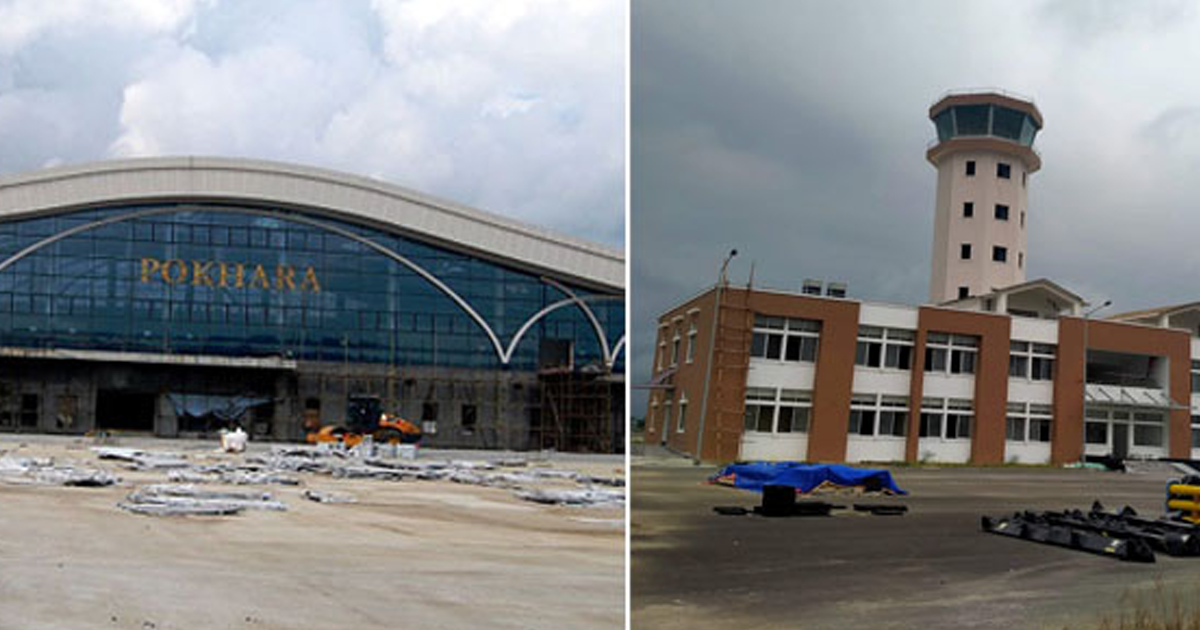

Kathmandu: Facing a persistent lack of international traffic at the newly constructed Pokhara and Bhairahawa international airports, the government has introduced a renewed incentive package to attract global carriers.
These facilities, built with nearly 40 billion rupees sourced from foreign loans and internal treasury funds, have struggled to become operational hubs since their inauguration. To address this, a cabinet meeting held on Wednesday decided to waive all landing, parking, and navigation fees for international airlines operating at these two airports until mid-September 2028.
The scale of the investment in these infrastructures is immense, with the government securing a 22-billion-rupee loan from China for Pokhara and an 8-billion-rupee loan from the Asian Development Bank for Bhairahawa. According to the Civil Aviation Authority of Nepal (CAAN), when land acquisition costs are included, the total expenditure exceeds 40 billion rupees. Despite this massive spending, international flights remain stalled as airlines cite a lack of long-term market viability and passenger demand, leaving the airports to be sustained almost entirely by domestic traffic.
In addition to the total waiver of aeronautical fees, the government has revised the ground handling charges managed by Nepal Airlines Corporation, offering a 50 percent discount to international operators. This decision extends a previous incentive plan that was due to expire this August, pushing the timeline back by another two years. While the previous administration had offered a higher 75 percent discount on ground handling, the current government has adjusted it to 50 percent while maintaining full exemptions on other regulatory and tourism-related levies.
The financial advantages for airlines choosing these regional hubs over Kathmandu are significant. Beyond the waived landing and parking fees, the government has also exempted the 3,000-rupee passenger service fee and the 1,000-rupee tourism service fee per traveller. Furthermore, the Nepal Oil Corporation is providing aviation fuel at a much lower rate outside the capital. While a kiloliter of international aviation fuel costs US$ 1,566 in Kathmandu, it is priced at only US$ 1,100 in Pokhara and US$ 1,085 in Bhairahawa, offering a subsidy of up to US$ 481 per kilolitre.
When all these concessions are calculated, an international carrier operating a standard 150-seat narrow-body aircraft stands to save over 700,000 rupees per flight in fees and fuel costs compared to operating at the Tribhuvan International Airport. Specifically, the waivers from CAAN and the ground handling discounts from Nepal Airlines account for a benefit of approximately 700,000 rupees, while the fuel price difference adds tens of thousands more in savings. Despite these lucrative offers, the government continues to face the uphill task of convincing the international aviation industry that these airports are sustainable destinations for the long term.

Comment Here