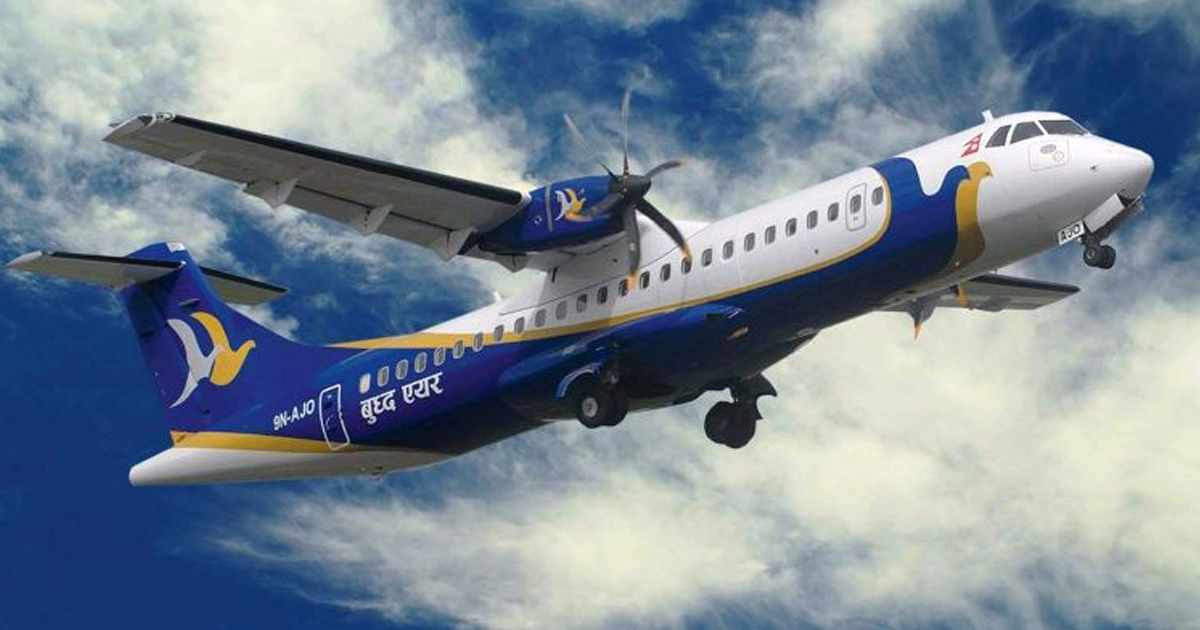

Kathmandu: Nepal’s largest domestic carrier, Buddha Air, has maintained a healthy financial position despite mounting pressure from higher fuel costs, weaker passenger demand and rising maintenance expenses. The airline continues to enjoy a dominant market position and a strong balance sheet; profitability has come under pressure over the past year due to external shocks, particularly the sharp increase in aviation fuel prices.
One of the biggest setbacks came in April 2026, Nepal’s busiest tourism month. Passenger traffic declined by around 33 percent compared to April 2025. The fall was largely attributed to the conflict in West Asia, which pushed up global oil prices and, in turn, the price of Aviation Turbine Fuel (ATF). The increase in fuel costs led airlines to raise airfares, reducing passenger demand and affecting revenue growth.
The pressure continued throughout the fiscal year. During the first nine and a half months of FY2025/26, Buddha Air carried around 10 percent fewer passengers than during the same period a year earlier. The decline was also influenced by the retirement of three aircraft from its fleet, reducing available capacity at a time of rising operating costs.
Profit margins narrow
Although the airline has continued generating stable revenue, its operating profitability has weakened considerably.
Operating Profit Margin (OPM), which stood at approx 19.4 percent in FY2025, fell sharply to approx 8.2 percent during the first 9.5 months of FY2026. The decline reflects a combination of higher fuel prices and significantly increased maintenance expenditure.
Aircraft engines require major overhauls after completing a prescribed number of flying hours, and several of these expensive maintenance checks were undertaken during FY2026. At the same time, fuel prices rose sharply, further squeezing operating margins.
Another indicator reflecting the pressure is the gap between Revenue per Available Seat Kilometre (RASK) and Cost per Available Seat Kilometre (CASK). The spread has narrowed to around Rs 2.8, compared to approximately Rs 8.9 in FY2019, marking its lowest level in five to six years. This indicates that operating costs have increased much faster than revenue, leaving the airline with considerably lower profit per seat flown.
Debt burden declines
Despite weaker profitability, Buddha Air has significantly strengthened its balance sheet by reducing debt.
The airline has continued repaying long-term loans ahead of schedule while also reducing short-term borrowings. As a result, its gearing ratio improved from 1.4 times in January 2025 to 1.0 time in April 2026, indicating lower dependence on borrowed funds.
Debt reduction has been supported by retained earnings, early repayment of long-term loans and lower short-term borrowings. A lower debt burden also reduces financial risk by decreasing future interest and repayment obligations.
The airline’s Debt Service Coverage Ratio (DSCR) currently stands at 2.0 times, suggesting that it generates roughly twice the cash required to meet its debt repayments. A DSCR above one generally indicates that a company can comfortably meet its loan obligations, making the current level financially sound.
However, the ratio was partially supported by insurance proceeds received after one aircraft was damaged, meaning the figure is slightly stronger than it would have been based solely on normal business operations.
Leverage increases as earnings soften
While overall debt has declined, another leverage indicator has weakened because operating earnings have fallen.
The airline’s Total Debt to OPBDITA ratio increased to 3.8 times, compared to 1.6 times previously. The ratio suggests that current debt equals nearly four years of operating earnings before depreciation, interest and taxes. Although debt has fallen, reduced operating profits have made this measure appear weaker.
Strong market position supports financial stability
Despite these challenges, Buddha Air continues to dominate Nepal’s domestic aviation market. The airline has been operating for nearly 29 years, currently flies a fleet of 15 aircraft, and commands around 57 percent of the domestic passenger market. Its long operating history, established brand, customer loyalty and economies of scale continue to provide significant competitive advantages.
However, increasing competition remains a challenge. Passenger Load Factor (PLF), a key measure of seat occupancy, has declined to around 83 to 85 percent in recent years from nearly 92 percent in FY2022. Maintaining healthy occupancy levels will become increasingly important as the airline plans future fleet expansion.
Strong liquidity and conservative dividend policy
The airline also maintains a healthy liquidity position. Working capital remains well managed, receivables are under control and inventory requirements are relatively low. In addition, approximately 71 percent of its sanctioned borrowing limits remain unused, providing substantial financial flexibility should additional funding be required.
Buddha Air has also adopted a conservative dividend policy. In both FY2024 and FY2025, it distributed only around 1 percent of annual profits as dividends, retaining approximately 99 percent of earnings within the business. This has strengthened shareholders’ equity and reinforced the company’s balance sheet.
While rising fuel prices, higher maintenance costs and softer passenger demand have weighed on profitability, Buddha Air continues to benefit from its strong market leadership, prudent debt management, healthy liquidity and conservative financial strategy. The company’s ability to maintain passenger demand, improve operating margins and manage costs amid increasing competition will remain critical to sustaining its financial performance in the coming years.

Comment Here