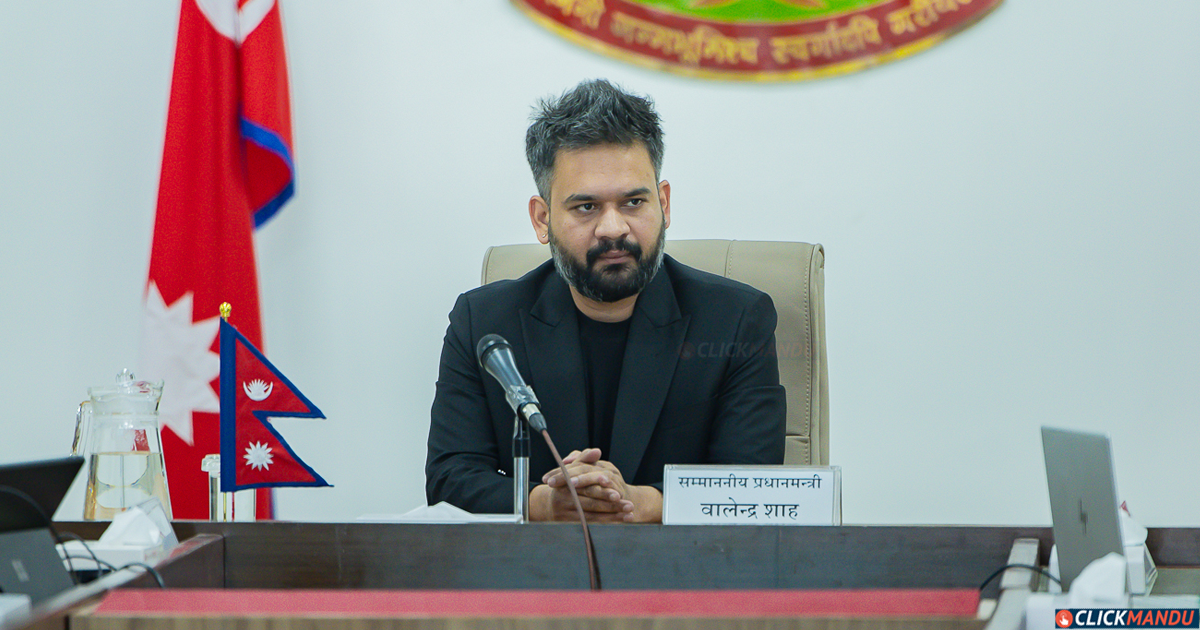

Kathmandu: Prime Minister Balendra Shah recently held a high-level discussion at Singha Durbar with representatives from Nepal’s organic agriculture sector to address long-standing hurdles in production, certification, and export.
The meeting primarily focused on creating a more favourable environment for organic products such as tea, coffee, and spices, which currently face significant challenges in reaching global markets. Key industry figures, including the leadership of the Organic Association and prominent tea estate owners, highlighted that the primary obstacle is the absence of a domestic, internationally recognized organic certification body.
Currently, the lack of such an official entity forces exporters to seek expensive foreign certification, which PM Shah responded to by directing the Ministry of Agriculture and his secretariat to prepare a detailed roadmap and budget for establishing a local certification institution.
During the forty-minute session, entrepreneurs expressed deep concern over the massive disparity in government support for chemical versus organic fertilizers. They pointed out that while the current budget allocates a staggering 32.46 billion rupees for chemical fertilizers, only a meager 360 million rupees has been set aside for organic and green manure.
Describing this policy as counterintuitive to the nation’s organic goals, the delegation urged the government to provide subsidies for organic fertilizers equivalent to those provided for Urea and DAP. Prime Minister Shah acknowledged these concerns, informing the group that a new “Organic Fertilizer Subsidy Procedure” is currently in the development stage to help expand the capacity of Nepal’s existing organic fertilizer factories.
The discussion also touched on the financial burden of maintaining international standards for export-oriented products such as orthodox tea, ginger, and turmeric. Business leaders requested the government to reinstate the 75 percent subsidy on certification costs that was previously available and proposed a minimum 10 percent export subsidy for all organic agricultural goods. To further incentivise the sector, they suggested integrating organic farmers into carbon credit programs, thereby providing additional income streams for eco-friendly practices.
PM Shah assured the entrepreneurs that the government is committed to policy reforms and is exploring the creation of a dedicated “Organic Agriculture Act” to provide a solid legal framework for production and market management.
Furthermore, the entrepreneurs proposed a strategic shift in government procurement policies to boost the domestic market. They recommended that government-run mess halls, including those in schools, hospitals, the army, and the police, be mandated to prioritize the purchase of Nepali organic products.
Branding Nepal as an organic nation in the global market was another key suggestion, with the entrepreneurs offering their unconditional cooperation and technical expertise to help the government achieve this vision. Prime Minister Shah concluded the meeting by emphasizing that the government views the organic sector as a priority for economic growth and promised to move forward with both policy and practical improvements based on the industry’s feedback.

Comment Here