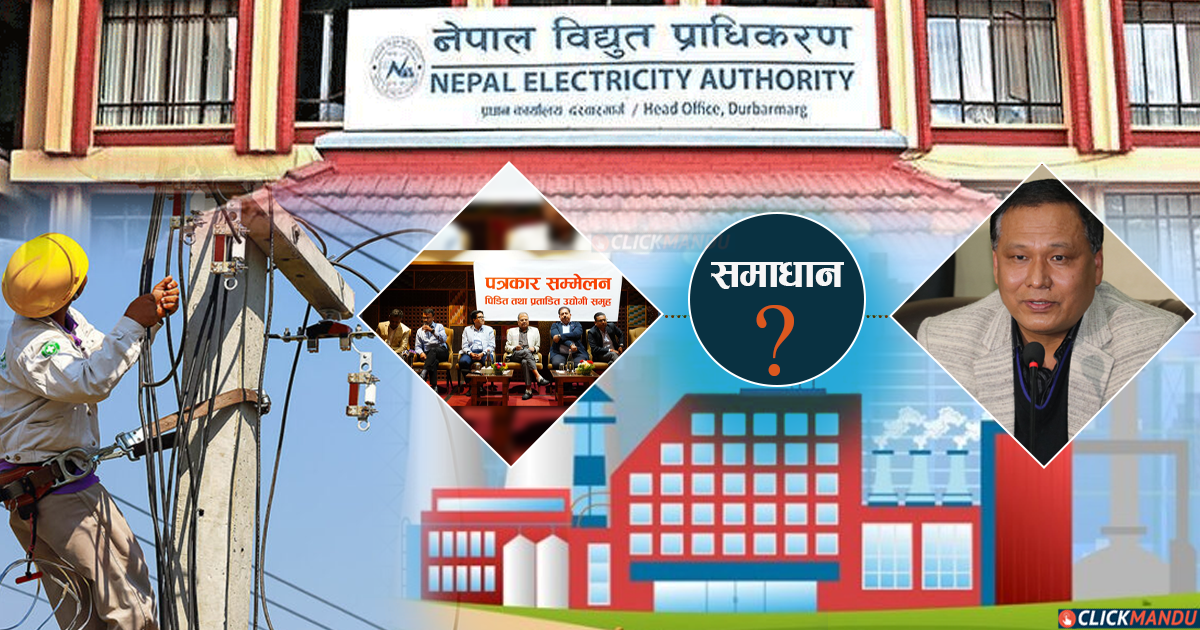

Kathmandu: Newly appointed Minister for Energy, Water Resources and Irrigation Kulman Ghising has started his ministerial work by signing his first decision to recover outstanding dues from dedicated feeders and trunk lines.
On Monday, after being sworn in as minister for three ministries including Energy, he assumed office at the Energy Ministry in Singha Durbar and immediately took the decision to collect arrears.
Ghising had already attempted to recover such dues during his tenure as Executive Director of the Nepal Electricity Authority (NEA). He had claimed that industries owed around Rs 220 billion for using dedicated trunk lines, while industrialists argued that the bills provided by the NEA were fraudulent and refused to pay. When asked for Time-of-Day (TOD) metre data to verify consumption, Ghising could not provide it, and the NEA has still been unable to supply the information.
This lack of evidence is why the dedicated and trunk line dispute has remained unresolved for years. In fact, it was partly due to this controversy that then–Prime Minister KP Sharma Oli’s cabinet removed Ghising as Executive Director on 24 March 2025, replacing him with Hitendra Dev Shakya.
Now, as Energy Minister and ex-officio chair of the NEA, Ghising’s push to recover dues is being seen as an attempt to pressure the NEA’s “Review Committee,” which is legally empowered to decide whether dues are collectible. If parties are unsatisfied with the committee’s verdict, they have the option of going to court.
Previously, industries had deposited 5 percent of their claimed dues as a deposit and appealed to the Review Committee. Though the NEA even offered installment facilities of up to 56 tranches, the committee has yet to issue a ruling. Courts, meanwhile, have refused to grant interim orders (stay orders) without industries first going through the committee process.
Industrialists argue that Ghising, both as Executive Director and now as Minister, is trying to bypass due legal procedure and forcefully impose payments.
“If the state itself ignores procedure and takes the law into its own hands, who will invest in such a country?” one businessman asked, saying they now feel threatened.
Most people understand this as industries not paying their electricity dues. In reality, industries have been paying their regular bills with a 2 percent discount for timely payment. The dispute is specifically about premium charges applied for uninterrupted supply during load-shedding years.
In 2015, the NEA board decided to impose extra fees on industries using dedicated feeders during power cuts. But the Electricity Tariff Fixation Commission initially did not approve this. Later, in January 2016, the commission permitted premium charges only if customers received 24 hours of uninterrupted power.
Thus, the dispute centres on whether industries actually received uninterrupted supply. Industries demand proof via TOD metre data, but the NEA has not provided it. The same applies to trunk line customers, for whom premium charges were approved under conditions that they received over 20 hours of electricity during days with 6+ hours of load-shedding.
The NEA, however, issued backdated bills in 2019, years after the actual consumption period (2015–2018). Industries argue this violates conditions and that they never received the uninterrupted supply required for premium rates to apply.
Industrialists say they are willing to pay if proof is given that conditions set by the tariff commission were met. The NEA insists they must pay for the entire period.
Past governments even formed a commission led by former judge Girish Chandra Lal Yadav to study the issue, which recommended settlement based on TOD metre data. The Oli government directed the NEA to implement this, but it was never carried out. Ghising had resisted then as Executive Director, and now, as Minister, his enforcement of arrear collection is expected to spark fresh conflict.

Comment Here