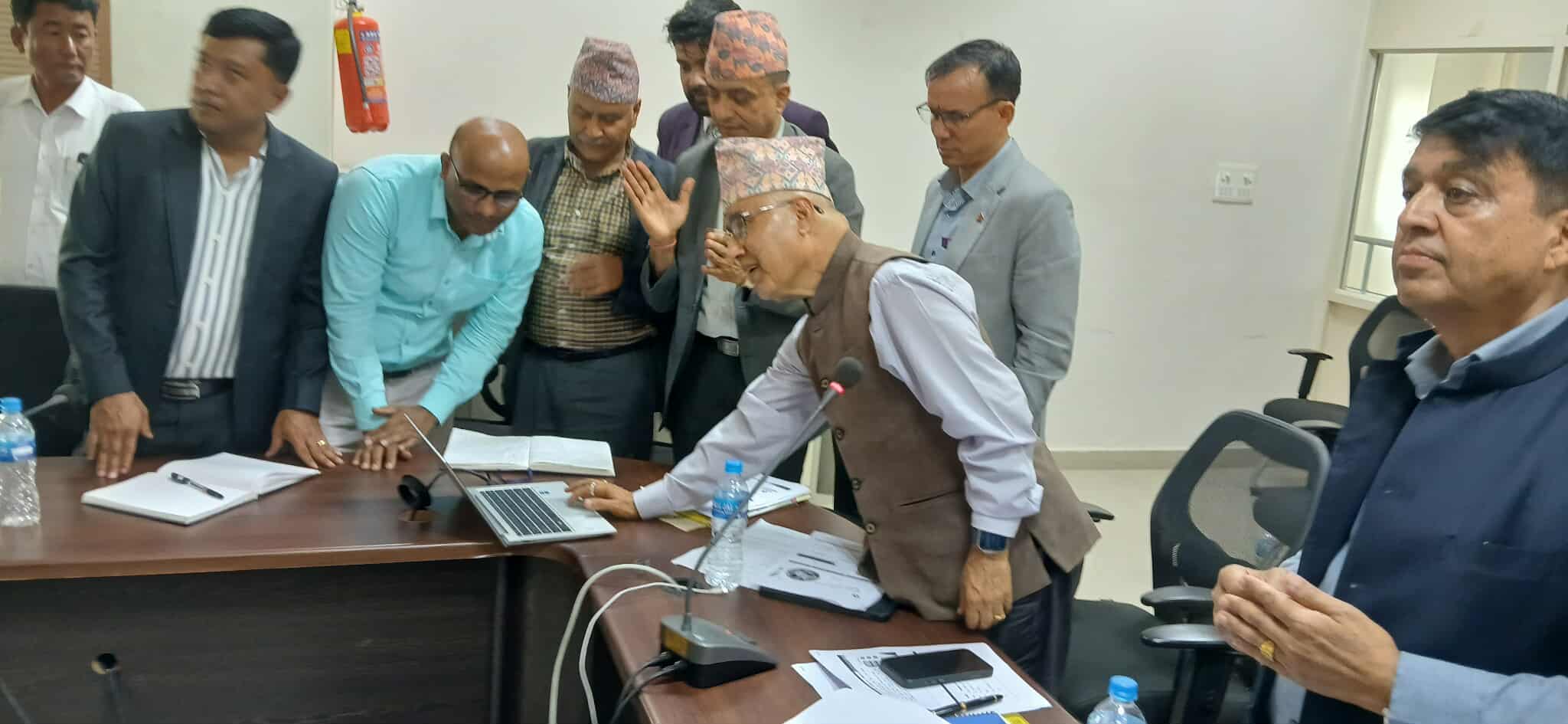

Biratnagar: Replacing the much-criticized reference price list that the private sector had opposed from the beginning, the Department of Customs has launched a pilot project of the valuation database system at the Biratnagar Customs Office starting Wednesday. The department plans to extend this system to other major customs offices soon.
Finance Minister Rameshore Khanal, inaugurating the system, expressed confidence that it would simplify customs clearance, make investigations quicker, and facilitate legitimate trade. He emphasized that the government had chosen to replace the reference price list by trusting the private sector more, ensuring customs values are based on actual transaction values, and making the process fair, transparent, and consistent. According to him, this will hold businesses accountable and also reduce operational costs.
Minister Khanal further explained that the new system will curb fraudulent practices such as declaring sugar imports as rice. “Generation Z’s demand for ethical conduct and an end to corruption applies not only to public institutions but also to the private, community, and cooperative sectors,” he said, adding that he had delivered this message strongly to private sector representatives in Biratnagar.
For the first time in Nepal’s customs history, an electronic system allowing self-declaration–based customs valuation and clearance has been introduced. Khanal argued this would reduce trade costs, eliminate unnecessary transactions, and encourage honesty among businesses. If businesses cooperate to make the Biratnagar pilot successful, the system will be rolled out nationwide. It will also deploy an electronic risk engine to detect revenue leakages and investigate suspicious transactions at their destination—ending the practice of stopping trucks on highways.
Customs Department Director General Shyam Prasad Bhandari said the system will detect under- and over-invoicing, strengthen post-clearance audits, and increase revenue. He explained that the reference price list had led to distortions: when invoice prices were higher, imports were still cleared at lower reference prices, enabling hundi transactions; and when invoice prices were lower, traders declared imports at higher reference prices to avoid fines, resulting in unnecessary capital outflows.
Meanwhile, at a discussion with industrialists organized by the Morang Trade Association, Minister Khanal urged the private sector not to expect sweeping reforms from the current government, noting it lacked the authority to go beyond the constitutional mandate. He said he was ready to act as a retaining wall for the private sector until election codes of conduct take effect.
Recalling that the Generation-Z movement had erupted because both state and private sectors engaged in corruption benefitting only a few, Khanal urged businesses to reform themselves as well. He stressed that the government is prepared to be a partner to the private sector, but businesses must also be accountable to the nation and the state.
In the presence of Federation of Nepalese Chambers of Commerce and Industry (FNCCI) President Chandra Dhakal, Khanal stated that the government had already met all the demands raised by the private sector for revival after recent arson and destruction. “The government has fulfilled every business demand to help you rise from the ashes,” he said, adding that he believed in proving himself through action rather than words, and that providing relief to citizens was his foremost duty.
FNCCI President Dhakal also welcomed the replacement of the reference price list, saying it addressed a long-standing demand of the private sector. He urged the government to guarantee security and create a conducive investment environment for recovery.

Comment Here