
Biratnagar: The unstable politics that emerged after the Gen-Z movement, along with incidents of arson, looting, and announcements of protests by various groups, has caused the country’s economic activities to slow down significantly.
Following the Gen-Z movement, imports of industrial raw materials and commercial goods through the Jogbani border have decreased substantially, leading to a nearly 40 percent drop in customs revenue collection. This indicates a slowdown in the nation’s economic activities.
Representatives from the private sector analyze that until an environment conducive to investment is created and a stable government is formed with consistent policies, there will be no opportunity for new investments. Moreover, with the current situation raising concerns about how to secure existing investments, the country’s economic activities have come to a near standstill.
Due to the lack of investment security, industrialists and business owners are not adding to their investments, leaving the market stagnant. Without increased activity in the market, economic growth is impossible. With no demand for loans, financial institutions are forced to sit on piled-up deposits. Business leaders believe that the accumulation of deposits in financial institutions is clear evidence of the economic slowdown.
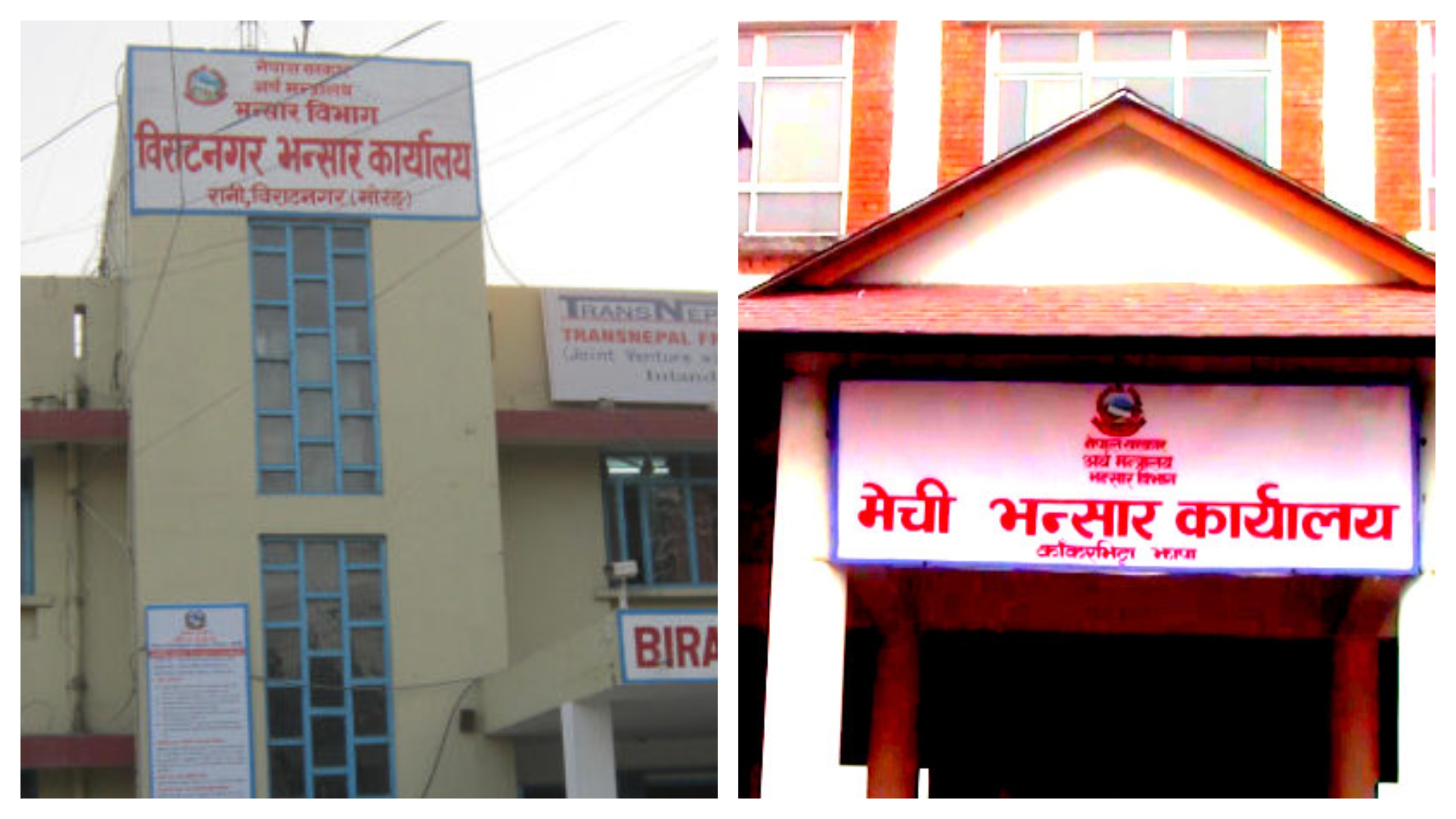
For the same reasons mentioned, economic activities in Koshi Province are also sluggish. This is confirmed by the province’s main trade border at Jogbani. In other words, trade transactions through the Jogbani border via the Biratnagar Customs Office have decreased by nearly 40 percent.
Although the daily target is to collect Rs 130 million in revenue, under normal circumstances, the Biratnagar customs border used to collect an average of nearly Rs 100-110 million in daily customs revenue. After the Gen-Z movement, the average daily customs revenue collection from this border has been only Rs 60-70 million.
Biratnagar Customs Chief Umesh Shrestha said, “In recent times, with imports and exports through the Jogbani border decreasing, customs revenue collection has also dropped by nearly 40 percent.”
In Kartik, the target was to collect Rs 3.56 billion in revenue. However, as of Thursday, only 31 percent, or 1.10 billion, has been collected. “Imports of industrial raw materials have decreased drastically,” Shrestha said, “Along with that, the import of commercial goods from third countries has also declined, affecting customs revenue collection.”
Last year in Kartik, this office collected Rs 2.38 billion in revenue. In Bhadra this year, with a target of Rs 3.50 billion, only Rs 2.80 billion was collected, and in Ashoj, with a similar target, Rs 2.88 billion was collected, according to the data.
The basis for revenue collection at Biratnagar Customs is the import of industrial raw materials. The customs office collects 70 percent of its annual target revenue from imports of industrial raw materials. The remaining 30 percent comes from imports of commercial goods.
Nand Kishor Rathi, President of the Morang Industry Organization, commented that there is currently no environment for new investments or increasing industrial production. “In the current atmosphere of fear, no one is thinking of making new investments. Market demand is practically zero,” he said. “There is fear about what tomorrow might bring. In such a situation, industrialists and business owners in Koshi are stressed about how to protect their existing investments.”
Rathi stated that there is no talk of new investments, and Koshi’s industrialists and business owners are tense about how to safeguard their current investments and whether they can continue their industries and businesses.
“There is no possibility of economic activities increasing until a stable government is formed,” said Anupam Rathi, President of the Morang Industry and Trade Association. “With the government itself unstable, there is no question of economic activities growing. After the Gen-Z movement, all organs of the state are unstable. In such a situation, the question of industrialists making new investments does not arise. At this time, industrialists and business owners are focused solely on how to keep their investments secure.”
Pawan Kumar Sarada, President of the Nepal Confederation of Industries Koshi, says that the morale of the private sector has been shattered after the Gen-Z movement. He accuses the government formed after the movement of failing to address the private sector’s grievances. Sarada said, “Due to the unstable government, the private sector is unable to invest, which has weakened the country’s economic activities.”
He added that there are problems in protecting existing investments and no environment for new ones. “Even Finance Minister Rameshore Khanal has not provided much support to the private sector,” Sarada said. “The state has not provided industrial security, and with industrialists and business owners not receiving the facilities they deserve, the industrial and trade sectors have been affected. The deposit subsidy that the government used to provide has also been cut.”
Sarada’s reaction is that the economic activities have declined also because the government has not refunded VAT and excise duties, including the deposit amounts kept when importing industrial raw materials.

Comment Here