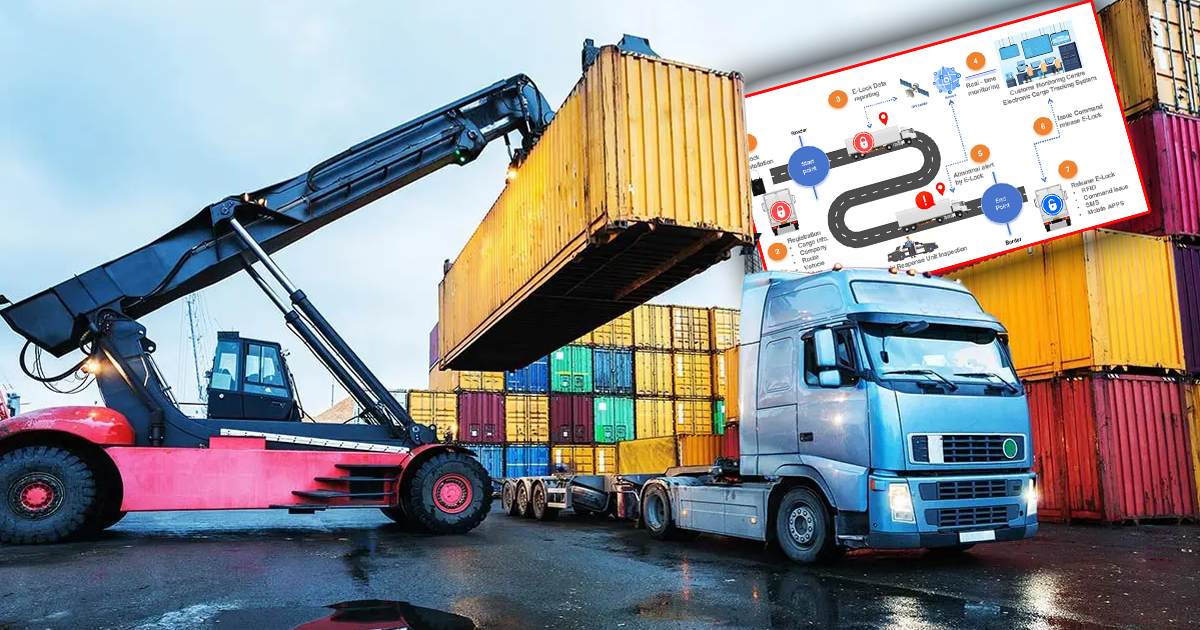

Biratnagar: Following the amendment to the protocol of the Nepal-India Transit Treaty, the route has been opened for transporting all types of industrial raw materials and finished industrial products via cargo rail from Bathnaha in India to the Integrated Check Post (ICP) customs yard in Biratnagar.
Two years ago, on the very day the cargo rail service from Bathnaha (India) to Biratnagar ICP was inaugurated, the transit treaty was renewed between the two countries. However, only four specific commodities could be transported through this rail route at that time.
The renewed treaty had allowed Nepali businessmen to import only cement, clinker, coal, and fertilizer from third countries via sea using the Bathnaha–Biratnagar rail route. As a result, the rail link had become practically useless for industries in the Sunsari–Morang industrial corridor.
On the inauguration day of 1 June 2023, the first cargo train arrived from Bathnaha carrying 2,400 tons of industrial raw material for Aarti Strips Industry. After that, no cargo train had entered the Biratnagar customs yard.
Industrialists in the region had expected that transporting industrial raw materials and commercial goods from India and third countries via cargo rail would save 35–40 percent in transportation costs and significantly reduce transit time.
During a conference in Visakhapatnam, Nepal’s Minister for Industry, Commerce and Supplies, Anil Kumar Sinha, met India’s Commerce and Industry Minister Piyush Goyal in New Delhi. Following the meeting, officials from both countries exchanged letters related to the protocol amendment, formally amending the treaty protocol.
Nandkishor Rathi, President of the Morang Industry Organization, said that it has become easier for Nepali businessmen to bring all types of cargo to the Biratnagar customs yard.
He added that if the government can resolve loading and unloading issues at the Nepali yard, industrialists and businessmen will be able to easily bring goods directly from ports to the Biratnagar customs yard. According to him, loading–unloading and handling charges at the Biratnagar customs yard are extremely high. Unless Nepal adopts the same loading–unloading and handling charges as in India, the cargo rail service will remain meaningless for industrialists in the region.
When importing sponge iron through the Integrated Check Post (ICY), the combined loading–unloading charge and transportation cost for up to 25 km is Rs 664 per ton, with an additional parking fee of Rs 32 per ton, making the total cost Rs 696 per ton to the factory.
Unless Nepal adopts the same loading–unloading and handling charges as in India, the cargo rail service will remain meaningless for industrialists in the region.
In contrast, when the same sponge iron is brought through the Nepal Customs Yard (NCY) at Biratnagar ICP, loading–unloading costs Rs 400 per ton and transportation up to 25 km costs Rs 360 per ton — a total of Rs 760 per ton.
Thus, importing sponge iron via ICY costs Rs 696 per ton, while via NCY it costs Rs 760 per ton — a difference of Rs 64 per ton in favour of ICY, according to a study by Rakesh Surana, former president of the Morang Industry Organization.
A single rake carries at least 2,500 tons of sponge iron. Compared to NCY, bringing sponge iron via ICY saves Rs 160,000 per rake in transportation costs alone. “Since bulk transportation via ICY is significantly cheaper than NCY, industrialists are more attracted to ICY,” Surana said.
“Industrialists always want to reduce production costs as much as possible to make products cheaper. However, even though the NCY was established for the convenience of Nepali industrialists, importing raw materials through it has turned out to be very expensive, rendering the NCY ineffective. Unless the government reviews the high charges imposed through NCY, domestic industrialists and businessmen will not be able to use the platform,” Surana stated.
Apart from sponge iron, importing MS wire-rod (the main raw material for GI wire, gabion boxes, etc.) through ICY is Rs 168 per ton cheaper than through NCY.
Importing MS wire-rod via ICY costs Rs 440 per ton for loading–unloading and transportation up to 25 km, plus Rs 32 per ton parking fee — totaling Rs 472 per ton.
The same MS wire-rod via NCY costs Rs 400 for loading–unloading and Rs 240 for transportation — totaling Rs 640 per ton. Thus, ICY is Rs 168 per ton cheaper.
“The new decision has opened the way for bringing cargo by rail. But the government must simplify the loading–unloading and handling charges that we have been requesting for a long time,” Rathi said.
“This issue was discussed earlier as well. We have already requested concessions in charges. If the government does not understand this, the cargo rail service will have no justification for industrialists.”
He claimed that only if loading–unloading and handling charges are made reasonable will imports by rail become beneficial, and smuggling and under-invoicing currently occurring through the customs point will also stop.
Pawan Sarawagi, President of the Koshi Province chapter of the Federation of Nepalese Chambers of Commerce and Industry (FNCCI), reacted that the protocol amendment now allows all types of goods, including container cargo, to be brought by rail. Nepali businessmen can now easily bring all kinds of cargo to the Biratnagar customs yard, he said, but a lot of work still remains to be done on the Nepali side.
“Some problems still exist on the Nepal side. The railway yard is complete, but since no station has been built at Katahari, trains cannot yet reach there. Railway work on the Nepal side is not fully completed,” Sarawagi said.
“Progress on the work done so far in Nepal has not even been shared with stakeholders. Nevertheless, the path is now definitely open to bring all goods.”
Industrialists believe that transporting goods by cargo rail will eliminate smuggling of goods due to the open border, as well as leakage and damage that occur during container imports.
Industrialists in the Sunsari–Morang industrial area, who currently pay IRS 3–4 per kg to bring industrial raw materials by truck and container from Kolkata to Biratnagar customs, had hoped that the Bathnaha–Biratnagar cargo rail service would allow them to transport raw materials at lower cost and reduce overall production costs.
However, even two years after the inauguration of the cargo rail service, industrialists in the region have not benefitted from it. They say they have been forced to continue importing raw materials by truck and container at high freight rates, preventing them from reducing production costs.
Even two years after the inauguration of the cargo rail service, industrialists in the region have not benefitted from it.
Transporting industrial raw materials by cargo rail from Kolkata to Biratnagar ICP costs only IRS 1.95 per kg — 35–40 percent cheaper than truck and container transport.
The cargo rail service, regarded as a potential “game-changer” infrastructure for reducing logistics costs of industries in the Sunsari–Morang industrial corridor, had effectively become “all hype and no substance” for local industrialists even two years after inauguration due to policy flaws by the government.
Ninety percent of the raw materials used by industries in the Sunsari–Morang industrial corridor come from Kolkata port in India. On average, 300 trucks enter Nepal daily through the Biratnagar checkpoint carrying industrial and commercial goods, of which more than 150 trucks carry bulk cargo. Although goods can now be brought from Visakhapatnam port as well, industrialists say very little cargo for the Biratnagar route actually arrives from that port.

Comment Here