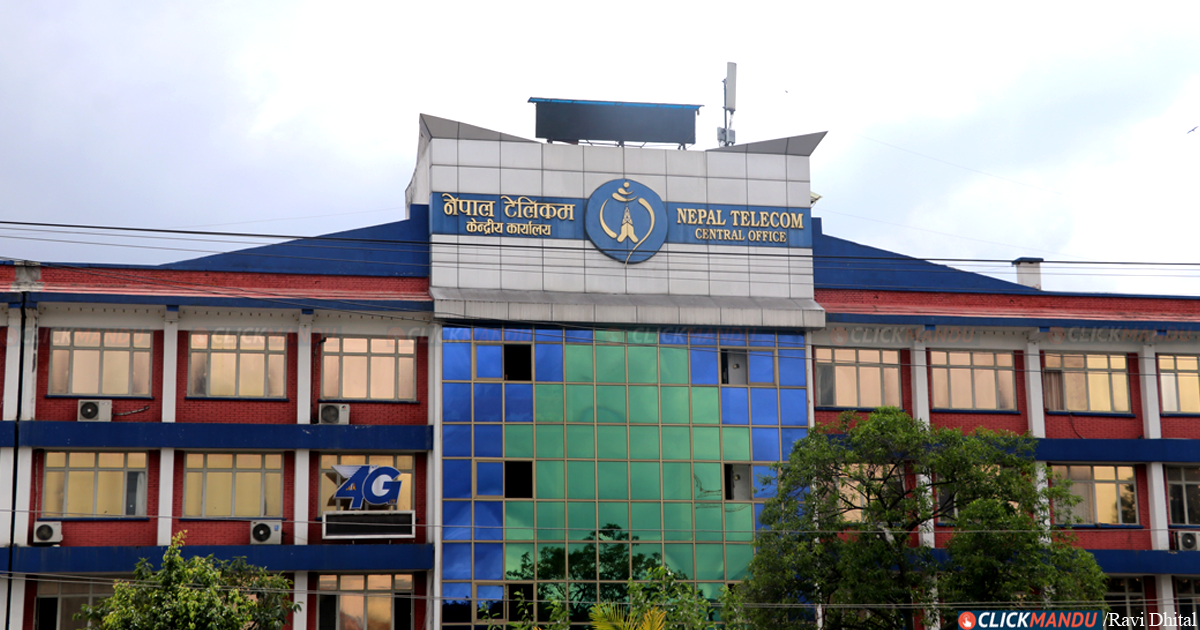

Kathmandu: A government-appointed investigation has exposed widespread irregularities and apparent collusion in Nepal Telecom’s tender for a new unified billing system, a project worth over Rs 4.33 billion.
The state-owned telecom company, already under pressure to modernize and compete with private operators, now faces serious allegations of manipulating the procurement process to favour a single vendor.
The high-level committee, chaired by former secretary Maniram Gelal and formed on the instructions of Minister for Communications and Information Technology Jagadish Kharel, concluded that Nepal Telecom deliberately structured the tender to benefit one bidder—widely believed to be China’s Huawei Technologies. Technical specifications were narrowly drafted to match the capabilities of a specific supplier, while legitimate competitors were effectively excluded from the race.
The investigation found that the company’s board, on 18 March 2025, approved last-minute changes to the bidding documents that inflated the original project cost from Rs 3.98 billion to Rs 4.33 billion. The bid evaluation committee itself was formed in violation of both the Public Procurement Act 2007 and Nepal Telecom’s own financial regulations, notably by omitting a required legal expert. Additional clauses were inserted into the tender documents that deviated substantially from the standard template mandated by the Public Procurement Monitoring Office, again without obtaining the necessary approvals.
In the latest bidding round that closed on 7 May 2025, only two companies submitted proposals: Whole Cloud Technology Company Limited (China) and Huawei Technologies. Nepal Telecom disqualified Whole Cloud at the technical evaluation stage and advanced only Huawei to the financial round—a decision now being challenged in the Patan High Court, where the case remains under review.
The probe also highlighted a clear conflict of interest: the tender allowed companies already operating Nepal Telecom’s core network to bid for the billing system as well. Such overlap, the committee warned, heightens the risk of revenue leakage and compromises the security of customer data. Moreover, the proposed system completely ignores the country’s upcoming transition to 5G, meaning taxpayers will face additional multibillion-rupee costs in the near future to retrofit a platform that should have been future-proof from day one.
The committee criticized Nepal Telecom for extending its existing billing contract with Chinese firm AsianInfo Linkage Technologies in early 2023, leaving just two years on the current deal, an artificially tight timeline that added urgency to rush the new procurement.
In its recommendations, the panel urged the telecom giant to significantly broaden technical specifications to encourage genuine competition, strictly adhere to public procurement laws, use only approved standard bidding templates, and ensure that core network operators and billing system providers remain separate entities. It also stressed the need for any new platform to fully support 5G and the latest global standards from the outset, while prioritizing customer data protection and fair market competition.
As Nepal’s largest telecommunications provider grapples with declining market share and the urgent need to roll out next-generation services, this scandal has cast a harsh spotlight on governance and transparency at the heart of the country’s digital infrastructure. The government has yet to announce whether the controversial tender will be scrapped and relaunched under stricter oversight.

Comment Here