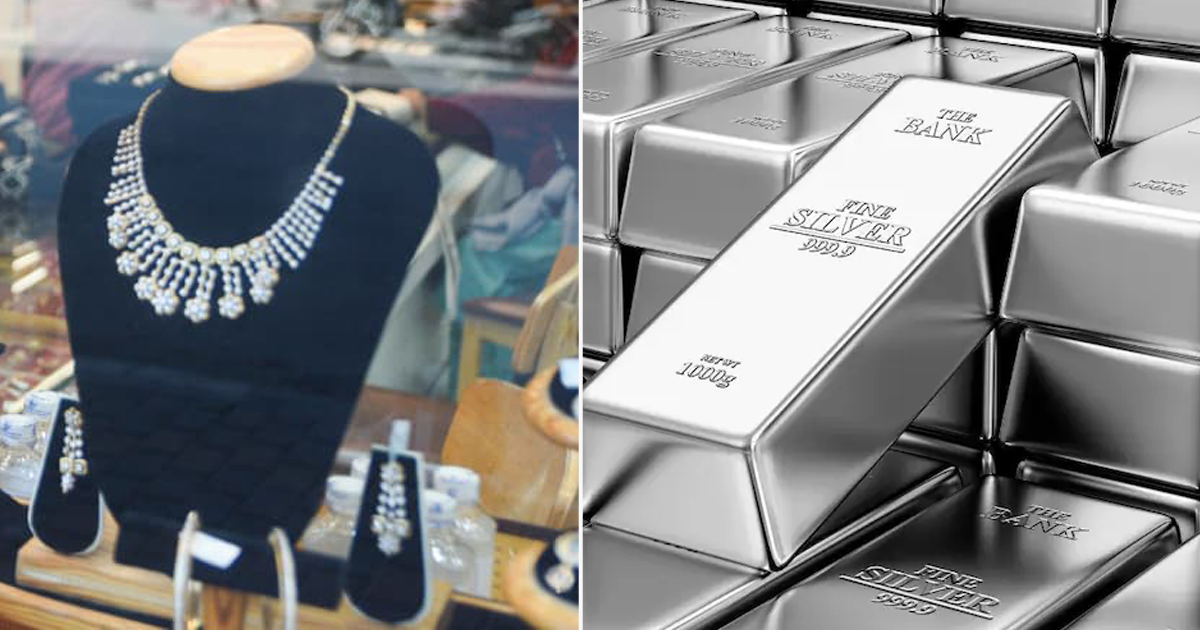

Kathmandu: Nepal is facing an acute shortage of silver, with availability in the domestic market dropping sharply since late December and worsening further with the start of the New Year. What began as a mild supply constraint in the final week of December has now escalated into a severe shortage by early January, leaving buyers unable to source silver and disrupting normal market activity.
The scarcity became most pronounced during the first week of January, corresponding to the second and third weeks of the Nepali month of Poush. With silver virtually unavailable, consumers across the country are struggling to make purchases, and many are returning empty-handed from jewellery stores. The impact is visible even in Kathmandu, where most small and large gold and silver shops have run out of silver altogether.
Business owners say dozens of customers are being turned away daily due to the lack of supply. The Federation of Nepal Gold and Silver Dealers’ Association has confirmed that the shortage has forced many potential buyers to abandon their purchases, as traders simply have no silver to sell.
According to the federation’s General Secretary, Kiranbhai Bajracharya, Nepal is currently experiencing an unprecedented shortage across the entire market. He said the problem stems from a near-total disruption in supply, driven largely by conditions in the international market.
“The global shortage of silver and the sharp rise in its price have directly affected Nepal,” Bajracharya said. “International suppliers have stopped supplying silver to Nepal since the beginning of January. As a result, traders have not been able to sell even a single gram of silver since January 1.”
Senior Vice President of the federation, Deyasratna Shakya, echoed the concern, noting that silver has not entered the Nepali market since the turn of the year. He explained that the last shipment arrived through Citizens Bank before January began, and no imports have taken place since then.
Under normal circumstances, Nepal consumes between 400 and 500 kilograms of silver daily. During peak seasons such as weddings, religious ceremonies, and festivals like Tihar, daily consumption can rise to as much as 1,000 kilograms. Although Poush is not traditionally a strong season for silver sales, Shakya said demand has increased as consumers seek to store silver at home as a form of asset, driven by global uncertainty and rising prices.
Shakya added that while the process to import silver through three banks is currently underway, no shipments have yet reached the market. He warned that the ongoing shortage poses a serious risk of hoarding and black-market activity, where a single large buyer could manipulate supply and prices. He stressed that the state needs to take this risk seriously.
The price of silver has also reached historic highs. In 2025, silver prices climbed to their highest level in 46 years. By the end of that year, international prices surged to around US$ 170.1 per unit, marking the sharpest increase since 1979.
The banking sector has also acknowledged the shortage. Kumari Bank CEO Ramchandra Khanal said that banks have been unable to import silver through formal channels despite efforts to do so. He explained that soaring global prices and extremely limited availability have made suppliers unwilling to deliver silver. In addition, stricter physical supply controls in China have further constrained the market.
In response to domestic pressure, Nepal Rastra Bank has introduced measures to ease silver imports. Importers who previously could bring silver into the country only once a month are now allowed to import up to four times the earlier value in a single shipment
Most of Nepal’s silver imports traditionally come from Dubai, which sources semi-processed silver from global markets, including China, refines it, and exports it worldwide. Over time, Dubai has emerged as a major silver trading hub for countries such as Nepal and India. However, disruptions upstream have now affected this supply chain as well.
Globally, silver mining, processing, and production have been slowing due to rising costs, reduced investment, and a stronger US dollar. At the same time, demand for silver has expanded dramatically. Beyond its traditional use in jewellery and as a store of value, silver is now a critical industrial metal used in solar panels, electronics, electric vehicles, defense equipment, batteries, medical devices, and advanced technologies. Geopolitical tensions and strategic stockpiling by major powers have further tightened global supply.
In response to domestic pressure, Nepal Rastra Bank has introduced measures to ease silver imports. Importers who previously could bring silver into the country only once a month are now allowed to import up to four times the earlier value in a single shipment. The central bank has increased the maximum import limit from US$ 500,000 to US$ 2 million per shipment for eligible importers, although such imports are still limited to once per month.
Similarly, smaller traders who were allowed to import up to US$ 100,000 worth of silver per shipment can now import up to US$ 400,000 at once, provided they do so only once a month. The policy aims to reduce transaction costs and logistical burdens that arose from multiple smaller imports.
Meanwhile, China’s recent policy shift has emerged as a major factor behind the global silver crunch. From 1 January 2026, China began enforcing a strict licensing regime for silver exports, significantly narrowing the export and delivery process. Due to declining domestic reserves, the Chinese government now requires special licenses for silver exports, a policy that also applies to tungsten and antimony—two metals over which China holds strong global supply dominance.
Under the new rules, only government-approved companies are eligible for export licenses, while new and small exporters are excluded. This has effectively halted silver exports through smaller traders, meaning Chinese individuals and companies can no longer freely export or sell silver abroad. Analysts say the move is part of China’s broader strategic and economic planning.
The policy is expected to affect global industrial and defense supply chains, particularly in the United States. As a result, international silver prices have climbed further, with silver in Nepal currently trading at around Rs 238,900 per kilogram.
China considers silver a strategic resource, given its growing importance in technology and industrial production. International media report that the policy is designed to secure domestic supply for sectors such as jewelry manufacturing, electronics, solar energy, electric vehicles, defense production, pharmaceuticals, and advanced manufacturing.
Nepal, meanwhile, has seen a steady decline in silver imports over the past several years. Customs Department data show that imports began falling from fiscal year 2019/20 onward
For 2026 and 2027, China has authorized only 44 state-approved domestic companies to export silver and has publicly released their list. In the first 11 months of 2025 alone, China exported more than 4,600 tonnes of silver, while importing only about 220 tonnes during the same period.
The move has drawn global attention. Tesla CEO Elon Musk reacted on social media platform X, calling the development “serious” and warning that silver is essential to many industrial processes. The United States has also added silver to its national list of critical minerals, further intensifying geopolitical competition.
Nepal, meanwhile, has seen a steady decline in silver imports over the past several years. Customs Department data show that imports began falling from fiscal year 2019/20 onward. While Nepal imported more than 167,000 kilograms of silver in fiscal year 2018/19 and over 107,000 kilograms in 2017/18, annual imports have since dropped to between 32,000 and 50,000 kilograms.
In the first five months of the current fiscal year alone, Nepal has imported 42,347 kilograms of silver. The country primarily sources silver from Dubai, Turkey, Hong Kong, China, and Switzerland.
On the global stage, Mexico remains the world’s largest silver producer, with annual output of around 6,400 metric tonnes. China follows with approximately 3,300 metric tonnes, while Peru produces about 3,100 metric tonnes annually. Poland, Chile, and Bolivia also rank among the top producers.
Hong Kong stands out as the world’s largest exporter of silver, shipping roughly 4,750 metric tonnes annually. It is followed by China, the United Kingdom, the European Union, and Mexico. As global supply tightens and strategic competition intensifies, Nepal’s silver shortage appears to be part of a much larger global realignment—one that shows no immediate signs of easing.

Comment Here