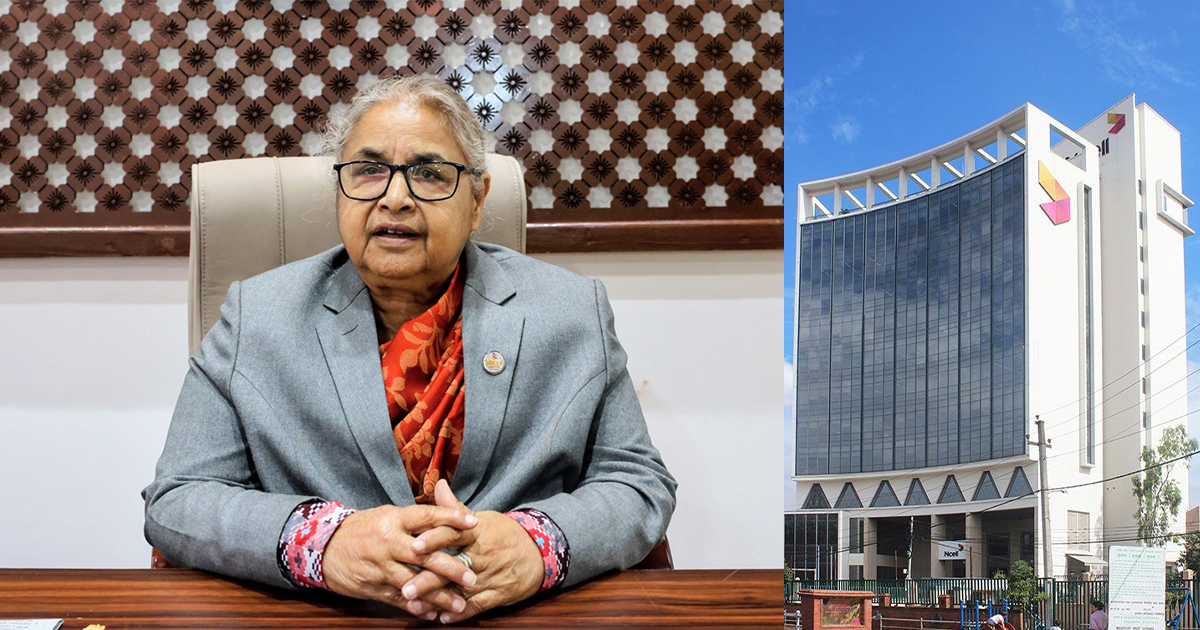

Kathmandu: Private telecom operator Ncell has asked the government to reconsider last year’s decision not to renew its operating license after the next four years, arguing that the move undermines fair competition and foreign investment confidence.
In a formal letter submitted to Prime Minister Sushila Karki, Ncell urged the government to acknowledge the company’s long-standing contributions to Nepal’s telecommunications sector and to review the Cabinet decision.
In the letter, Ncell claimed it has not been treated on an equal footing with the state-owned Nepal Telecom and accused the government of failing to adequately safeguard foreign investment. The company said it was subjected to an additional 10 percent interest charge while paying its license renewal fees in installments, a burden it describes as unjustified.
According to Ncell, Nepal Telecom was allowed to pay similar installments without interest, while Ncell was forced to bear extra financial costs. The company estimates this has added an interest burden of Rs 2.55 billion, limiting its ability to invest in network expansion and service improvement.
Ncell also maintained that the sale of Axiata’s shares in December 2023—from Reynolds Holdings to Spectrlite UK—was carried out in full compliance with Nepali law. The company expressed dissatisfaction that the government has yet to formally recognize the transaction and called for immediate official approval.
The company said it had already informed the Department of Industry in line with the Foreign Investment and Technology Transfer Act, arguing that all legal obligations related to the ownership change have been fulfilled.
Ncell further raised concerns over provisions of the Telecommunications Act that require company ownership to be transferred to the government after 25 years and prohibit changes in share structure during that period.
The company said such provisions discourage foreign investors and infringe on fundamental property rights. It argued that newer regulations introduced on the basis of Section 33 of the Telecommunications Act 2053 have further weakened investor confidence by restricting ownership rights.
Highlighting broader industry challenges, Ncell pointed to declining revenues due to the rapid growth of over-the-top services, high spectrum fees, and heavy taxation. It warned that if current conditions persist, telecom companies may struggle to even cover operational costs within the next three to four years. The company called on the government to revise spectrum fees and service charges in line with market realities.
As part of a potential path toward resolving disputes, Ncell proposed several constructive options. It expressed willingness to convert into a public limited company and issue an initial public offering, allowing Nepali citizens to become shareholders. Ncell said this would increase domestic ownership and help transform the company into a truly Nepali enterprise.
Concluding the letter, Ncell appealed for the creation of a level playing field in the telecom sector. It urged the government to revisit its decisions to support the goals of Digital Nepal and to ensure meaningful protection of foreign investment in the country.

Comment Here