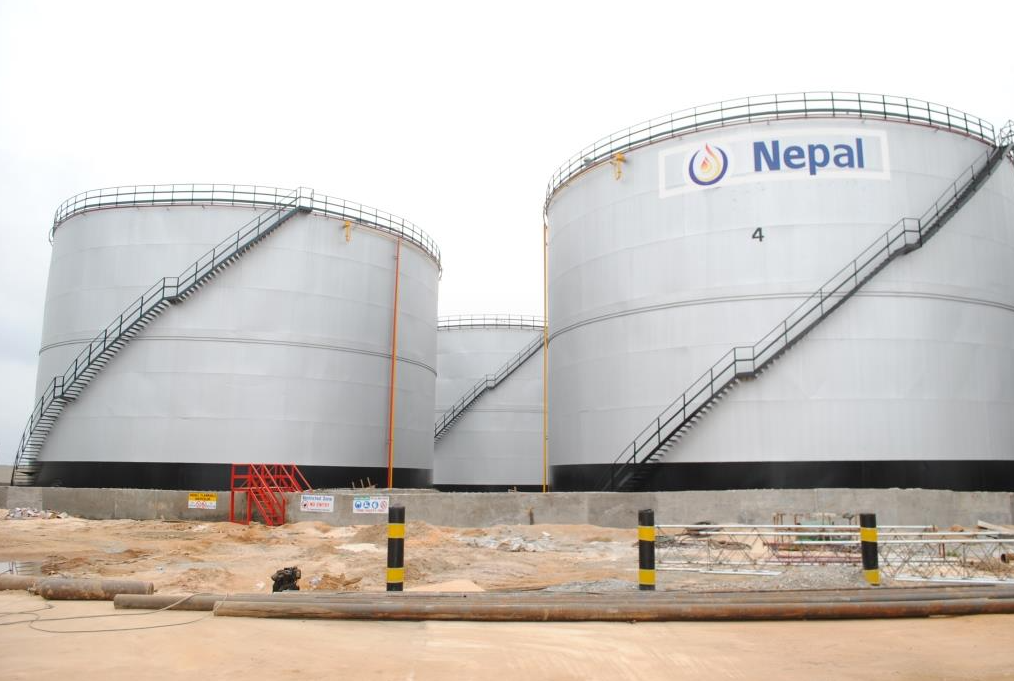

Kathmandu: Fuel is treated across the world not just as a commodity but as a pillar of national security. It is the backbone of a country’s strategic energy system and one of the most powerful tools for dealing with geopolitical shocks. Whether a nation faces war, pandemics, natural disasters or political turmoil, it is fuel that keeps the state functioning, the economy moving and society from grinding to a halt.
From transporting people and goods to running factories, moving raw materials, powering farms, keeping hospitals operating, ensuring border security, supporting disaster relief and even stabilising prices and inflation, fuel plays a role in almost every critical sector. When fuel supplies are disrupted, all these systems collapse together. That is why governments around the world treat fuel as a strategic national energy reserve and build their policies around ensuring its uninterrupted availability.
According to a senior official at the Nepal Oil Corporation, rising fuel prices or shortages quickly spread through the entire economy. Transport and freight costs surge, food prices climb, electricity becomes more expensive, industrial production slows, inflation rises, black markets emerge and public frustration can escalate into protests, riots and political instability. Nepal does not need to look far for proof of how deeply fuel affects national security. The country has experienced three blockades imposed by India, each one leaving painful lessons.
These repeated crises underline what happens when a country fails to treat fuel as a core element of national energy security and plan accordingly.
The first blockade came in the early 1970s after King Mahendra moved to review treaties with India and push for a more independent foreign policy. India tightened border crossings, triggering acute shortages of fuel, salt, medicines and daily essentials across Nepal. The hardship was so severe that it became etched in public memory as the country’s first blockade.
The second came in 1989, when India closed 13 of Nepal’s 15 trade routes after disputes over treaty renewals and Nepal’s decision to purchase weapons from China. Fuel, raw materials, food and medicines all became scarce, fuelling public anger against the government. The pressure helped ignite the popular movement that eventually brought down the Panchayat system. That blockade lasted from March 1989 until June 1990.
The third came in 2015, shortly after Nepal adopted its new constitution. Protests in the southern plains and India’s open dissatisfaction with the constitutional process led to what Nepal experienced as an undeclared blockade lasting nearly six months. Fuel, medicines and food ran desperately short, while earthquake recovery and reconstruction were badly disrupted.
These repeated crises underline what happens when a country fails to treat fuel as a core element of national energy security and plan accordingly. Nepal is not alone in facing such dangers. Sri Lanka in 2022 and Pakistan on several occasions have seen their economies and daily life nearly grind to a halt due to fuel shortages.
For Nepal, the stakes are even higher because it produces no fuel of its own and relies entirely on imports. Fuel availability is directly linked to social stability. In times of crisis, having enough reserves buys a country time. Fuel cannot be replaced overnight. New imports take weeks or months to arrive, and even then require refining, transport and distribution infrastructure. Renewable energy, while expanding, cannot be ramped up quickly enough to fill a sudden gap in fuel supply.
As a landlocked country surrounded by India on three sides and China on one, Nepal has little margin for error. It must treat fuel as a strategic asset and build adequate storage facilities that allow it to survive external shocks. Most countries maintain reserves sufficient for at least 60 to 200 days of consumption, enabling them to keep functioning even when supply chains are disrupted.
India currently holds reserves covering about 75 days of demand and is working rapidly to expand this to 90 days. China has storage capacity equivalent to roughly 96 to 106 days of demand, amounting to about 1.5 billion barrels, combining both strategic and commercial reserves, with plans to increase this to 2 billion barrels. Sri Lanka has reserves for about 60 days, Pakistan around 35 days and Bangladesh about 60 days. Even Bhutan, much smaller than Nepal, has storage sufficient for 14 days.
Nepal, by contrast, is at the bottom of the regional ladder. Only in the last two decades has it slowly begun expanding its storage capacity. From just seven days of coverage, it has now reached around 13 days. According to Nepal Oil Corporation spokesperson Manoj Thakur, the country currently has storage capacity sufficient for 13 days of petrol and diesel demand, 42 days for kerosene and 10 days for aviation fuel.
One of the most alarming gaps is in cooking gas. Despite its essential role in daily life, Nepal has virtually no state-owned storage for liquefied petroleum gas. Even after three blockades, the government has failed to build reserves of this critical fuel, leaving households highly vulnerable to supply disruptions.
A decade ago, Nepal’s total fuel storage capacity stood at about 68,115 kilolitres, including petrol, diesel, kerosene and aviation fuel. After the 2015 blockade, the government made some effort to expand capacity. By late 2025, an additional 34,163 kilolitres had been added, bringing total storage to about 102,278 kilolitres. Petrol storage has increased to 28,542 kilolitres, diesel to 60,421 kilolitres and aviation fuel to 9,120 kilolitres, while kerosene capacity has been slightly reduced due to falling use.
Nepal continues to import fuel worth about Rs 250 billion every year from India, yet has failed to invest in the infrastructure needed to protect itself from future shocks.
However, not all of this fuel can actually be used. By safety standards, 10 percent of stored fuel must always remain in the tanks as non-pumpable volume. Another 10 percent is set aside as a national security reserve that cannot be touched for normal consumption. This means that out of Nepal’s total capacity of about 102,279 kilolitres, only around 82,846 kilolitres are available for daily use. Nepal consumes roughly 8,000 kilolitres of fuel per day, excluding cooking gas. In practical terms, this gives the country just over 10 days of usable supply in a crisis.
After the 2015 blockade, the government announced a plan to build storage facilities in all seven provinces with enough fuel for 90 days of national demand. Land was even acquired in Chitwan, Rupandehi, Jhapa and Sarlahi for this purpose. But the plan stalled because the government could not secure the massive investment needed to build the facilities and stock them with fuel. Meanwhile, Nepal continues to import fuel worth about Rs 250 billion every year from India, yet has failed to invest in the infrastructure needed to protect itself from future shocks.
For a country that depends entirely on imported fuel to keep its economy, health system, transport network and basic daily life running, this is a dangerous vulnerability. Until Nepal treats fuel storage as a cornerstone of national security, it will remain exposed to the same kind of crises that have already brought it to its knees three times before.

Comment Here