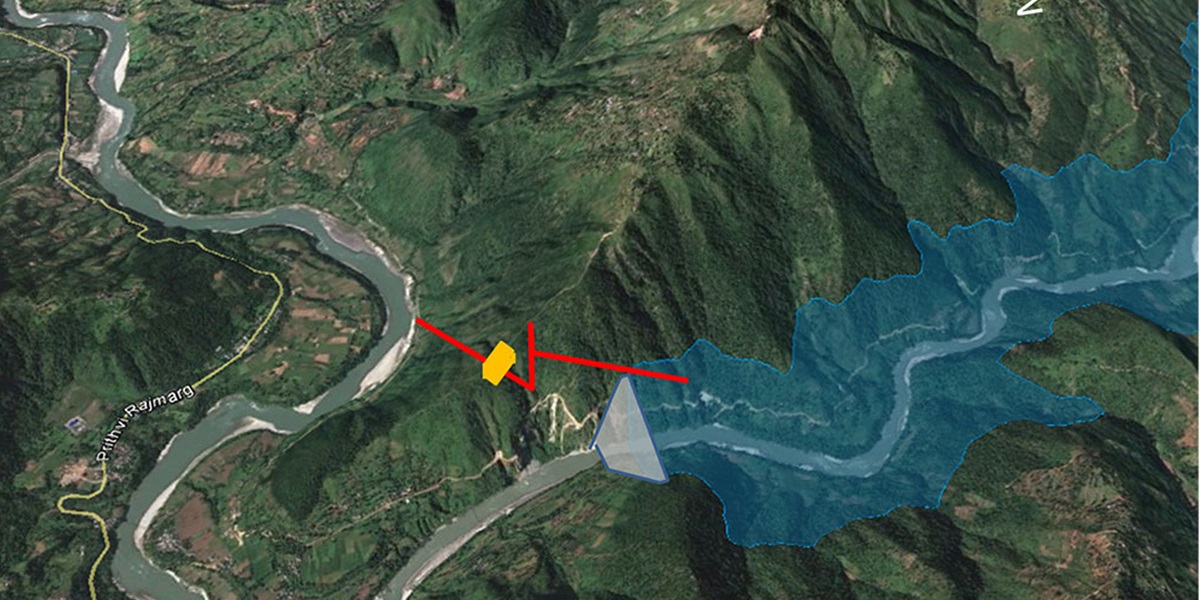

Kathmandu: The government has collected Rs 168 billion (approximately US$ 1.25 billion) through a fuel-based infrastructure development levy to finance the construction of the Budhi Gandaki Hydropower Project, according to the Nepal Oil Corporation.
The amount has been accumulated from fiscal year 2015/16 through mid-January of fiscal year 2025/26, under a dedicated heading for infrastructure development and the Budhi Gandaki hydropower project.
The levy was introduced specifically to fund the domestically financed Budhi Gandaki project, a 1,200-megawatt reservoir-based hydropower plant located across Dhading and Gorkha districts. To support this goal, the government began imposing a tax on petroleum products imported into the country.
Initially, the government charged Rs 5 per litre on imported fuel for the project. This rate was doubled to Rs 10 per litre following a Cabinet decision on 24 February 2022. Since then, the government has been collecting Rs 10 per litre at customs points under the infrastructure development tax.
Nepal Oil Corporation spokesperson Manoj Kumar Thakur said the revenue collected under this levy is deposited directly into the government’s account.
Meanwhile, the government has formally approved the financial investment modality for the Budhi Gandaki reservoir-based hydropower project, which is classified as a national pride project. The Cabinet endorsed the financing framework at its meeting on Sunday, paving the way for the long-delayed project to move into the construction phase.
The investment modality was submitted to the Cabinet by the Ministry of Energy, Water Resources and Irrigation, with concurrence from the Ministry of Finance and the National Planning Commission. With the approval now in place, procedural steps for construction are expected to accelerate.
Budhi Gandaki Hydropower Company Limited CEO Arun Rajouria said the approval allows the company to proceed with building a permanent project office, access roads, and bridges. He noted that preparatory work will be completed within two years, with full-scale construction scheduled to begin in January 2028. The project is expected to take around eight years to complete.
The total project cost, including interest during construction, is estimated at Rs 406 billion. The company said its strategic plan is in the final stages of preparation.
According to the company, compensation totaling Rs 42 billion has already been distributed to around 7,000 households in Dhading and Gorkha districts, covering 49,000 ropanis of land acquired for the project.
The approved financing structure includes 70 percent debt and 30 percent equity. Under this model, the government will invest Rs 97.47 billion as equity and provide Rs 150 billion in concessional loans, bringing total government investment to Rs 248 billion.
In terms of equity distribution, the Ministry of Energy will hold 50 percent, the Ministry of Finance 30 percent, and the Nepal Electricity Authority 20 percent. The company also plans to issue energy bonds worth Rs 30 billion. Additionally, Rs 45 billion already spent by the government on the project will be converted into equity shares in the company.

Comment Here