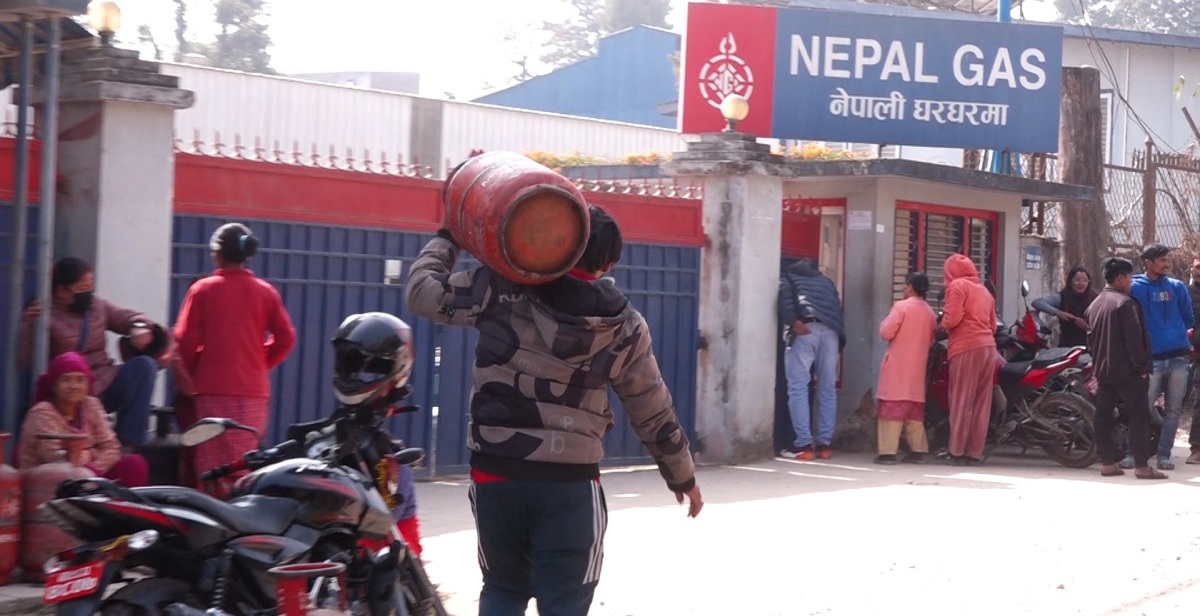

Kathmandu: Kathmandu Valley consumers faced a temporary shortage of several cooking gas brands from the end of January, even though overall imports were higher than usual.
During the one-month period from mid-January to mid-February, around 2,500 metric tons more liquefied petroleum gas (LPG) was imported compared to a typical month.
Nepal normally consumes about 45,000 metric tons of cooking gas monthly, but imports reached 47,264 metric tons in November 2025, 48,531 metric tons in December, and 47,304 metric tons in January 2026.
The Nepal Oil Corporation (NOC) says production of the two brands that saw shortages has increased since Sunday, and market conditions are gradually returning to normal. In recent weeks, Nepal Gas and Saibaba brand cylinders were particularly hard to find.
Industry insiders say internal disputes among partners at Nepal Gas reduced loading and distribution, worsening the shortage in a brand that holds about a 20 percent share of the Kathmandu market.
Frustrated customers were seen carrying empty cylinders to the company’s Balaju office after failing to get refills from dealers. Company management attributed the problem to transport and supply hurdles but said adequate imports should steadily ease the crunch.
NOC spokesperson Manoj Thakur said routine maintenance and cleaning at India’s Barauni refinery about six weeks ago disrupted some scheduled shipments. Higher winter demand and election-related consumption also tightened supply, while panic buying fuelled what officials describe as an artificial shortage.
Former Nepal LP Gas Industry Association president Shiva Ghimire added that Indian-registered bullet tankers, which handle much of Nepal’s LPG transport, diverted about a quarter of their fleet to domestic Indian routes offering higher freight rates, cutting deliveries to Nepal. Rising toll and operating costs for cross-border transport further discouraged operators. Around 700 such tankers typically serve Nepal.
Demand for LPG naturally spikes from late autumn through winter as households, hotels, and restaurants use gas for heating water and indoor warmth. At the same time, the Barauni refinery which is Nepal’s closest and most economical supply source was offline for maintenance.
Alternatives such as Haldia, Mathura, and Paradip refineries involve longer distances and higher costs, with transport times ranging from two to four days to Kathmandu. The Indian Oil Corporation allocates monthly supply quotas from these four points, and NOC issues product delivery orders to Nepali gas companies accordingly.
Officials say the situation has improved since Monday. NOC’s LPG department chief, Binitmani Upadhyay, said February demand projections led Nepal to request a 52,000-metric-ton quota, of which India has approved 49,500 metric tons.
Joint monitoring teams from NOC and the Department of Commerce, Supplies and Consumer Protection are inspecting dealers to prevent hoarding. In a public notice, NOC stressed that shortages are limited to a few brands, instructed companies to ensure smooth distribution, and urged consumers not to stockpile cylinders unnecessarily.

Comment Here