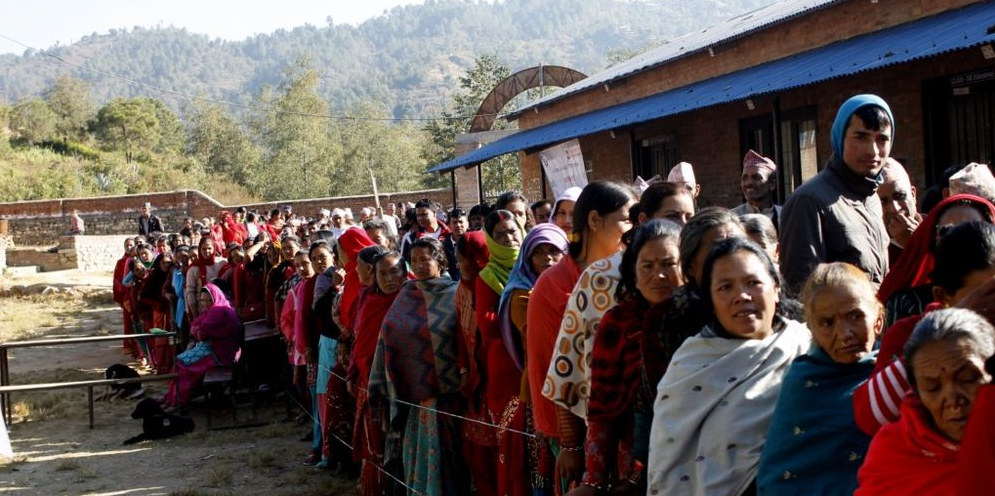

Kathmandu: Nepal observed the National Democracy Day yesterday, Falgun 7, organizing various programmes across the country. The day is observed every year, commemorating the abolishment of autocratic Rana regime and paying tribute to the martyrs.
Since then, the country did not witness the autocracy as that of Ranarchy. However, the democracy was hijacked frequently. We were destined not to see democracy flourished, but flailed and faltered.
Struggles continued to safely release the democracy from the hijackers’ clutch. Interestingly, the democracy (prajatantra) has been given new name ‘loktantra’ since the 2063 BS people’s movement.
Loktantra is in use, probably because Nepalis are no more praja (subject) after the abolishment of monarchy. Even before loktantra, the prajatantra was restored, bringing the monarchy under constitution in 2046 BS.
Until the flash protest of youths last September, which was later recognized as ‘Gen Z movement’ by the incumbent government, the abolishment of monarchy or the adoption of federal democratic republic was regarded as the most consequential political event. The country has been undergoing a new system of federalism. Not long after such phenomenal change, the country witnessed another flash protest that not only pulled down the sitting government but also caused dissolution of the House of Representatives, the supreme institution of people’s representatives. Now, Nepal is poised to have a fresh mandate on March 5, less than two weeks to go for voting.
Democratic deficit
With these indents in the background, it is worth pondering: What were the reasons behind such recurring protests and movements in Nepal? Was the system, which was revered as ‘democracy’ and ‘loktantra’ itself a faulty scheme? Or were the political actors or those in power failed to retain public trust in absence of delivery as they promised?
Defining democracy with beautiful words and limiting it to paper- constitution, acts, policies and parties’ manifestos are largely blamed for the faltering democracy. The background struggles to this stage expose our proclivity towards protest and movement, but sheer ignorance to institutionalize the achievements. The institutionalization of democratic achievements gained through struggles requires utmost political consensus that retain public trust.
The constitution Nepal promulgated in 2015 is often prided on for its progressive features. It is indeed a solid foundation for empowering citizens with three-tiers of governments in place. The present system is qualified also as an inclusive democracy.
Worryingly, the decoration of system with flowery words failed to win people’s trust in system, political parties and institutions, which ultimately resulted in the unprecedented protest, Gen Z movement. It evidently unmasked a state of democratic deficit.
Those to bear the brunt of democratic deficit are largely the youths, who are delivered dream of new Nepal, prosperity and happiness, but reality remained elusive. The public demand of good governance, corruption free society, rule of law, and development with thriving economy fell on pachyderm ears of rulers that caused the fresh political quake last September, forcing parties to prove their trust and strength again.
There is no doubt that Gen Z movement that demanded lift on social networks for free speech and corruption free society for good governance was a stark reminder of democratic dividend in short supply. The movement was therefore for reinforcing democratic values, keeping in centre the youths’ demand and aspirations.
Propping up pillars
As the country is all set to hold the HoR election on March 5, how the post-election would prop up other democratic pillars – free press, independent judiciary, separation of powers, good governance, economic freedoms and developments- is a new concern. In addition to serving as a step further to wipe out present political adversity, the successful conduct of March 5 election is instrumental in strengthening these pillars of democracy. Whoever comes to hold the power post-election, these are fundamental issues to address the youths’ aspiration and reclaim public trust.
Nepal cannot imagine democratic casualties anymore. For it, it is time to work honestly to check deficits. Only corrected politics with noticeable change in practice can navigate well the system that best reflects the youths’ aspiration. The parties- both with legacy and the new ones- require smooth conversation and robust coordination at this stage so that they can avoid intolerance, politics of negation and confrontation. If the politics of negation and revenge as seen in the past is repeated, it brews another round of hostility.
Seize the moment
There is no luxury for the political parties at all to belittle the democratic achievements made so far either. Working together for betterment is urgency. Democracy thrives on conversation and tolerance, cooperation and coordination that ultimately helps the State actors build consensus for public welfare and earn their trust.
Now, it is time for delivery that pays heed to democratic values and practices. Creation of trust in parties, system and institutions is imperative that builds an atmosphere conducive to curb democratic backsliding. Nepal cannot undergo more sufferings that further derail democracy. It is opportune moment to bring the democracy back on track. Let’s seize the moment.

Comment Here