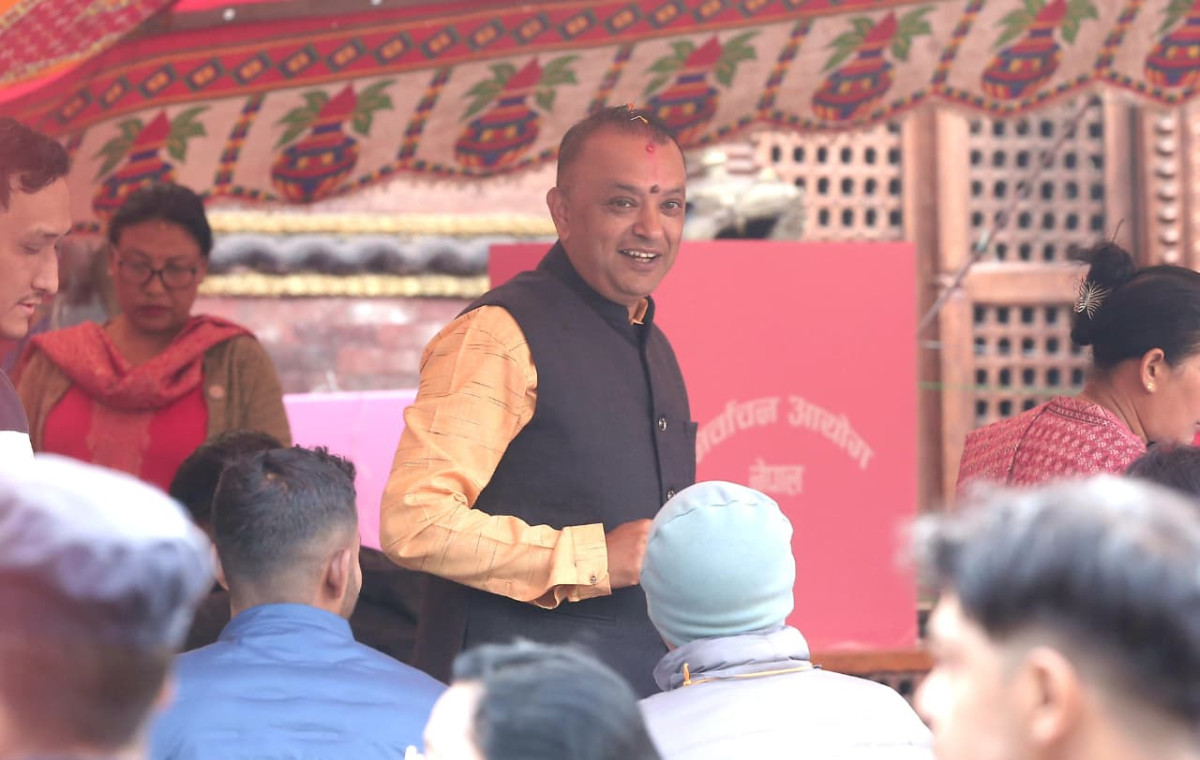

Kathmandu: Gagan Kumar Thapa, president of the Nepali Congress, has urged voters to give him a five-year mandate to deliver good governance, saying he is committed to using that time to bring meaningful change. Speaking to journalists after casting his vote at a polling center in Maitidevi in Kathmandu Constituency No. 4, Thapa said that if given the opportunity, he would focus on strengthening governance and addressing long-standing problems from the very first year.
Thapa also reflected on his candidacy in Sarlahi Constituency No. 4, saying that campaigning in the Madhes region has given him what he described as “political completeness.” While he had long been familiar with the issues of Kathmandu and the hill regions, he said his experience in Sarlahi allowed him to better understand the complexities of Madhes. According to him, the constituency offered a rare opportunity to engage closely with local communities, observe their living conditions firsthand, and learn directly from their experiences.
He described the situation in the region as serious and pledged to begin reform efforts from the first year if he is elected to government leadership. Thapa said that previously he had only observed the realities of Madhes from afar, but traveling into villages and spending time with residents changed his perspective. The experience, he added, deepened his understanding of the challenges people face in their daily lives.
During his campaign in Sarlahi, Thapa said he learned how farmers sometimes face extreme pressure even when bringing fertilizer across the border, and gained a deeper appreciation of the struggles of sugarcane growers. He noted that witnessing these issues firsthand made it impossible to imagine policies such as cutting subsidies for sugarcane farmers.
Thapa further said that, if in government, he would prioritize improving housing conditions for Dalit communities in Madhes, even if it required reallocating budgets from other ministries. He stressed that it was deeply troubling to realize that many people in the region still live in such difficult circumstances. According to him, ensuring dignified housing and better living standards should be a national priority.
When asked about the difference between being a candidate and potentially serving as prime minister, Thapa responded briefly with a smile, saying, “It sounds exciting.”
Reflecting on voting at the Maitidevi polling station, Thapa recalled that in Nepal’s first parliamentary election he had cast his vote for Suprobha Ghimire. In subsequent elections he himself had been the candidate. This time, however, his vote would not be counted for him personally, which he described as a new experience. He said he felt happy to use his vote for a younger candidate, Sachin Timilsena, adding that just as voters once entrusted him with responsibility as a young leader, he now felt proud to support the next generation.
Addressing reports of minor tensions at two polling stations in Sarlahi-4, Thapa said the situation had already been resolved through dialogue among local stakeholders. He said he had also urged the administration to ensure a peaceful election day. According to him, despite occasional attempts to provoke conflict during the campaign, the overall environment had remained civil. Thapa expressed confidence that any small tensions could be managed, noting that the Nepali Congress remains the main political force in the area and is committed to preventing violence.
Asked what voters in Kathmandu-4 were telling him, Thapa said he had limited direct interaction on election day but had briefly met some voters at polling booths. Some told him they had supported him in previous elections and would now vote for Timilsena, while others expressed concern about the Sarlahi race. Many supporters from Kathmandu had even traveled to Sarlahi during the campaign to assist him, something he said made him happy. At the same time, he acknowledged that some voters were disappointed by his decision to contest outside Kathmandu. Thapa said he had not abandoned his political base but had instead expanded his political journey, emphasizing that gaining broader experience was important for shaping his thinking in parliament and government.
He added that his time in Madhes had been an important learning experience. After more than a decade in politics centered in Kathmandu, he realized that his understanding of Madhes had been limited. The diversity of its society, its complex problems, and the structures shaping daily life there became clearer only after spending time in the region.
Thapa concluded by saying that Nepal’s diversity requires leaders who understand the realities of different regions. Having long experience in Kathmandu and the hill areas, he said gaining firsthand experience in Madhes has broadened his perspective. With insights from cities, villages, hills, and plains alike, he believes he is now better positioned to make balanced national decisions and represent the interests of the entire country.

Comment Here