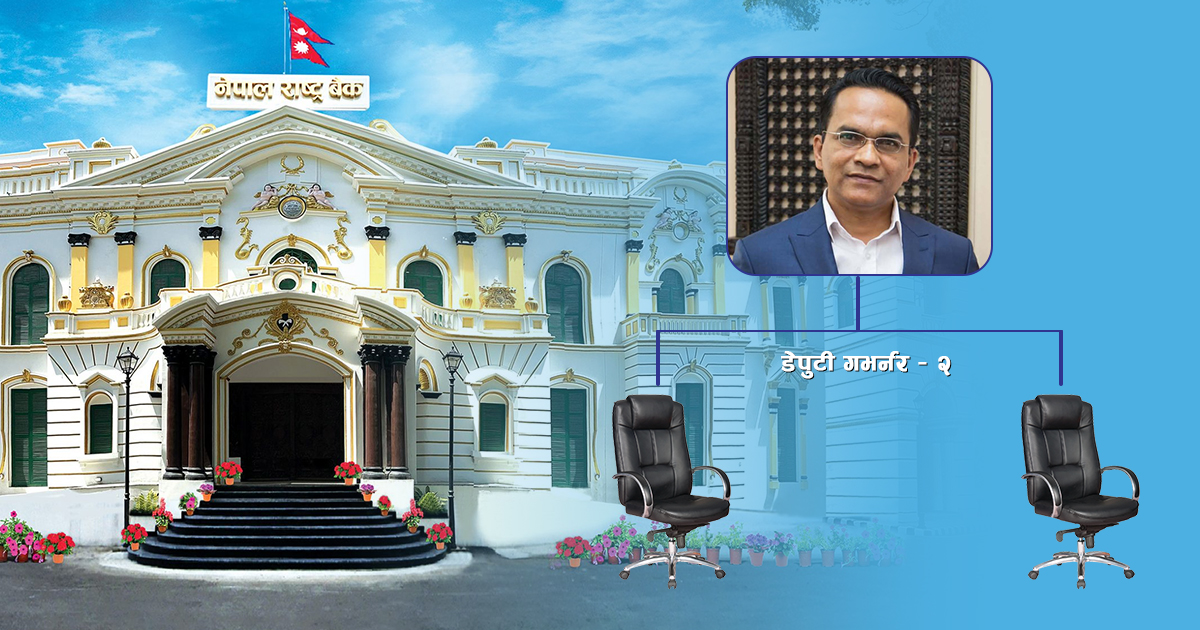

Kathmandu: Two deputy governors of Nepal Rastra Bank, Nilam Dhungana Timsina and Bam Bahadur Mishra, officially completed their five-year terms on March 9 and have stepped down from their positions.
The central bank held a formal farewell ceremony on Monday to mark the end of their tenure. Both officials were appointed deputy governors on February 27, 2021, from among four executive directors recommended by then governor Maha Prasad Adhikari.
Their appointments were approved by the government led by then prime minister KP Sharma Oli and finance minister Bishnu Paudel. With both posts now vacant, interest has grown over who will be chosen as the next deputy governors.
However, the government has yet to begin the appointment process. Political developments have added to the uncertainty.
Following the Gen-Z protest movement in September that led to the dissolution of the House of Representatives, an interim government headed by former chief justice Sushila Karki was formed with the mandate to conduct elections.
Those elections have now concluded, producing a clear majority for the Rastriya Swatantra Party, and its senior leader Balen Shah is expected to become the next prime minister.
As the current administration has already fulfilled its mandate of conducting elections, and with finance minister Rameshwor Khanal having returned his diplomatic passport, there is growing speculation that the caretaker government may leave the deputy governor appointments to the incoming administration.
Under the Nepal Rastra Bank Act, the cabinet appoints deputy governors based on recommendations from the governor. The governor must nominate twice the number of candidates required from among the bank’s senior officials, primarily executive directors, based on merit and performance.
With two positions vacant, four names must be recommended, from which the government will appoint two officials for five-year terms. Although seniority does not formally determine eligibility, all 18 current executive directors qualify for consideration. Sources say the governor is currently evaluating potential candidates but has not yet submitted recommendations to the Ministry of Finance.
Despite the position being technically non-political and reserved for internal appointments from the central bank’s staff, past selections have often been influenced by political affiliations. As a result, some executive directors aspiring to the role have reportedly sought political backing to strengthen their chances. However, observers in the banking and financial sector believe the recent election mandate and changing political climate could increase the likelihood of appointments being based primarily on competence and performance.
Another debate centers on whether the caretaker government should proceed with the appointments at all. Some analysts argue the positions should be filled immediately because deputy governors lead several key committees and oversee important operational responsibilities within the central bank. Others contend that with a new government about to take office, it would be more appropriate to leave the decision to the incoming administration. Historically, there have been periods when deputy governor posts remained vacant for extended durations without severely affecting the bank’s operations.
Age and tenure rules also shape the pool of candidates. Staff at Nepal Rastra Bank retire at 58 years of age or after 30 years of service, while executive directors must retire after seven years in the position and directors after twelve years. Several senior executive directors are expected to retire within the next one to three years, limiting their window for promotion. Others who were more recently promoted may still be eligible to compete for the position even five years from now.
Ultimately, former officials say the governor is likely to recommend candidates who can effectively support the leadership and policy direction of the central bank. A capable deputy governor strengthens the governor’s ability to manage the institution, one former governor noted, arguing that appointments should prioritize merit over connections.
With uncertainty over whether the current administration will act or defer the decision to the next government, executive directors are reportedly maintaining contact with both current officials and potential future policymakers. Still, both the current finance minister and leaders expected to form the next government have publicly emphasized that competence, rather than political influence, should guide the final selection.

Comment Here