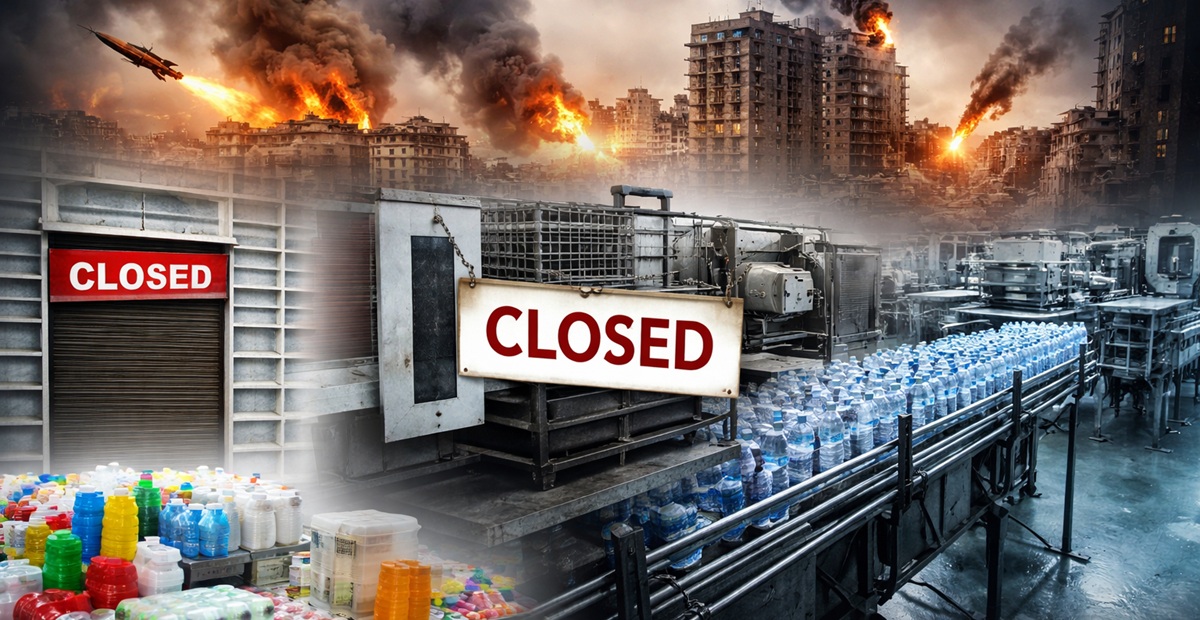

Kathmandu: Nepal’s plastic industry is facing a deepening crisis as conflict in West Asia disrupts global shipping routes and chokes the supply of critical raw materials.
The fallout from tensions involving the United States and Iran, particularly disruptions in the Strait of Hormuz and attacks on Gulf-based petroleum refineries, has severely impacted the global petrochemical supply chain—effects now being felt sharply in Nepal.
The shortage of raw materials has rippled across multiple sectors, hitting plastic manufacturers, packaging industries, and bottled water producers alike. The impact extends beyond these industries, affecting a wide range of downstream sectors that depend on plastic inputs.
From infrastructure to agriculture, the consequences are becoming increasingly visible. Production of essential items such as water supply and sewage pipes has slowed, raising concerns for construction projects. In contrast, shortages of irrigation pipes, fertilizer sacks, and plastic tunnel materials threaten agricultural output.
The disruption is also affecting everyday consumer goods. Industries producing food, instant noodles, biscuits, dairy products, medicines, and beverages are struggling due to packaging shortages. Even household items such as plastic chairs, tables, buckets, and containers are seeing declining production.
Plastic products are not naturally available; they are derived from petrochemicals. In Nepal, the key raw material, commonly referred to as plastic granules or polymers, is produced through complex chemical processes using substances like naphtha.
Currently, hundreds of plastic factories across the country are grappling with acute shortages and rising costs of these inputs, putting billions of rupees in investment at risk and threatening the livelihoods of tens of thousands of workers.
Industrialists warn that major industrial corridors in Nepal are experiencing one of the toughest periods in history. With imports stalled, many factories have reduced operations to 50–70 percent capacity, while smaller units have already shut down. The plastic industry in Nepal represents over Rs. 100 billion in investment and provides employment, directly and indirectly, to more than 50,000 people. The ongoing crisis is also raising fears of a new wave of inflation.
Business leaders are urging the government to provide relief on customs duties for raw material imports and to pursue diplomatic measures to reduce transit costs. Without timely intervention, they warn of severe shortages of plastic products in the domestic market, the collapse of local industries, and a surge in imports of finished goods.
According to Prabodh Ghimire, president of the Nepal Plastic Manufacturers Association, more than 60 plastic and pipe factories operate in the Birgunj–Pathlaiya industrial corridor alone. Many of these industries have begun rotating shutdowns due to a lack of raw materials. He notes that sectors producing water pipes, packaging materials, household plastic goods, pharmaceuticals, bottled water containers, and agricultural plastics are among the hardest hit.
In the Morang–Sunsari industrial corridor, including Biratnagar and Itahari, packaging manufacturers are rapidly depleting their stock of raw materials. Factories producing food packaging, plastics and cement sacks have already started halting production. Similarly, industries in the Bhairahawa–Lumbini region are struggling to stay competitive due to soaring raw material prices. Plastic manufacturers in Kathmandu, Narayanghat, Pokhara, Chitwan, and Janakpur are also on the verge of shutdown.
Ghimire warns that if the disruption continues, the entire sector could grind to a halt within months. Nepal relies heavily on imports for plastic raw materials, primarily sourced through Indian suppliers such as Indian Oil Corporation, Reliance, and OPaL. Recently, around 2,500 metric tons of raw material shipments have been withheld by Indian suppliers amid regional tensions, pushing Nepali industries closer to closure. He adds that refinery attacks in the Gulf have crippled the primary production hubs, and with India holding back its own imports, Nepal has been left exposed.
Industry insiders estimate that it could take at least two years for damaged Gulf refineries to return to full operation, suggesting prolonged supply constraints not just for Nepal but globally.
The bottled water industry is also under strain. Dhruva Gautam, president of the Nepal Bottled Water Industries Association, says shortages of plastic used for jars and bottles have already forced about a dozen out of 600 water bottling plants to shut down. Without containers, water purification and distribution have stalled, raising concerns about supply shortages in the near future.
Costs have surged dramatically. The price of an empty water jar has risen from Rs. 180 to Rs. 250, while the cost per bottle has nearly doubled from Rs. 4 to Rs. 7. Similar pressures are being felt in the pharmaceutical sector. Biplav Adhikari, president of the Nepal Pharmaceutical Manufacturers Association, says shortages and rising costs of plastic polymers used in medicine packaging have pushed drug manufacturers to the brink.
Prices of available raw materials have increased by around 15 percent, while transportation costs have jumped by 30 percent. As a result, shortages of medicines packaged in plastic bottles have already begun appearing in the market. Adhikari warns that if the situation persists, pharmaceutical production could come to a complete halt within two weeks.
Nepal imports most of its pharmaceutical raw materials and packaging inputs from India, China, and Germany, often routed through third countries. However, the ongoing conflict in the Middle East has tightened global supply, affecting overall drug production in the country. Industry representatives have already alerted the Department of Drug Administration, urging intervention to ensure the continued availability of medicines.
Manufacturers say the current pricing regulations make it impossible to sustain production amid rising costs. They argue that temporary price adjustments based on input costs could help both industries survive and consumers maintain access to essential medicines.
Nepal remains entirely dependent on imports for plastic raw materials, with around 70 percent sourced from Middle Eastern countries such as Saudi Arabia, the UAE, Qatar, and Kuwait. The rest comes from India, Thailand, and South Korea. However, shipping disruptions have compounded the crisis. Attacks on vessels in the Red Sea by Houthi rebels have forced major shipping companies to reroute via the Cape of Good Hope, increasing transit times by 15 to 20 days and doubling or even tripling freight costs.
These logistical challenges have significantly raised the landed cost of raw materials in Nepal, intensifying pressure across industries.
Plastic polymers are produced through a complex process that begins with fossil fuels. Crude oil is refined to produce naphtha, which is then cracked at high temperatures to create gases like ethylene and propylene. These gases are chemically processed into long-chain molecules known as polymers, which are later converted into small granules used as raw materials in manufacturing.
Different types of polymers are used to produce different plastic products. High-density polyethene (HDPE) is used for water pipes and containers, low-density polyethene (LDPE and LLDPE) for flexible packaging like milk packets, polypropylene (PP) for cement bags and furniture, polyvinyl chloride (PVC) for pipes and electrical insulation, and polyethene terephthalate (PET) for water and beverage bottles.

Comment Here