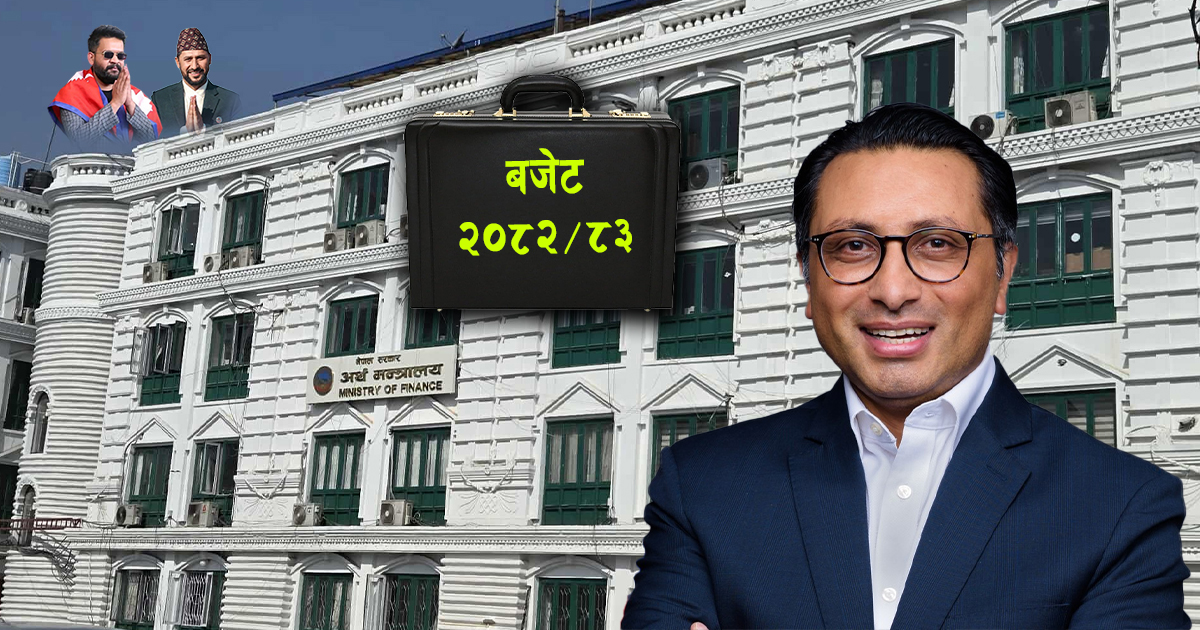

Kathmandu: The National Planning Commission (NPC) and the government ministries are engaged in preliminary discussions about the upcoming budget, focusing on ensuring sufficient budget allocation for the completion of ongoing and continuing projects as soon as possible.
Similarly, the discussions focus on proposing new plans and programmes that have already undergone prior preparation, including cost–benefit analysis, and are ready for prompt implementation.
The Commission has prepared a checklist aimed at making the budget formulation process for the upcoming fiscal year 2083–84 BS (2026–27) more disciplined, results-oriented, and realistic.
The Commission is today discussing with the Office of the Prime Minister and Council of Ministers, and the Ministries of Federal Affairs and General Administration; Culture, Tourism and Civil Aviation; and Health and Population, according to Commission Assistant Spokesperson Dr Diwakar Luintel.
On Wednesday, discussions will be held with the Ministries of Forests and Environment; Labour, Employment and Social Security; Physical Infrastructure and Transport; and Urban Development.
Similarly, the current status of national pride projects and major programmes included in the project bank should be clearly mentioned. It is expected that it would facilitate the progress evaluation of projects of long-term importance.
The government has also emphasised aligning the budget with the 16th plan. As per this, the ministries have to clearly propose transformational strategies and key programmes and projects to be implemented in the coming fiscal year.
The ministries would have to submit proposals with realistic projections of resources and expenditure as per the budget ceiling and medium-term expenditure structure for the next three years (2083/84-2085/86) provided by the Finance Ministry.
In accordance with the Financial Procedures and Financial Responsibility Act, 2076, details like the feasibility study, environmental assessment study, detailed project report, design, cost estimation, land acquisition situation, implementation schedule and purchase plan should be mandatorily included in the proposed plans.
Similarly, arrangement has been made where the expected outcome from the projects should be clearly mentioned. The details of the guarantee of resources for national pride projects and multi-year projects should be compulsorily submitted. It is believed that it would increase the transparency of budget commitment.
The government has adopted a policy to give special priority to the projects that will yield a quick return, can be completed on time and cost and will be completed in the next fiscal year.
Projects that should be restructured or reviewed, along with the details of incomplete and sick projects, should be presented separately.
Likewise, it is mandatory to disclose whether or not the financial liabilities created by previously completed projects are included in the budget.
Earlier, the Finance Ministry had given March 29 as a deadline to propose plans and programmes for the budget of the coming fiscal year, but it has extended the deadline, citing a lack of homework.
“We had asked to enter the proposed plans and programmes into the Line Ministry Budget Information System (LMBIS) by March 29. But, the Finance Ministry will be flexible on it,” Joint-Spokesperson of the Commission, Luintel.
It is necessary to extend the process for proposing the plans and programmes into LMBIS to incorporate the provisions mentioned in the 100-point reform programme, Good Governance Blueprint, 2082, the election manifesto of the ruling party in the budget, added the Finance Ministry.

Comment Here