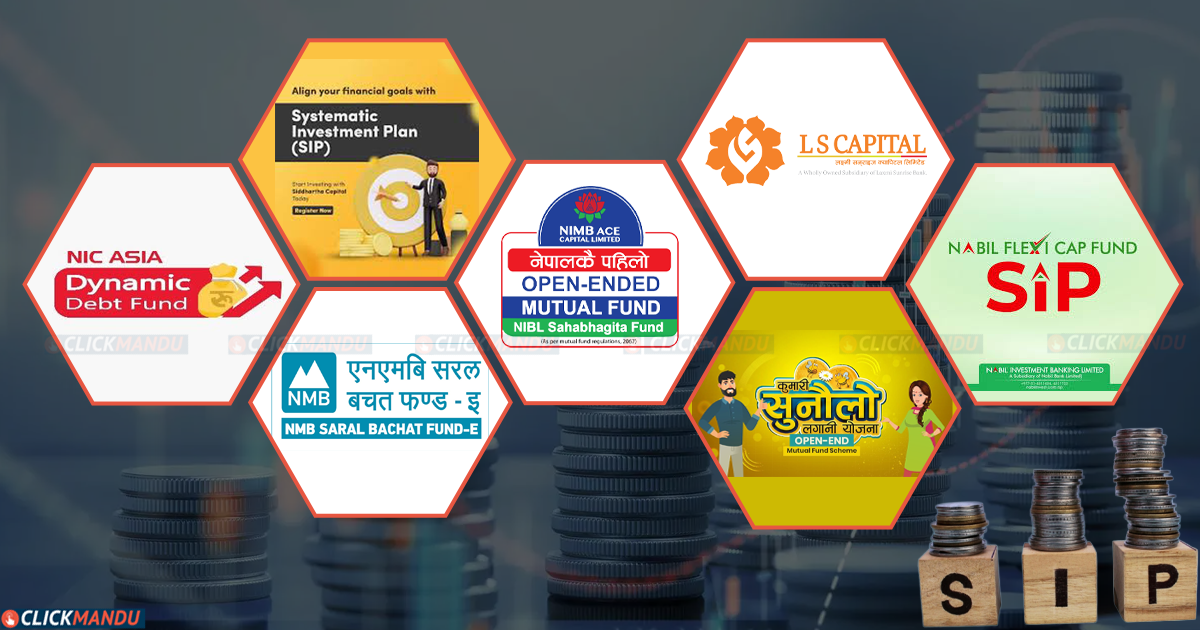

Kathmandu: Nepal’s capital market is witnessing a steady rise in Systematic Investment Plans (SIPs) alongside the expansion of open-ended mutual funds. As most capital companies have adopted open-ended fund structures in a relatively short period, the number of SIP schemes in operation has reached 13.
By 2023, Nepal had seven SIP schemes in operation, including those from NIBL, NIC Asia, Siddhartha Capital, NMB Capital, Laxmi Capital, Nabil, and Kumari. However, no new SIP schemes were launched in 2024. Since then, six additional SIP funds have entered the market, reflecting renewed momentum in this segment.
Choosing the right mutual fund for SIP investment requires a clear understanding of equity, debt, and hybrid funds. Equity funds typically offer higher risk and higher returns, while debt funds are relatively stable with lower risk and predictable income. Hybrid funds combine elements of both. Investors are generally advised to align fund selection with their age and risk tolerance. Young investors often favour equity funds, while older investors may prefer debt or hybrid options.
Beyond fund type, investors need to assess key indicators such as asset allocation, Net Asset Value (NAV), expense ratio, compound annual growth rate, dividend history, and fund size. Funds with consistent long-term NAV growth, lower expense ratios, and a strong dividend track record are typically preferred. While a larger fund size may indicate investor confidence and liquidity, it does not necessarily guarantee superior performance.
In Nepal, SIPs are broadly categorized into equity-oriented and debt-oriented funds. Among them, only NIC Asia’s Dynamic Debt Fund represents a debt-oriented SIP, while the rest are equity-focused. Equity-oriented funds invest heavily in the stock market and tend to perform well during bullish periods, generating higher returns and dividends.
However, their performance can weaken during market downturns, and dividend payouts may not always be consistent. In contrast, debt-oriented funds are better suited for conservative investors seeking stability and regular income, as they primarily invest in bonds, debentures, and fixed deposits.
Overall, equity funds may be suitable for investors willing to tolerate market volatility in pursuit of long-term gains, whereas debt funds are ideal for those prioritizing capital preservation and steady returns.
Given that SIP funds launched after 2025 are relatively new and lack sufficient performance history, a closer look at the seven earlier schemes provides better insight into market trends and fund performance.
The NIBL Participation Fund stands out as a market leader in terms of asset management, fund size, and dividend distribution. Since its launch in 2019, it has consistently delivered attractive returns, with a cumulative dividend of over 76 percent and an average annual return of around 12.7 percent. The fund allocates the majority of its investments to equities, with smaller portions in fixed-income instruments and cash.
The NIC Asia Dynamic Debt Fund, launched in 2020, is known for its consistent dividend payouts and relatively stable returns. With a cumulative dividend of over 41 percent and an annual average return exceeding 8 percent, it has expanded significantly in size, reflecting growing investor interest in lower-risk instruments.
Siddhartha Systematic Investment Scheme has seen rapid growth, nearly doubling its fund size within a year. Although relatively newer, it has begun delivering dividends and maintains a strong equity-focused investment strategy.
NMB Saral Bachat Fund–E ranks among the largest funds in terms of asset management. With a significant portion of its portfolio invested in equities, it has also recorded steady growth in fund size and continues to attract investors.
Shubha Laxmi Fund, operated by Laxmi Capital, has grown quickly despite its smaller size. It has delivered notable dividends in recent years and maintains a balanced investment approach with a mix of equities and cash holdings.
Nabil Flexi Cap Fund has recorded the fastest growth in fund size, more than doubling within a year. Its flexible investment strategy and consistent dividend payouts have contributed to its rising popularity.
Kumari Sunaulo Lagani Yojana has also gained traction among retail investors, showing strong growth in both fund size and returns. With a high allocation to equities, it has delivered solid dividends and maintains a competitive average return.

Comment Here