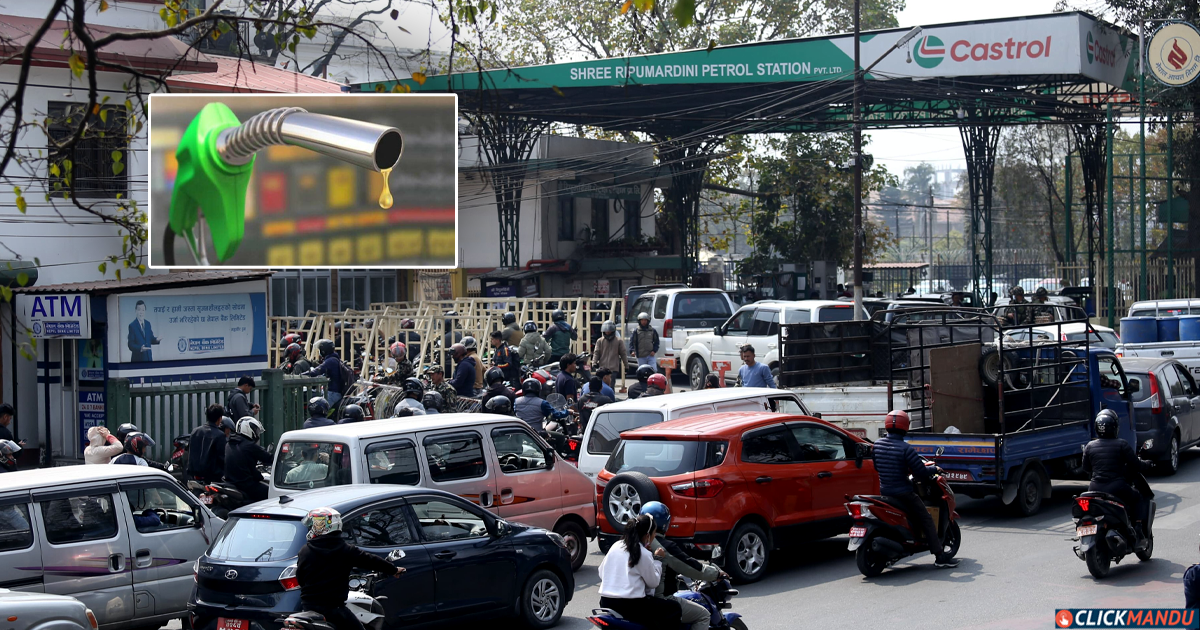

Kathmandu: Nepal Oil Corporation says it could save around Rs 1 billion worth of fuel per day as the government rolls out new measures to curb soaring losses driven by rising global oil prices.
The surge in international fuel prices, triggered by the US–Israel–Iran conflict, has left the state-owned oil supplier unable to fully adjust domestic prices under its automatic pricing system. As a result, it has been absorbing daily losses of roughly Rs 1 billion.
In response, the government has introduced a two-day weekend, Saturday and now Sunday as well, for public offices and educational institutions starting Monday. The move mirrors steps taken in other countries, such as reducing workdays, closing schools, and promoting remote work to cut fuel consumption.
Authorities have also decided to gradually replace petroleum-powered vehicles with electric ones to further reduce dependence on imported fuel.
With Sundays now designated as a public holiday, officials expect a noticeable drop in fuel use. According to the corporation, just one day of reduced activity could save fuel worth Rs 1.04 billion while also lowering operating losses.
Despite a recent price adjustment, setting petrol at around Rs 199.50–202 per litre and diesel at Rs 179.50–182, the corporation continues to sell at a loss. It currently loses Rs 34.36 per litre on petrol, Rs 120.54 on diesel, and Rs 416.37 per LPG cylinder, adding up to a staggering Rs 11.71 billion in losses every two weeks.
Daily consumption remains high, with around 2.5 million litres of petrol and 5 million litres of diesel sold each day. By halting Sunday sales alone, petrol transactions worth nearly Rs 498.75 million would be avoided, along with losses of about Rs 85.9 million tied to those sales. In total, this translates into a combined saving and loss reduction of roughly Rs 584.65 million from petrol.
Diesel savings are even more significant. A one-day halt could prevent sales worth Rs 897.5 million and eliminate losses of about Rs 602.7 million, resulting in a combined benefit of roughly Rs 1.5 billion.
While Saturday was already a public holiday, fuel consumption had not declined significantly in the past because fuel was often purchased in advance, and transport services continued operating. Officials warn the same pattern could limit the effectiveness of the new policy unless stricter controls are enforced.
“If fuel retailers stock up in advance and vehicles continue running as usual, the impact of the two-day weekend will be minimal,” one official said, stressing the need to regulate non-essential transport, including government vehicle use.
The policy is expected to reduce monthly consumption by about 52.5 million litres of petrol and 105 million litres of diesel. However, authorities are urging the public to cooperate by avoiding unnecessary travel during holidays, noting that leisure trips could offset intended savings.
“We don’t want people taking their vehicles out just because it’s a holiday,” said spokesperson Manoj Thakur. “The goal is to reduce consumption. Public participation is crucial.”
Experts, however, argue that the two-day weekend alone will not significantly ease the financial burden. Consumer rights advocate Madhav Timilsina said the government must also address increased recreational travel on holidays and introduce broader measures, including better management of public transport and long-distance travel.
He suggested replacing ministers’ fuel-powered vehicles with electric ones and encouraging shared transport among officials. Security vehicles accompanying ministers should also transition to electric alternatives.
Timilsina further called for a review of fuel taxes, arguing that high tax rates are worsening the burden on consumers. Lowering taxes, he said, could reduce transportation costs and help control inflation, providing direct relief to low-income households.
Former industry secretary Purushottam Ojha echoed similar concerns, recommending targeted tax cuts on diesel and cooking gas, which directly impact daily life. He also proposed selling petrol and aviation fuel at cost price under special circumstances to reduce overall losses.
Ojha emphasized that diesel powers public transport and essential goods delivery, meaning price hikes ripple across food, construction, agriculture, and industry. He suggested introducing a flexible tax policy where taxes decrease when global prices rise and increase when prices fall.
The government currently collects significant taxes on fuel. Each litre of petrol includes around Rs 66.98 in taxes, while diesel costs Rs 49.28 per litre. Cooking gas is taxed at Rs 324.95 per cylinder, and domestic aviation fuel at Rs 34.40 per litre.
Experts warn that without structural reforms, such as tax adjustments, stricter consumption controls, and accelerated electrification, the current measures may offer only limited and temporary relief.

Comment Here