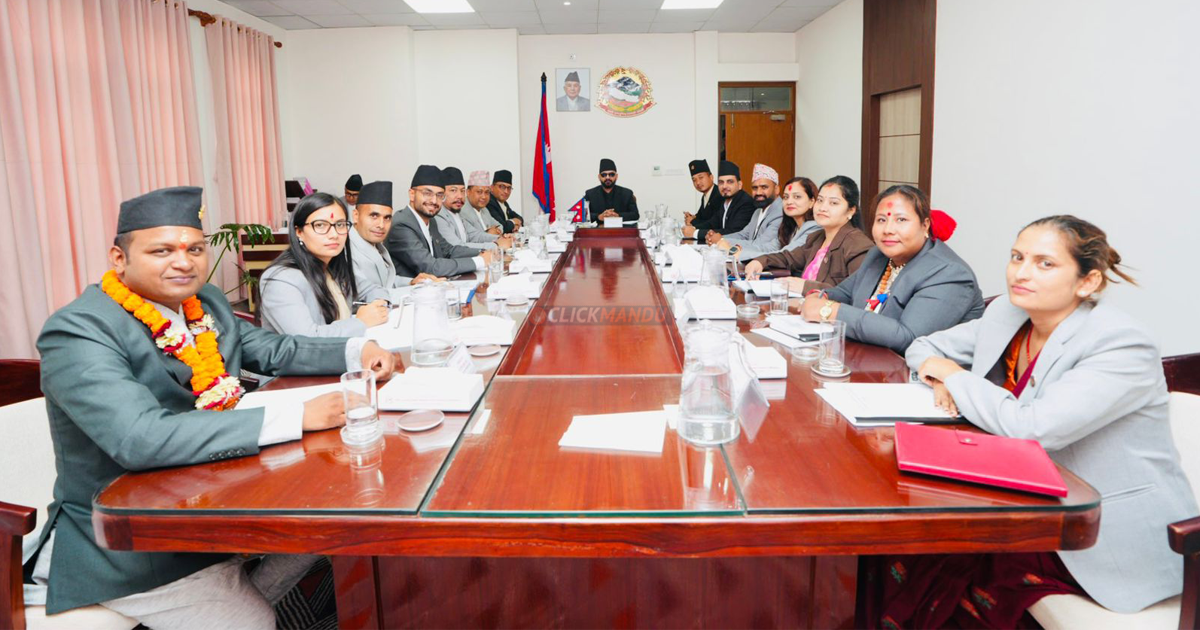

Kathmandu: A Cabinet meeting led by Balen Shah has endorsed a series of major policy decisions spanning economic management, infrastructure development, and administrative reforms.
The meeting on Tuesday approved the acceptance of a concessional loan worth 85 million US dollars from the World Bank to support the Greater Lumbini Area Development Project under the Ministry of Finance.
According to Minister for Federal Affairs and General Administration Pratibha Rawal, the Cabinet has also authorized the acquisition of private land in Dhunibesi Municipality for the western section of the Nagdhunga Tunnel project, as well as in Uttargaya Rural Municipality along the Betrawati–Dhunche–Syafrubesi road under the Pasang Lhamu Highway.
In a major boost to transport infrastructure, the government has permitted the use of 46.39 hectares of forest land across Kathmandu, Lalitpur, and Makwanpur districts for the construction of the Kathmandu–Terai Madhesh Fast Track. Approval has also been granted to cut down 18,898 trees required for the project.
On the administrative front, the Cabinet decided to relocate the Water Resources and Energy Research Centre from Pulchowk, Lalitpur, to Godawari, and shift the Secretariat of the Water and Energy Commission to the vacated premises. Additionally, Dr Gunakar Bhatta from Doti has been appointed as Vice Chair of the National Planning Commission, while Kiran Pandit has been named Deputy Governor of the Nepal Rastra Bank.
The Cabinet also accepted the resignations of the chairperson and members of the Problematic Cooperative Management Committee as part of ongoing institutional restructuring.
To address rising fuel import losses, reported at around Rs 11.72 billion in just the past 15 days, the government has decided to provide a 50 percent waiver on customs duties and infrastructure development tax on the import of petrol, diesel, and kerosene.
Minister Rawal further stated that additional measures are under consideration to curb fuel consumption, including declaring Sundays as public holidays, implementing an odd-even vehicle system, and promoting the use of electric vehicles and ethanol as alternatives.

Comment Here