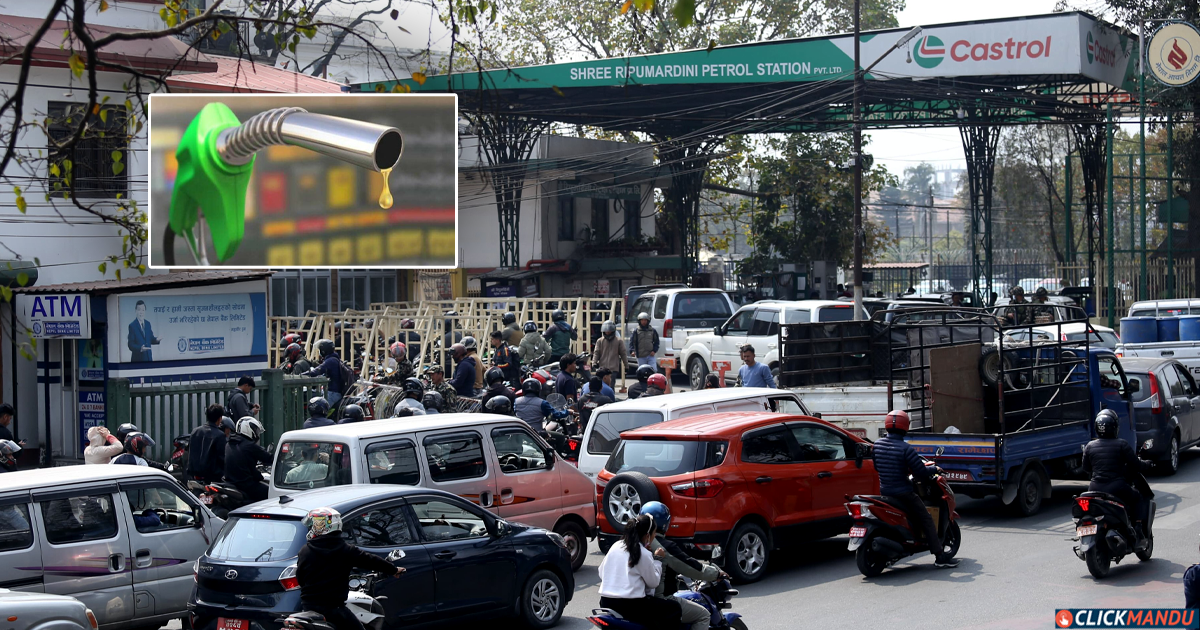

Kathmandu: As supply disruptions triggered by the West Asia conflict continue to strain global petroleum markets, the Nepal government is scrambling to cushion the domestic impact. In a bid to reduce fuel consumption and ease mounting losses, authorities have introduced measures including additional public holidays and tax relief for fuel imports.
A Cabinet meeting on Tuesday decided to slash customs duties and infrastructure development taxes on petrol, diesel, and kerosene imports by 50 percent. The move is aimed at providing financial relief to the state-owned Nepal Oil Corporation, which has been facing steep losses due to soaring international prices.
Despite recent price adjustments, setting petrol at around Rs 199.50 to Rs 202 per litre and diesel at Rs 179.50 to Rs 182, the corporation continues to sell fuel at a loss. Current estimates indicate losses of Rs 34.36 per litre on petrol, Rs 120.54 per litre on diesel, and Rs 416.37 per LPG cylinder. Even after the price revision, the corporation is incurring losses of nearly Rs 11.71 billion every two weeks.
Before the tax cut, the government imposed customs duties of Rs 25.23 per litre on petrol, Rs 12.03 on diesel and kerosene, Rs 2.13 on aviation fuel, and Rs 90.81 per LPG cylinder. Additionally, an infrastructure tax of Rs 10 per litre was levied on both petrol and diesel.
Following the Cabinet’s decision, these rates will be reduced by half. This means customs duties will drop to Rs 12.61 per litre for petrol, Rs 6 for diesel and kerosene, Rs 1.06 for aviation fuel, and Rs 45.40 per LPG cylinder. Similarly, the infrastructure tax on petrol and diesel will be cut to Rs 5 per litre, translating into total tax relief of Rs 17.61 per litre on petrol and Rs 11 on diesel.
However, for now, the benefit of these reductions is expected to primarily support the financial position of Nepal Oil Corporation rather than immediately lowering consumer prices.
According to the corporation’s data, even at minimum consumption levels over the past 15 days, Nepal has recorded sales of 34,000 kiloliters of petrol, 83,000 kiloliters of diesel, 865 kiloliters of kerosene, 2,615 kiloliters of domestic aviation fuel, 5,892 kiloliters of international aviation fuel, and over 1.52 million LPG cylinders. At current pricing and tax structures, the government faces an estimated total loss of around Rs 11.72 billion over two weeks.

Comment Here