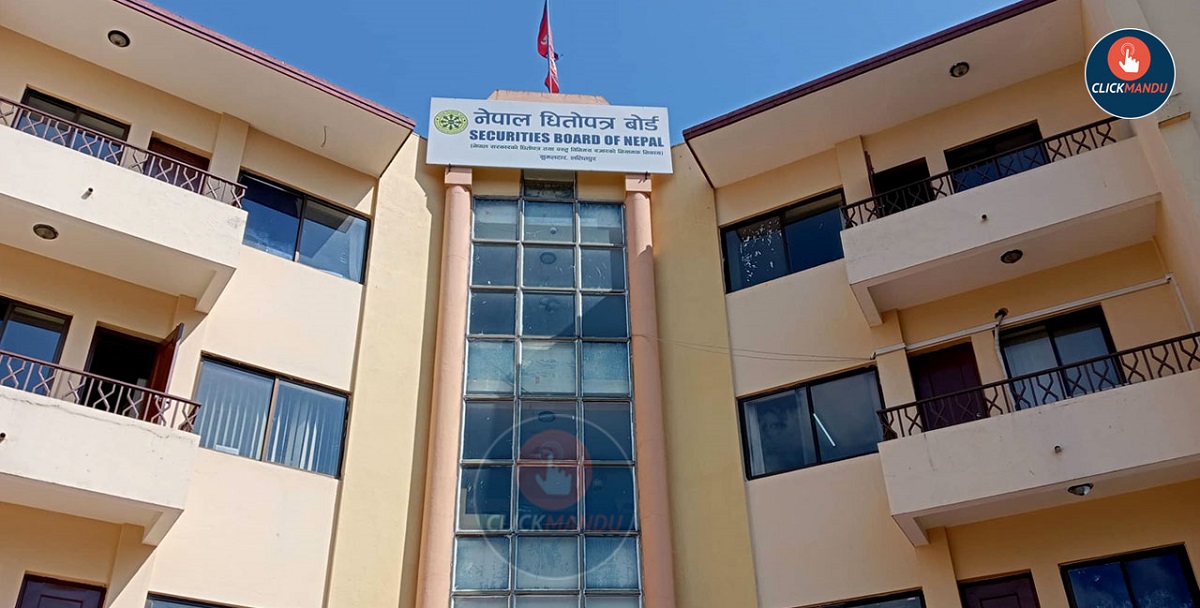

Kathmandu: Securities Board of Nepal (SEBON) has decided to implement new standards for reviewing financial statements submitted by companies seeking an Initial Public Offering (IPO), starting from Baisakh 1, 2083 (14 April 2026).
The decision was made during a board meeting held on 6 April, under provisions of the Securities Act 2009, which allows the regulator to order independent reviews of financial reports submitted by issuers and securities businesses when deemed necessary.
According to SEBON, the new “Financial Statement Review Standards 2025” aim to enhance transparency and ensure the credibility of companies entering the capital market. Under the new framework, companies applying for IPOs will face mandatory scrutiny if certain financial red flags are identified in their latest annual or interim reports.
For instance, if more than 75 percent of a company’s total sales revenue is recorded as receivables, or if adjusting for tax liabilities significantly weakens net worth and profitability benchmarks, SEBON will initiate a detailed review. Similarly, if such adjustments reduce net worth to half or less of paid-up capital, the company’s financials will be closely examined.
The regulator will also scrutinize companies if, over the past three years, more than 30 percent of major asset transactions involve related parties, or if accounting policy changes appear to have been made primarily to meet listing criteria.
Additional triggers include cases where profitability is driven mainly by non-operating income or reserve funds, where audit qualifications could render a company ineligible, or where past errors are corrected in a way that artificially improves financial indicators.
Sector-specific thresholds have also been introduced. Manufacturing companies will be reviewed if more than 75 percent of sales remain uncollected, while the threshold is set at 50 percent for hotel and tourism businesses. Hydropower and energy firms will face scrutiny if over 30 percent of project costs involve related-party transactions or if tariff manipulations are suspected to inflate profits.
For investment companies, SEBON will examine cases where more than 50 percent of capital is deployed outside core objectives or where frequent policy changes are used to meet financial benchmarks.
Beyond these criteria, the board retains discretionary authority to review any company’s financials if complaints are received or if directed by the Government of Nepal, constitutional bodies, or parliamentary committees.
SEBON stated that the move is intended to strengthen investor protection and build greater trust in Nepal’s capital market by ensuring that only financially sound and transparent companies are allowed to go public.

Comment Here