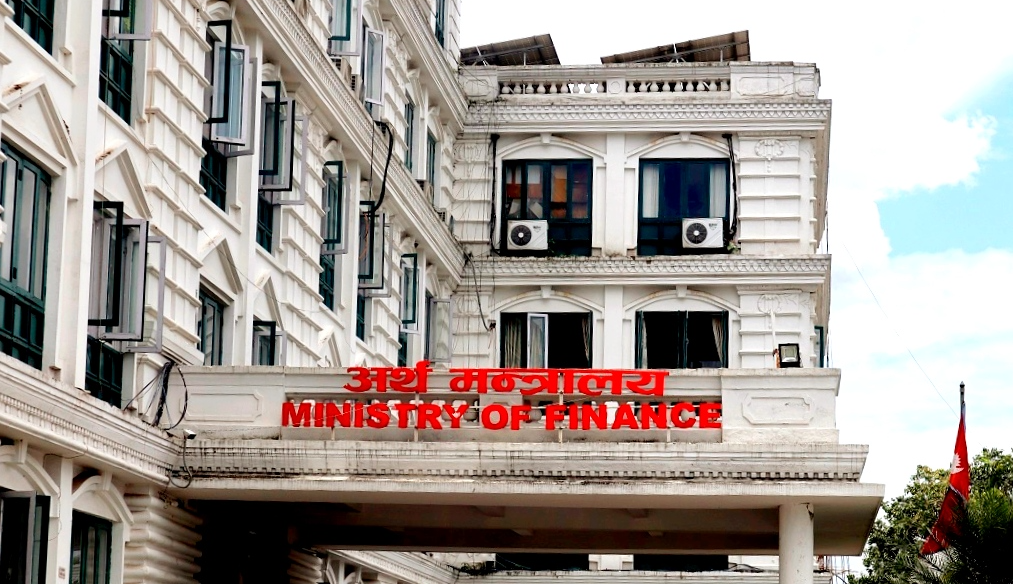

Kathmandu: The Government of Nepal has managed to spend just over half of its annual budget in the first nine months of the current fiscal year 2082/83 (mid-July 2025 to mid-April 2026), highlighting a widening gap between targets and actual performance.
Out of a planned expenditure of Rs 1.964 trillion, only Rs 1.059 trillion—about 54 percent—has been spent by the end of Chaitra, leaving a daunting Rs 905 billion to be utilized within the remaining three months.
This uneven pace underscores a significant imbalance: while it took nine months to spend 54 percent of the budget, the government must now disburse the remaining 46 percent in just a quarter of the fiscal year. Revenue collection has also fallen short. Although the target was set at Rs 1.48 trillion, only Rs 886 billion, or nearly 60 percent, has been mobilized so far, meaning the government must achieve the remaining 40 percent within the same tight timeframe.
Due to the inability to meet both revenue and expenditure targets, the Ministry of Finance revised the annual budget through a mid-year review. The original Rs 1.964 trillion budget, introduced by then Finance Minister Bishnu Paudel, was later reduced to Rs 1.688 trillion by Finance Minister Rameshwar Khanal following the Gen-Z protests. Even after slashing Rs 276 billion in projected spending, the government still faces an uphill task in utilizing the remaining funds effectively.
Capital expenditure remains particularly weak. Of the Rs 407 billion allocated for capital projects, only Rs 96 billion, around 23.6 percent, has been spent so far, raising concerns about delays in infrastructure and development works.
By the end of the review period, the government’s total income stood at Rs 907 billion against expenditures of Rs 1.059 trillion, resulting in a budget deficit of approximately Rs 150 billion.

Comment Here