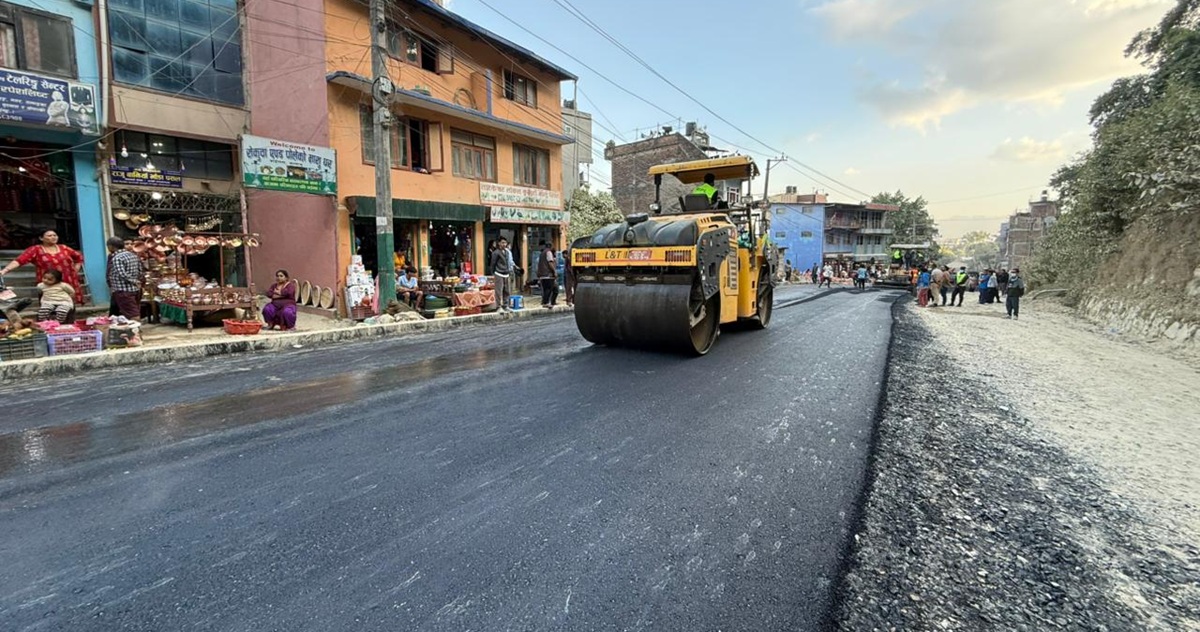

Kathmandu: Rising global fuel prices, driven by escalating tensions in West Asia, are taking a heavy toll on Nepal’s construction sector, sharply increasing costs and halting major infrastructure projects across the country.
Construction activities in Nepal rely heavily on diesel, kerosene, and bitumen, all of which have seen steep price hikes due to disruptions in global supply chains. The ongoing conflict involving the United States, Israel, and Iran has led to attacks on production facilities, reduced output, higher petrochemical prices, rising shipping costs, and increased marine insurance premiums—creating a cascading impact on Nepal’s infrastructure development.
According to the Federation of Contractors’ Association of Nepal President Nicholas Pandey, overall construction costs have risen by up to 40 percent, while road construction costs have surged as high as 70 percent. He warned that the sector is facing a serious crisis due to both soaring input costs and shortages of key materials.
“Prices of diesel and bitumen have skyrocketed due to global geopolitical tensions, pushing project costs up by 40 to 70 percent,” Pandey said, adding that uncertainty over pricing and lack of materials have made it nearly impossible for contractors to continue work.
As a result, road blacktopping projects across the country have largely come to a standstill. Projects such as Suryabinayak–Dhulikhel, Nagdhunga–Naubise, the Mid-Hill Highway, the Hulaki Highway, expansions of the Mahendra Highway, and the Gorusinghe–Butwal road have all been severely affected. Maintenance and resurfacing of damaged roads have also slowed significantly.
Bitumen shortages and sharp price increases have compounded the crisis. Contractors say the price of bitumen has jumped by as much as 50 percent, from around Rs 85–90 per kilogram to as high as Rs 135. Alongside this, the costs of diesel, kerosene, lubricants, cement, and steel rods have all risen, pushing overall construction costs up by at least 40 to 50 percent.
Former federation president Ravi Singh noted that contractors are now facing potential losses of up to Rs 4 million on projects worth Rs 10 million due to cost overruns. Nepal typically requires 10 to 20 million litres of bitumen monthly for road construction, making supply disruptions especially damaging.
Contractors argue they cannot continue work unless the government adjusts project costs to reflect current market realities. They have also pointed out that the shutdown of mines and crusher industries in various districts has further strained material supply.
More than half of infrastructure contracts nationwide, most of them related to road construction and maintenance, are now affected. Industry leaders warn that this could significantly impact capital expenditure and overall development progress.
The Ministry of Physical Infrastructure and Transport has acknowledged the seriousness of the issue. Joint Secretary Sushil Babu Dhakal said the ministry has begun internal discussions to address the problem, including exploring options for cost adjustments and relief measures.
Under existing rules, contractors must bear up to 10 percent of cost increases themselves. However, given the extraordinary surge in prices, the government is considering revising this threshold or introducing additional support mechanisms. A committee has also been formed under Dhakal’s leadership to study how to adjust project costs affected by price volatility and supply constraints.
Meanwhile, the Department of Roads confirmed that both small-scale and national pride projects have been impacted by rising fuel and bitumen prices, as well as supply challenges.
Contractors are calling on the government to ensure a smoother supply of critical materials and compensate for the gap between outdated project estimates and current market prices. They have also urged authorities to invoke provisions under the Public Procurement Act 2007, which allow for price adjustments and deadline extensions under exceptional circumstances.
Despite these demands, some officials have suggested that certain contractors may be attempting to exploit the situation to seek contract extensions and revised pricing without sufficient justification.
Globally, bitumen prices have increased by 20 to 25 percent between late January and mid-April, rising from around US$ 355–380 per metric ton to US$ 409–444. Nepal imported 88,158 metric tons of bitumen worth Rs 6.11 billion between mid-July and mid-February, up significantly from 65,085 metric tons worth Rs 4.55 billion during the same period last year. Most imports come from countries such as India, Malaysia, the UAE, Oman, the United States, and Turkey.

Comment Here