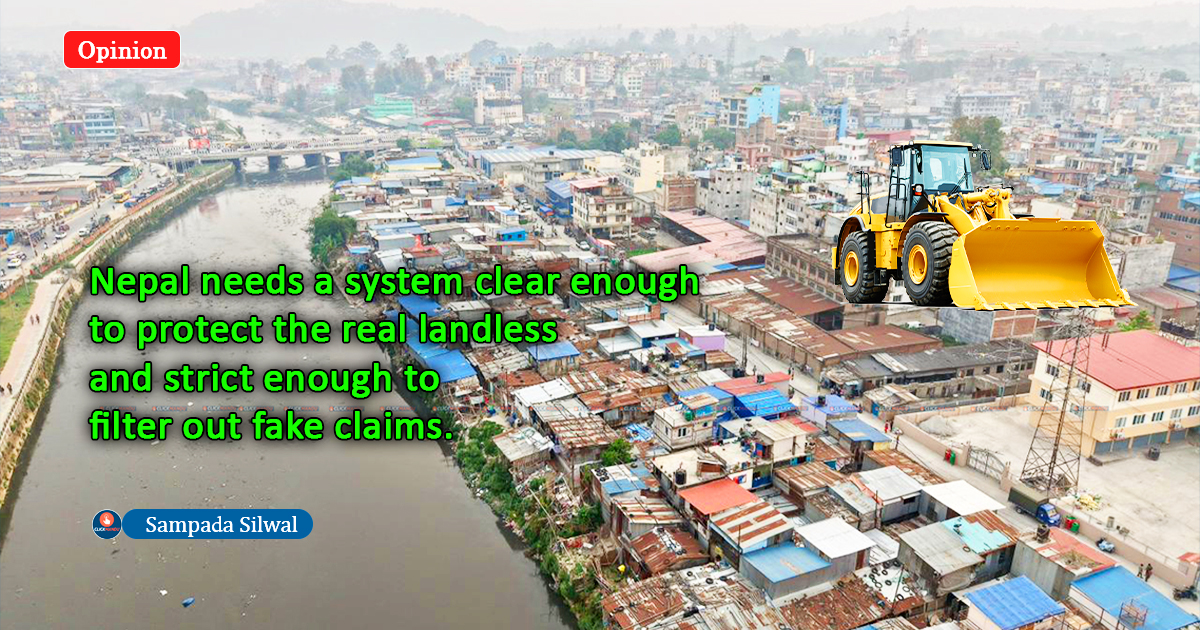

The issue of landless squatters, also known as Sukumbasi, is one of the most widely discussed topics in Nepal. Everyone seems to have an opinion. Social media is full of anger, certainty, and easy judgment.
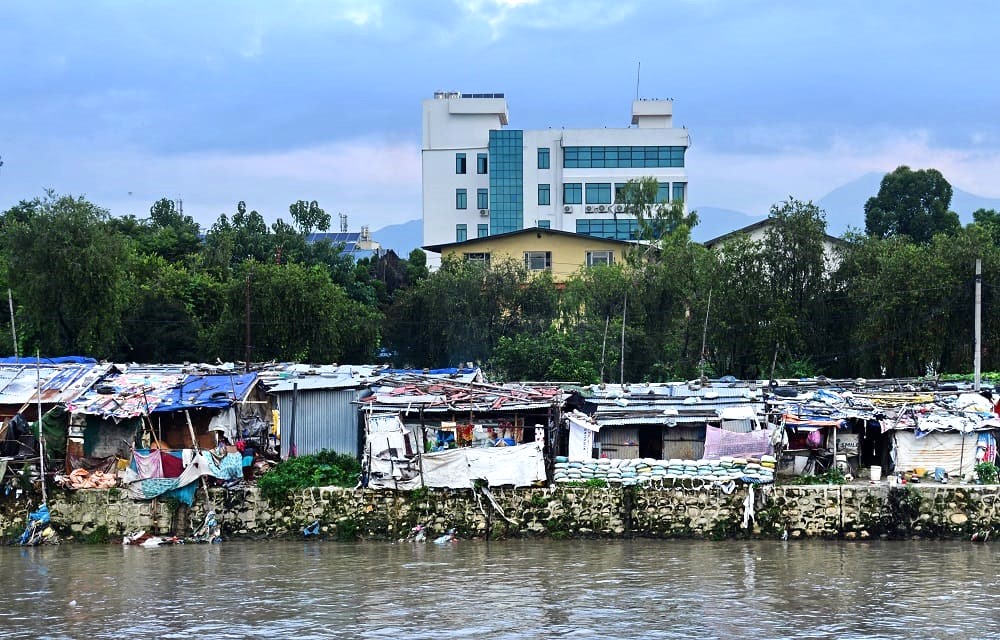
But what I keep asking myself is this: how many of the people giving strong opinions have actually seen how these families live? How many have spent time in these settlements, observed the residents’ daily lives, or understood what it means to live with fear as a permanent condition? It is easy to speak from a distance; it is much harder to understand what it means to sleep in a house that may be demolished any day, to send children to school not knowing whether they will return to the same home, or to leave for work, wondering if a bulldozer will arrive before evening or early morning. With every election or change in government, hope and fear co-exist in these settlements.
Amnesty International’s recent work on forced evictions in Nepal shows that this fear is not imaginary. Families in informal settlements have repeatedly faced eviction without proper safeguards, and the burden has fallen heavily on already marginalized communities.
I think the conversation in Nepal starts in the wrong place. We start by calling people encroachers. We start by assuming fraud. We begin by assuming that every person living in a squatter settlement is the same. But even the law does not say that. The legal framework distinguishes between “landless squatters” and “unmanaged dwellers.”
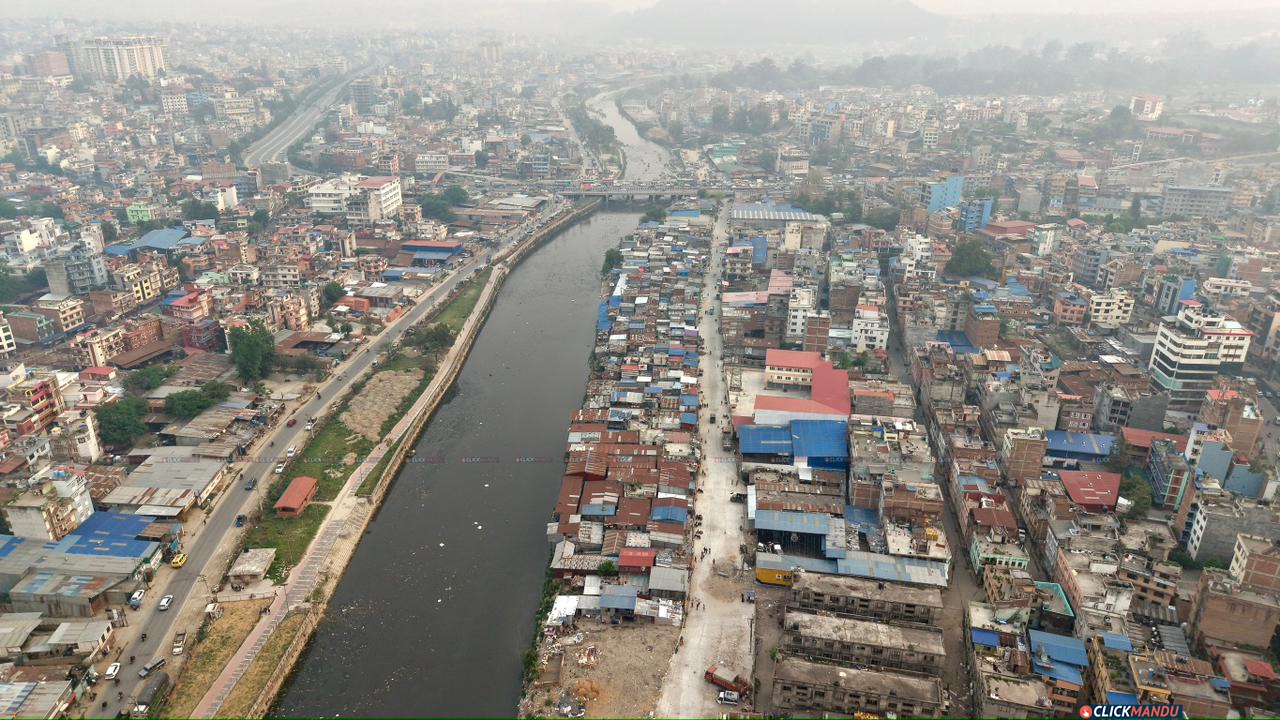
A landless squatter, in the legal sense, is a person or family that has never had land ownership and cannot manage land through their own income, effort, or resources. That is very different from the public imagination that treats all Sukumbasi as opportunists waiting to grab land. It’s a reality that some people are misusing the system. But many others are where they are because of poverty, exclusion, migration, disaster, displacement, and the long failure of the state to make land and housing accessible. By looking at one or two examples, we can’t generalize about everyone and see them from the same perspective. It’s an injustice towards them that we do as a society.
During the campaign, Balendra Shah also spoke about the squatter issue in both legal and humane terms
What frustrates me the most is that the landless suddenly become visible during elections. At that time, everyone speaks the language of humanity. During the election campaign, the question of what would happen to landless squatters was a serious concern for many people. That fear was already alive because of the bulldozer action in the Thapathali area, which had sent a message of insecurity not only to the people living there, but to landless communities across the country. At the same time, leaders who were asking for public trust were also making strong promises.
In rallies across the country, Rabi Lamichhane accused older parties of spreading rumours that the RSP would use bulldozers against poor settlements if elected. He said that landless settlers had been used as a “vote bank” for decades and claimed his party would end that politics by providing real land ownership certificates. Other political leaders also gave hope to people living in squatter settlements that they would not be displaced without a proper resettlement plan.
During the campaign, Balendra Shah also spoke about the squatter issue in both legal and humane terms. The promises were big and very clear. There was talk of forming a powerful commission within 100 days and fully resolving the squatter issue within 1000 days. There were commitments to resettle squatters living in dense urban areas through an apartment model or in other suitable locations. There were repeated assurances that “genuine” landless people would not be treated unfairly, and that no displacement would happen without proper management and safe housing.
The RSP’s election manifesto also said it would end the old practice of using squatters only as a vote bank. It promised land ownership certificates within two years for landless squatters and unmanaged settlers, and even spoke about making Nepal free from the squatter problem. There was also a promise to form a high-level national land rights authority to scientifically manage land, identify genuine landless people, and ensure their housing rights. The message was that earlier governments had only given false hope, but this time things would finally be different.
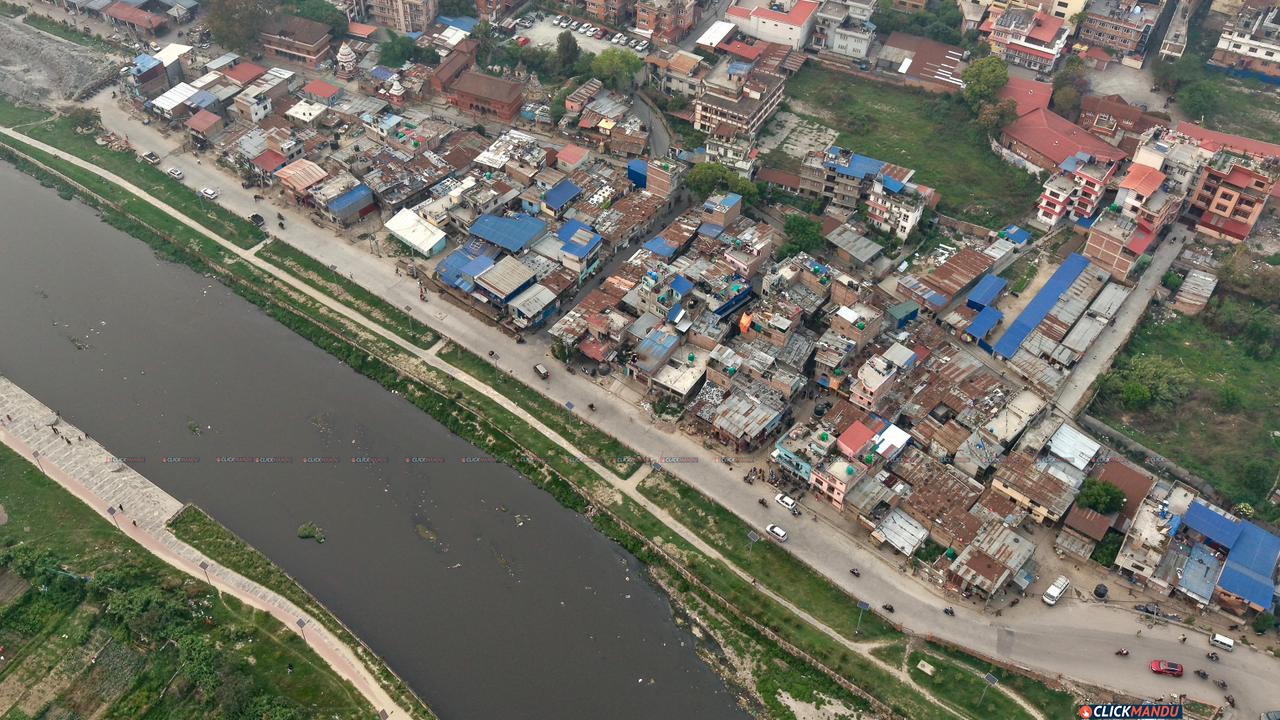
But news is right now coming up that the government has decided to clear the Thapathali settlement by this coming weekend. What makes this even more disturbing is that the plan appears to be to move residents into temporary places like lodges first, and only then carry out final verification to identify who is a “genuine” landless person. That turns the whole promise upside down. If verification is supposed to be scientific, fair, and humane, why is force coming before certainty? Why are people being pushed out first and identified later? This is exactly the kind of politics people were told would end; this is exactly what the elected candidate reassured will not happen.
That is why this moment feels so frustrating. The issue of landless squatters is again starting to look less like a matter of justice and more like a matter of political convenience. During elections, they are spoken to with sympathy. There are promises of dignity, housing, and ownership; there is assurance that they will no longer be used. But once power is secured, they are again the first people asked to move, wait, prove themselves, and live under uncertainty. Even if the government’s intention is good, the haste, the lack of preparedness, and the decision to act before full verification make the whole process deeply concerning. A government that truly sees itself as different should first act differently, should act as a guardian of the landless, not as a source of new fear.
Of course, the state has a duty to identify fake claimants; no one is denying that. However, genuine landless families should not be pushed aside by people who are misusing the system. But that process must be fair, transparent, and humane. Verification, trust and rehabilitation should come first. The government should enter these settlements first as a guardian, not first as a threat. Because when families are already living with fear, and the state responds mainly with deadlines, notices, police, and bulldozers, it is not solving the problem; it is deepening the wound.
So, how should genuine squatters be identified when some people are pretending?
How do we separate genuine landless squatters from those who are only pretending? This cannot be decided through rumour, political pressure, police force, or whoever has the loudest voice
The answer is not rumour, police action, or political patronage. The answer is a transparent verification system. The commission’s own process, as described in Amnesty’s review, includes household surveys, community engagement, public hearings, land mapping through GIS, satellite imagery, drones and ground surveys, and then cross-checking claims before final lists are prepared. Earlier efforts also developed software to detect whether an applicant already possessed land elsewhere. This is the direction Nepal must strengthen: evidence-based identification, registry cross-checking, ward-level verification, social audits, and clear appeal mechanisms. Genuine claimants should be protected; fraudulent applicants should be filtered out. A just policy must be both humane and strict.
There are already signs of what better management can look like. In Nepal, local verification supported by technical mapping has helped some families finally receive land titles. In Dhangadhimai Municipality, 143 households had received titles by 2024 under a reform process supported by the government and land partners. In Lamahi Municipality’s Kanchhi Tole, a locally conducted verification process led to land ownership certificates being distributed to 23 families, showing that when state institutions go to the community instead of forcing communities to chase distant offices, results become possible. These are small examples, but they matter because they show that progress comes from verification, partnership, and administrative seriousness, not from dramatic eviction campaigns.
Then the question is: how do we separate genuine landless squatters from those who are only pretending? This cannot be decided through rumour, political pressure, police force, or whoever has the loudest voice. That is exactly how injustice begins. If the state is serious, then identification has to be transparent, patient, and evidence-based. It should begin with proper household surveys, community-level engagement, public hearings, GIS mapping, satellite images, drone support where needed, ground verification, and cross-checking of claims before any final list is prepared.
If someone already owns land elsewhere, that should be detected through proper records and software systems, not through guesswork or selective targeting. Nepal does not need more dramatic action. It needs a system that is clear enough to protect the real landless and strict enough to filter out fake claims. A just process cannot be only soft, and it cannot be only harsh. It has to be humane and disciplined at the same time.
And the truth is, Nepal already has some signs of what a better approach can look like. There have been cases where verification, mapping, and local-level coordination have actually helped families receive land titles. In Dhangadhimai Municipality, more than a hundred households were able to get titles through a process backed by proper technical and institutional support. In Lamahi’s Kanchhi Tole, families received land ownership certificates after a locally grounded verification process. These may look like small examples in a country with such a large and unresolved problem, but they still matter. They show that when the state goes to people with seriousness, instead of only going to them with threats, results are possible. They show that progress comes from verification, partnership, and administrative honesty, not from bulldozer politics and rushed campaigns.
In the end, this decision cannot be taken through a top-down approach where plans are made in offices and fear is delivered on the ground. If the state is serious, it must begin with participation, facts, and proper planning, not assumptions, pressure, or rushed action. Before the bulldozer arrives, the state should reach the landless and stand there first as a guardian, not as a threat.
Development, after all, is not only about building roads, clearing riverbanks, or creating green spaces. Development means protecting the rights of those who have the least, ensuring the well-being of those who are weakest, and making sure the voiceless are not crushed in the name of order. In Thapathali, the dream of a green space can wait another year if needed, but the protection of genuine landless families cannot wait.
Those who were elected through proportional representation, and those who received the trust and votes of these same communities, have a special responsibility to become the voice of the voiceless, not silent witnesses to their displacement. If this government truly wants to be different, then it must prove that justice comes before display, facts before force, and people before machines.
The writer is a postgraduate student of Development Studies at Kathmandu University with experience in research, fieldwork, and community engagement, focusing on social protection and inclusive development.

Comment Here