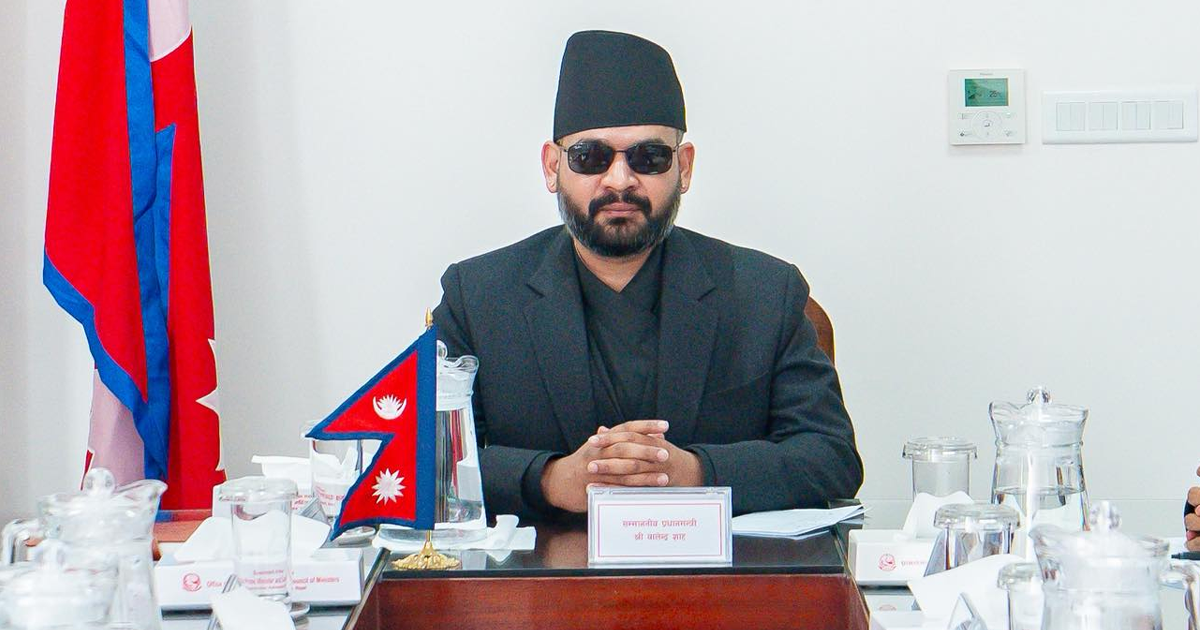

Kathmandu: It has been one month since Balendra Shah led the Rastriya Swatantra Party to power with a near two-thirds parliamentary majority, marking one of the most dramatic political transitions in Nepal’s recent history.
Shah officially took office on March 27 after his party’s landslide victory, carrying with it an enormous public mandate for anti-corruption reform, faster governance and a clean break from traditional political leadership.
The first month of the new government has been marked by an unusual combination of speed, symbolism and controversy. On its very first day, the cabinet unveiled a 100-point governance reform agenda, an aggressive roadmap focused on bureaucratic efficiency, digital public services, anti-corruption enforcement, depoliticization of state institutions and long-promised structural reforms.
That opening burst of activity has undeniably created a sense of movement that Nepal had not seen under previous administrations. Across ministries, long-stalled files have been pushed, digital tracking systems introduced, administrative deadlines imposed, and several citizen-facing services simplified.
The government has moved to shorten timelines for SEE results, streamline passport and driving licence applications, digitize educational certificates, tighten attendance and workflow rules inside government offices, and expand online delivery of official approvals. These are the kinds of small but visible interventions that have allowed the administration to project itself as a “work-first” government rather than a speech-first one.
At the political level, the Shah administration has also tried to distinguish itself through hard-edged accountability optics. Investigations have been opened into former high-ranking office bearers, a commission has been formed to scrutinize the assets of public officials over the last two decades, illegal betting platforms have been blocked, middlemen in transport and land revenue offices have been targeted, and an assertive anti-money laundering campaign has begun reaching into Nepal’s business elite. Some of these steps have been applauded by citizens who voted for a decisive anti-corruption reset, and the shutdown of illegal gambling platforms in particular drew strong public approval online.
Yet one month has also been enough to reveal the first signs of friction between reformist energy and governing maturity.
The government’s crackdown-oriented style has unsettled the private sector, where arrests and detentions of major industrialists under money laundering investigations have generated concern over due process. Business groups say wrongdoing should certainly be punished, but they have begun warning against a “detain first, investigate later” mindset that could weaken investor confidence at a time when Nepal’s economy remains fragile.
Similarly, the administration’s handling of informal riverbank settlements has produced mixed reactions. While the government claims it has begun relocating landless and high-risk squatter communities in line with its manifesto promises and state land recovery commitments, rights advocates and affected families remain anxious that the push for visible enforcement could outpace humane resettlement planning.
Another early challenge has been internal credibility. Despite the government’s anti-corruption branding, two ministers have already exited within the first month, one dismissed over nepotism concerns and another, Home Minister Sudan Gurung, resigned after scrutiny over his financial dealings and business links. The resignations have underlined that the Shah administration is not insulated from the same transparency tests it has imposed on others.
Public sentiment, therefore, remains split between excitement and caution. Supporters argue that no government in recent memory has moved this fast in its opening weeks and that Nepal’s bureaucracy needed a shock treatment after years of inertia. Critics counter that velocity alone is not governance, warning that inexperienced decision-making, centralized power and headline-grabbing enforcement can easily slip into administrative overreach if institutional safeguards are weak. That tension is increasingly visible in public discourse, where online debate shows admiration for quick action but also growing unease about authoritarian instincts, poor consultation and inconsistent appointments.
Still, there is little doubt that this first month has succeeded in one political objective: it has made citizens feel that the state is no longer motionless. Whether through the “zero file week,” weekend public holiday restructuring, digital governance pushes, anti-encroachment drives, education policy shifts, or the opening of long-taboo corruption files, the government has sent a message that it intends to govern disruptively rather than ceremonially.
But the burden on Balendra Shah is now heavier than at the time of his swearing-in. Election slogans can survive on anger and aspiration; governments survive on consistency, legality, institutional discipline and economic confidence. The same public that has celebrated the collapse of old political dominance is also watching closely for signs that this new power centre can do more than perform urgency.
One month in, the Balen government has undoubtedly created hope. It has also created fear in some sectors, discomfort in entrenched networks and legitimate questions among observers. That may be the inevitable profile of any administration trying to rewrite Nepal’s political habits overnight.

Comment Here