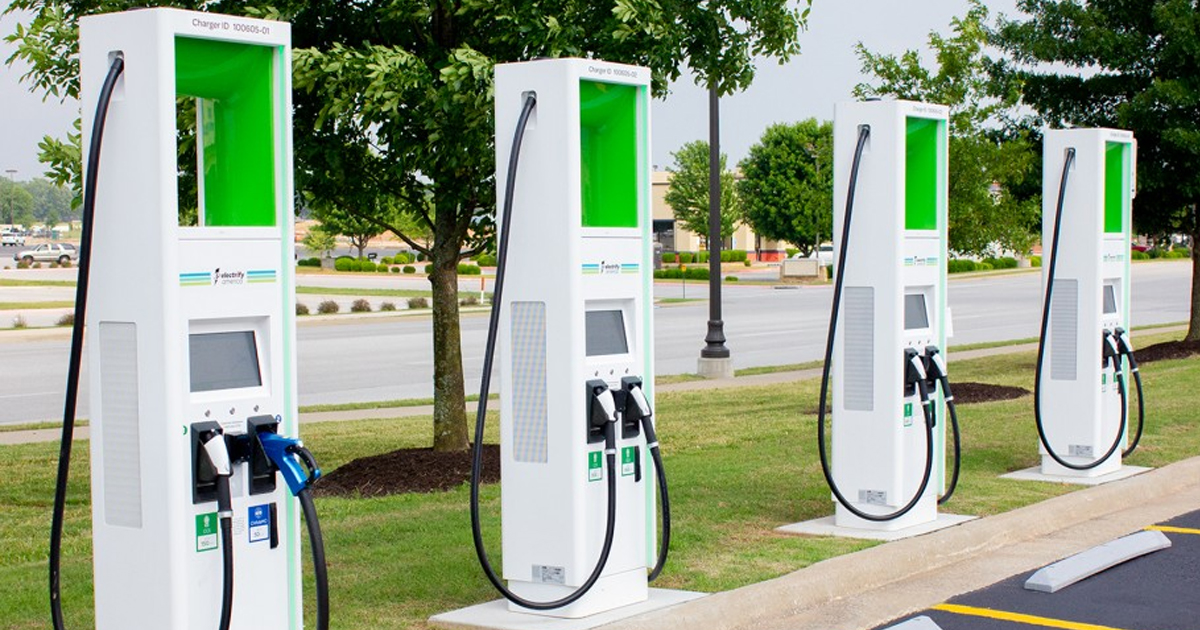

Kathmandu: The government has proposed an ambitious national strategy to accelerate the adoption of electric vehicles (EVs), including the construction of 10,000 charging stations across the country and a legal framework to convert old fuel-powered vehicles into electric ones.
The recommendations were made by a government task force led by Joint Secretary Engineer Krishna Raj Pantha of the Infrastructure Development and Transport Division. The committee was formed to study policies, imports, market conditions, quality standards, and institutional arrangements related to EVs in Nepal.
A ministerial meeting on September 15 last year had approved the formation of the task force to assess the current state, opportunities, challenges, and future potential of electric mobility in Nepal, along with the legal and policy reforms needed to support the sector.
The report submitted to the government outlines a broad roadmap for the commercial expansion of electric vehicles, emphasizing both large-scale charging infrastructure and the conversion of ageing internal combustion engine vehicles into EVs.
To ensure the long-term sustainability and commercial success of the EV sector, the task force has recommended sweeping policy, technical, and institutional reforms. After analyzing the strengths and weaknesses of Nepal’s EV ecosystem, the report concludes that at least 10,000 charging stations should be operational nationwide by 2030.
According to the report, Nepal’s electric mobility sector presents major technological, economic, and social opportunities. Emerging battery technologies such as lithium-ion and LiFePO4, along with smart charging networks and integration with solar power, could significantly enhance the country’s technical capabilities.
Economically, the report notes that EV adoption could reduce Nepal’s dependence on petroleum imports and lower operating costs. However, high upfront costs and uncertainty among investors remain key obstacles.
On the social front, EV expansion is expected to reduce air pollution and improve public health, although the report identifies limited rural access and low consumer confidence as continuing challenges.
The task force also highlighted delays in policy implementation and poor coordination among agencies, recommending stronger operational cooperation among federal, provincial, and local governments.
To improve transparency and monitoring, the report proposes a digital platform that would track charging station data, vehicle registration, and operational status in real time.
If fully implemented, the strategy could strengthen Nepal’s energy security, reduce the trade deficit, and help the country meet its environmental and climate goals, the report states.
The report further recommends introducing legal provisions to allow older internal combustion engine vehicles to be converted into electric vehicles, especially in cases where spare parts are no longer available in the market. It also calls for policies that would permit the renewal and operation of such converted vehicles.
To support large-scale public EV adoption, the task force has proposed subsidized bank interest rates and financing facilities covering up to 80 per cent of the purchase cost for public electric transport vehicles.
The government has also been advised to make EV procurement mandatory across all public agencies and to introduce special EV routes and discounted fares for electric public transport users.
For financing the transition, the task force recommends mobilizing “green funding” through international financial institutions such as the World Bank, Asian Development Bank, and UNDP. It also suggests gradually phasing out subsidies on petroleum imports and redirecting those savings toward EV infrastructure development.
To encourage consumers, the report proposes guaranteeing stable EV transport fares for at least five years and introducing green lane markings or dedicated “special EV routes” on roads.
The report places strong emphasis on charging infrastructure. It recommends amending building codes so that all new commercial buildings must include designated parking spaces equipped with EV charging facilities.
On highways, the task force proposes maintaining a charging ratio of one charging point for every 20 vehicles initially, eventually improving that ratio to one charger for every 10 vehicles.
By 2030, Nepal should have at least 10,000 charging stations nationwide, according to the report. It also recommends developing solar-powered charging systems in rural areas and ensuring that highway charging stations maintain a minimum uptime of 97 per cent. Public-private partnership models have also been proposed for the construction of charging stations and roadside refreshment centres.
The report stresses that the future of transportation must be not only electric but also technologically advanced. It recommends prioritizing Advanced Driver Assistance Systems (ADAS) such as automated braking, lane assist, and cruise control in EVs.
It also highlights the need to develop systems enabling communication between vehicles and between vehicles and infrastructure, commonly known as vehicle-to-vehicle (V2V) and vehicle-to-infrastructure (V2I) technologies.
Battery management and quality control are another major focus of the report. The task force has proposed strict “battery take-back” policies and mandatory Extended Producer Responsibility (EPR) systems, requiring manufacturers or importers to reclaim used batteries once they reach the end of their life cycle.
Under the proposal, importers and manufacturers would be legally responsible for collecting, safely disposing of, or recycling batteries after use.
The report also recommends setting minimum standards for battery size, capacity, and quality, allowing only vehicles that meet those standards to be imported into Nepal.
Detailed safety certification and international compliance standards have also been proposed. The task force recommends that all imported EVs, batteries, and chargers comply with International Electrotechnical Commission (IEC) and ISO standards.
To ensure interoperability among charging stations, the report recommends making software systems such as Open Charge Point Protocol (OCPP) and Charging Management Systems (CMS) mandatory nationwide.
For charging infrastructure, the task force proposes adopting “Type 2 AC” and “CCS2 DC” chargers as Nepal’s default national standards.
The report also highlights the need to develop skilled technical manpower. It recommends that institutions such as CTEVT establish specialized courses and training centres focused on EV repair, battery management, and charging systems.
In addition, the Nepal Bureau of Standards and Metrology has been advised to establish testing laboratories for EVs and batteries, while the Department of Transport Management should create systems to monitor battery State of Health (SOH).
The report further recommends mandatory overload protection and remote monitoring systems at charging stations to enhance safety and reliability.
Consumers should also receive guaranteed information on battery life cycles, and vehicle purchase agreements should legally require companies to take back batteries after they reach end-of-life status.
The report additionally proposes setting up specialized battery recycling plants under public-private partnerships by 2030.
The task force has divided implementation into three phases. The short-term phase, covering the next one to two years, focuses on policy clarity, expansion of charging stations in major cities, technical training, and public awareness campaigns.
The medium-term phase, spanning three to five years, aims for full electrification of public buses and taxis, expanded financial incentives, nationwide charging networks under PPP models, and broader investment promotion packages.
The long-term phase, covering five to ten years, targets extending EV access to rural areas, establishing battery recycling plants, facilitating international technology transfer, and eventually manufacturing or assembling electric vehicles within Nepal itself.

Comment Here