
Kathmandu: The government has announced an ambitious plan to bring all types of financial transactions onto digital platforms in the upcoming fiscal year as part of its broader strategy to build a cashless and transparent economy.
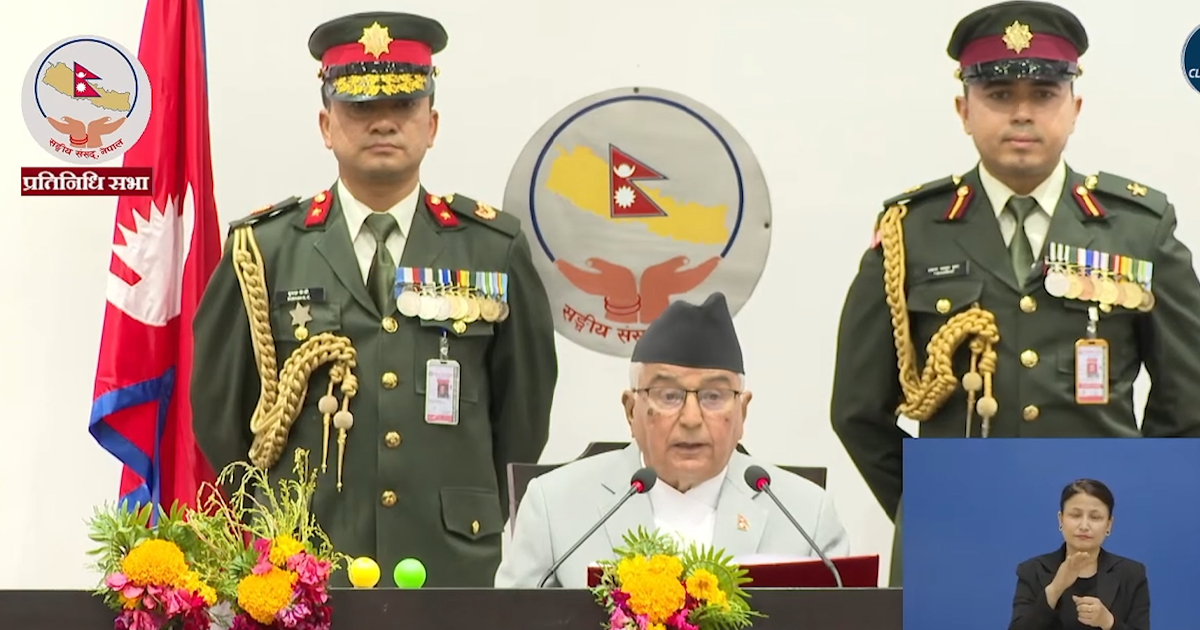
Presenting the government’s policy and program for fiscal year 2026/27 at a joint session of the Federal Parliament on Monday, President Ram Chandra Paudel outlined a series of economic reform measures aimed at strengthening the economy and modernizing Nepal’s tax system.
The government said it would focus on formalizing the economy, curbing revenue leakage and establishing a more transparent revenue administration system.
In a move aimed at supporting entrepreneurs and middle-class households, the government also announced plans to review the existing tax structure. The policy document states that the tax burden on middle-income families will be reduced while encouraging greater voluntary tax compliance.
The government further pledged to make revenue administration more technology-friendly and develop new mechanisms to resolve tax disputes more quickly and efficiently.
To attract investment and facilitate international trade, Nepal also plans to expand double taxation avoidance agreements with various countries.
Another major policy shift involves consolidating scattered charges related to pollution, infrastructure and other sectors into a unified green tax system.
The government also reiterated its commitment to tightening controls against under-invoicing at customs points and fully automating tax refund procedures — including VAT refunds — within fixed timelines.
In addition, the administration announced that it would strictly implement risk-based regulation, supervision and prosecution systems in line with international anti-money laundering standards.

Comment Here