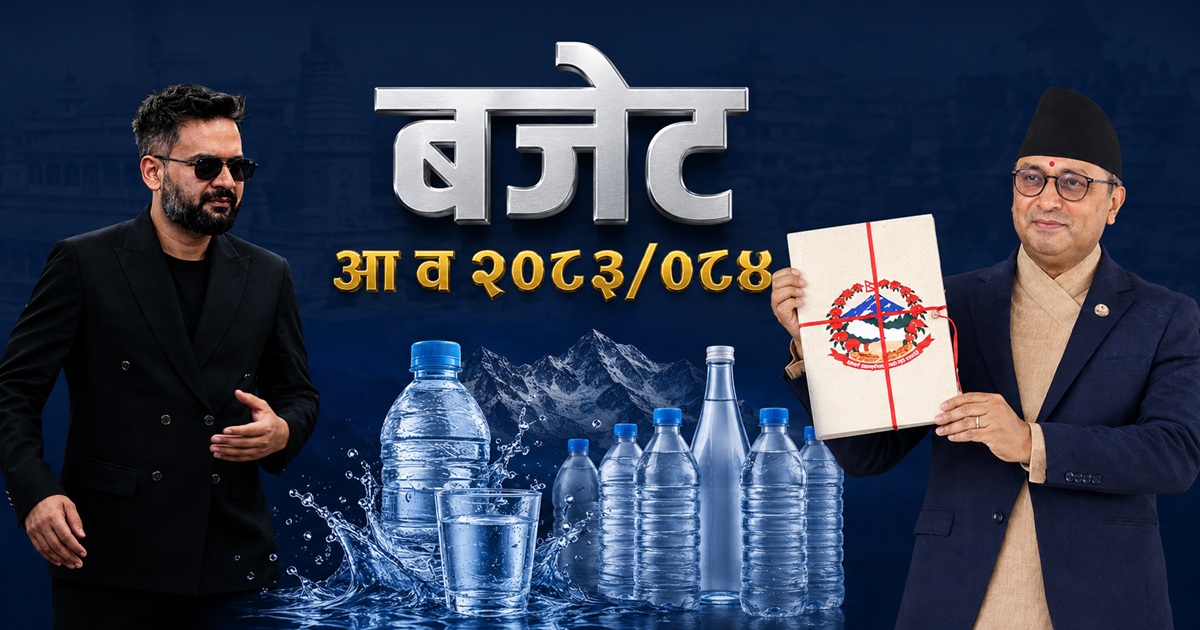

Kathmandu: In a move that contradicts the Balen Shah government’s stated goal of branding “Nepali Water” internationally, Finance Minister Dr Swarnim Wagle has reduced the customs duty on imported mineral water. Despite the government’s rhetoric regarding self-reliance and global exports, the new budget makes foreign water cheaper for domestic consumers.
Previously, imported water was subject to a 40 percent customs duty, which has now been slashed to 30 percent through the Finance Bill for the upcoming fiscal year. This 10 percent reduction directly undermines the “Himalayan Origin Certified Water” concept introduced in the government’s recent Policy and Programmes. That policy, presented by President Ram Chandra Paudel in the Federal Parliament, specifically aimed to brand and promote Nepali water on the global stage.
Critics point out the irony of a government that publicly pledges to take Nepali water to the world while simultaneously providing incentives for foreign water to enter the local market. With the customs duty cut, the total cumulative tax burden on imported mineral water has dropped from 58.20 percent to 46.9 percent, making luxury foreign brands more competitive against local producers.
Market data suggests that the demand for imported water is already on the rise. In the previous fiscal year, Nepal imported approximately 40,862 litres of mineral water, generating 6.9 million rupees in revenue. However, in the first ten months of the current fiscal year alone, imports have surged to 68,735 litres, with the government collecting 9.5 million rupees in customs duties.
By lowering the barrier for imports at a time when local branding should be the priority, the Finance Minister’s move has raised questions about the internal consistency of the Balen administration’s economic strategy. Rather than protecting and promoting a domestic resource, the new fiscal policy appears to encourage the consumption of imported alternatives.

Comment Here