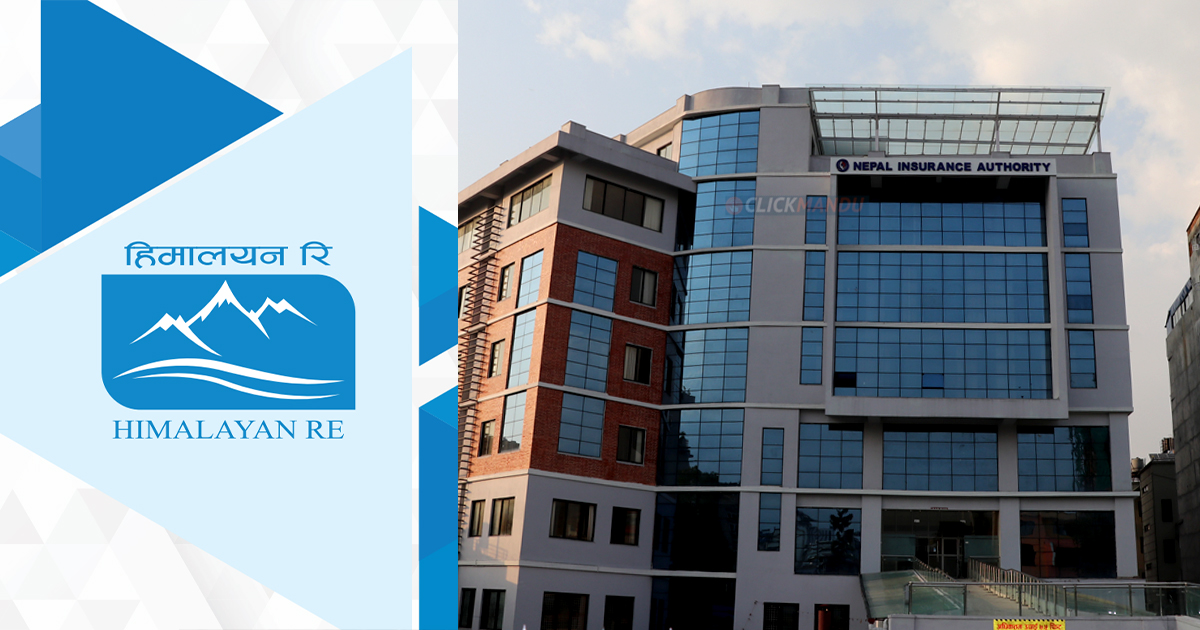

Kathmandu: Himalayan Re-Insurance, the sole private-sector reinsurer in Nepal, is currently navigating a period of significant instability. A convergence of factors, including a ban on new business imposed by the Nepal Insurance Authority, ongoing investigations into insurance-related offences, and alarming findings regarding its internal operations, has raised serious questions about the company’s long-term viability. These challenges are testing the resilience of a firm that was once seen as a burgeoning force in the regional insurance market.
The Nepal Insurance Authority, acting under the provisions of the Insurance Act 2022, has prohibited the company from accepting any new reinsurance business until the end of the current fiscal year. This regulatory freeze has effectively paralyzed the company’s growth, restricting its operations solely to settling old claims and managing retrocession. Industry experts and CEOs of various insurance firms note that this disruption has broken the strategic business “chain” the company had built both domestically and internationally. Clients who previously sought coverage from Himalayan Re are now migrating to competitors, and restoring its damaged reputation and market share is expected to be a long and arduous process.
Beyond regulatory sanctions, the company is facing an increasingly hostile policy environment. The latest national budget presented by the government has introduced measures that further squeeze Himalayan Re’s market space. A new mandate requires all domestic insurance companies to cede at least 20 percent of their business to the state-owned Nepal Re-Insurance Company. Furthermore, lucrative insurance “pools,” such as foreign employment term life insurance, which were previously managed by Himalayan Re, are being shifted back to the state-owned reinsurer. Experts argue that this policy shift creates an uneven playing field, questioning why the government issued a license to a private reinsurer if it intended to maintain a state monopoly through policy intervention.
The financial health of the company has taken a dramatic turn for the worse, according to recent data. While the company recorded a profit of nearly one billion rupees in the third quarter of the previous fiscal year, the third-quarter report for the current fiscal year shows a staggering net loss of 4.43 billion rupees. This decline is attributed to a massive surge in total expenses, which rose by over a billion rupees compared to last year, alongside a significant spike in claim payments. Although the company’s second-quarter reports had shown a profit of over 640 million rupees, the subsequent quarter has seen a total reversal of its financial fortunes, pushing the company into a state of economic contraction.
Despite these domestic setbacks, there is a silver lining in the company’s international standing. In February 2026, the international rating agency AM Best maintained Himalayan Re’s Financial Strength Rating at ‘B+’ and its Long-Term Issuer Credit Rating at ‘bbb-’. This assessment suggests that the company’s capital base remains robust and its investment risk is considered low to moderate. AM Best noted that the company’s capital adequacy is a primary strength, though it highlighted that the geographic concentration of business in Nepal, a high-risk seismic zone, remains a persistent challenge that is only partially mitigated by risk-sharing arrangements.
However, legal and ethical controversies continue to overshadow these technical strengths. Investigations by the Insurance Authority have revealed that Himalayan Re has an outstanding balance of over 2.73 billion rupees to be recovered from Bhrikuti Stock Broking, a figure that has swelled significantly compared to the previous year. Furthermore, the company has been found in violation of investment guidelines. While regulations cap a reinsurer’s investment in listed public companies at 15 percent, Himalayan Re’s exposure reached over 23 percent. There are also concerns regarding a conflict of interest, as the company purchased substantial shares in micro-insurance firms where its own core shareholders hold significant stakes.
In conclusion, while Himalayan Re-Insurance is not currently in a state of immediate collapse, bolstered by its 18 billion rupee investment portfolio and strong shareholder funds, it is undoubtedly in a defensive posture. The combination of regulatory bans, unfavourable government policies favouring the state-owned competitor, and the fallout from financial misconduct investigations has created a perfect storm. For the company to secure its future, it must not only navigate these legal hurdles but also regain the trust of a market that is increasingly looking toward more stable alternatives.

Comment Here