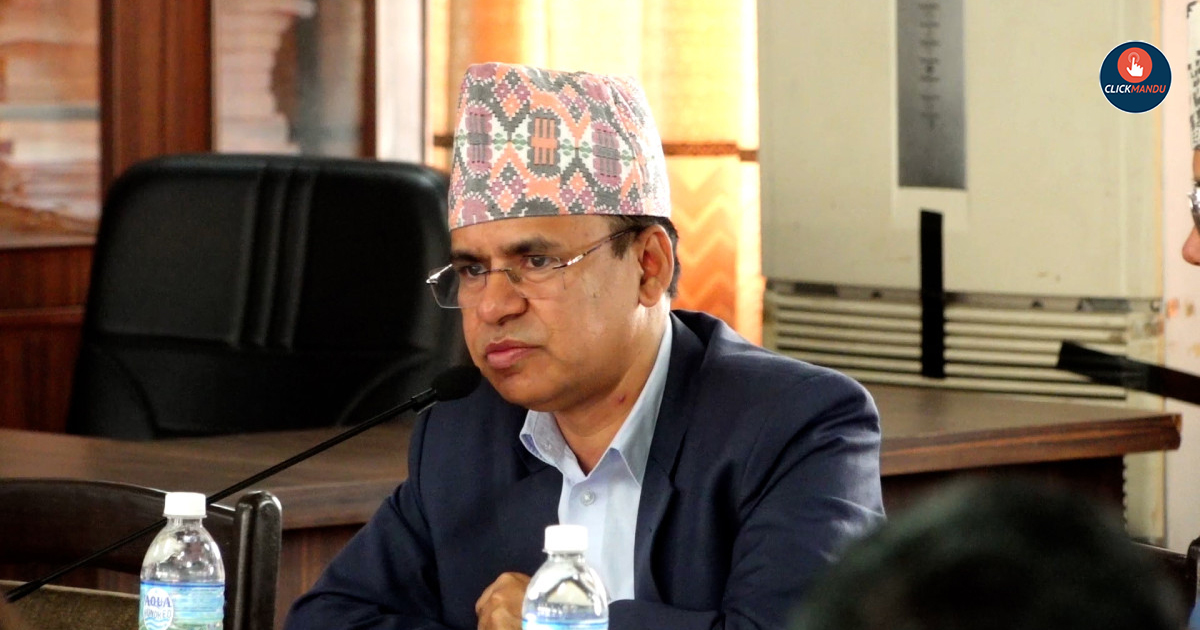

Kathmandu: Finance Secretary Ghanashyam Upadhyay recently addressed concerns raised by lawmakers regarding the last-minute adjustments made to tax rates during the budget-making process.
Speaking at a meeting of the Public Accounts Committee on Thursday, he asserted that the activities occurring on the eve of the budget announcement, specifically on the night of May 28, are a standard part of the institutional procedure. He firmly denied any allegations of manipulation or illicit influence, maintaining that the timing is dictated by the extreme sensitivity and confidentiality required for national fiscal planning.
Expanding on the technical aspects of the timeline, Upadhyay explained that the Finance Minister receives various revenue options from the administrative staff only after midnight on the night before the budget speech. The final decisions on which tax rates to approve are made in the early hours of the morning, often continuing until 2 AM, 3 AM, or even 4 AM. This rigorous overnight schedule is necessary to ensure that the rates remain confidential until they are officially presented to the public, thereby preventing market distortions or speculative trading.
The Secretary also clarified why the budget is traditionally presented at 4 PM on May 29. He noted that the final polish of the document often persists until 10 AM or 11 AM that morning, making an earlier presentation logistically impossible. During this critical window, senior officials from the Finance and Law Ministries remain stationed at the ministry without returning home. The budget documents are then printed under a strict security perimeter maintained by the police and the army to guarantee absolute secrecy until the moment the Finance Minister reaches the parliamentary rostrum.
In response to media reports alleging that specific decisions, such as those regarding vehicle imports, were made overnight to favour certain interest groups, Upadhyay dismissed such claims as baseless. He emphasized that the Ministry of Finance operates on a robust institutional framework with multiple internal oversight mechanisms designed to prevent individual interference. He urged the public and lawmakers to trust the established system, highlighting that the complexity of the task requires a centralized and disciplined approach.
Concluding his clarification, Secretary Upadhyay reiterated that the ministry’s operations are transparent and governed by long-standing institutional practices. To bolster confidence in the system, he extended a formal invitation to the members of the parliamentary committee to form a delegation and visit the Department of Customs for a direct observation. He suggested that seeing the technical safeguards and rigorous processes firsthand would help dispel doubts and demonstrate the integrity of the nation’s financial administration.

Comment Here